

2024 Weingut Dönnhoff Tonschiefer Trocken
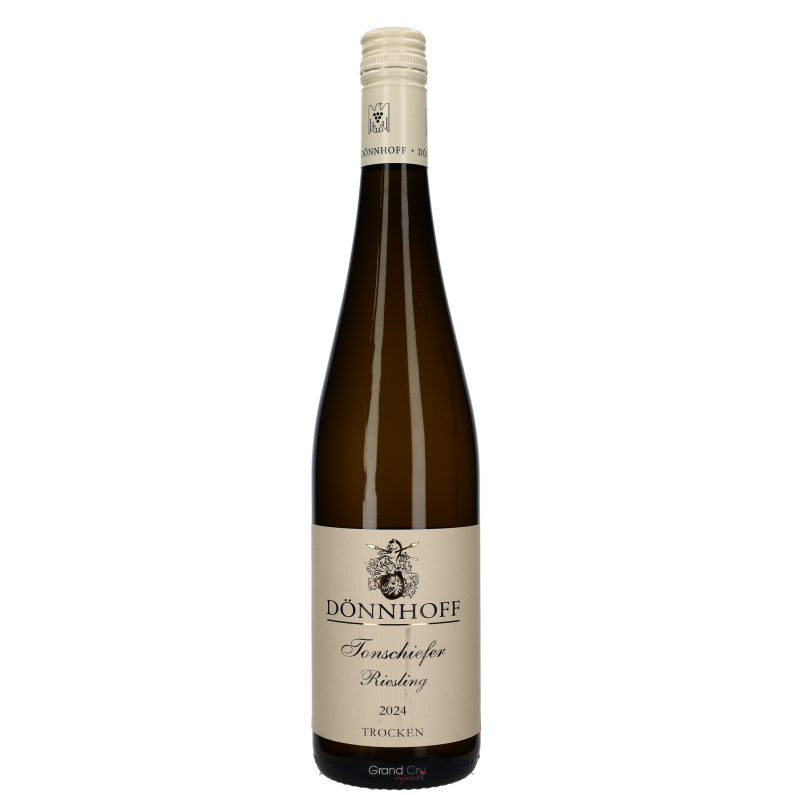
De specificaties zoals vermeld bij de wijn (o.a. wijnjaar) en in de titel zijn leidend en er kunnen geen rechten worden ontleend aan de afbeelding die wordt getoond. Lees meer in onze Frequenty asked questions
| Type of Wine | White |
|---|---|
| Country | Germany |
| Region | |
| Winery | |
| Vintage | 2024 |
| Grape | |
| Content (Alc) | Standard (0.75 ltr) (12%) |
| Drink window | 2025 - 2040 |
Ordering in bulk? Log in to request a quote
Low Stock
Only 3 left
Notities
Foto
Proefnotities
Heb je deze wijn geproefd?
Bewaar je beoordeling en aantekeningen.
Bewaar je beoordeling en aantekeningen.
Heb je deze wijn geproefd?
Log in om je proefnotitie op te slaan.
Log in om je proefnotitie op te slaan.
Log inHoe wil je je wijn beoordelen?
Max 5 MB. JPG, PNG, WebP.
Hoe smaakt het?
Klik op wat het beste past. Alles is optioneel.
Welke geuren en smaken herken je?
Klik op alles wat je herkent. Dit is optioneel.
Uiterlijk
Neus
Aroma's (neus)
Smaak
Smaken (mond)
Afdronk
Wijngegevens
Automatisch ingevuld vanuit productgegevens.
Persoonlijke gegevens
the winery Weingut Dönnhoff
The family-owned Weingut Dönnhoff is among the finest in the Nahe region. Its roots date back to the 18th century. Under the leadership of Cornelius Dönnhoff, they meticulously cultivate vineyards with old vines, steep slopes, and unique soils. The estate focuses on Riesling in all its facets: dry, rich, and complex. With nine "Grosse Lagen" (large vineyards), Dönnhoff owns some of Germany's most renowned vineyards.
region, soil and vineyards
The wine comes from the Nahe region, around Oberhausen an der Nahe. The slopes consist of "Tonschiefer" – clay-schist soil, rich in minerals and weathered slate. This location ensures cool nights and warm days, ideal for ripening while retaining freshness. The grapes are harvested by hand, mostly from vineyards on the Oberhäuser Leistenberg estate, where the soil provides deep grip and gives the wines a characteristic stony character.
the wine 2024 Weingut Dönnhoff Tonschiefer Trocken
This 2024 vintage is certified as VDP Gutswein and originates from the Tonschiefer soil. Its alcohol content is approximately 11.5% vol. It was an exceptional year, with Dönnhoff achieving a concentration and freshness that were internationally renowned. The wine was bottled in April.
style and vinification
The grapes were rigorously selected and hand-picked. Vinification took place largely in stainless steel, in some cases in large vats. There is no oak aging, allowing the pure fruit and mineral expression to remain central. The result is a dry Riesling that is clear, taut, and intense yet subtly sweet.
reviews by Parker and Suckling
According to Stephan Reinhardt of The Wine Advocate, this 2024 received 92 points: “Predominantly sourced in the Leistenberg … pure as well as intense on the concentrated and aromatic nose … Mouth-filling but light, refined, and elegant on the palate … the acidity is an electric beam but focused on fully ripe and textured fruit.” The sensory depth and structure make the wine a classic in the making. According to James Suckling, it scores 92 points: “Very cool and lemony, with plenty of garden-herb aromas … a very sleek and focused dry Riesling … very crisp finish with some herbal and green apple flavors.” These compliments confirm the quality, complexity, and aging potential.
color, smell and taste profile
In the glass, a light straw yellow with green highlights. The nose opens with lime zest, yellow apple, and fresh herbs like rosemary and green tea. Beneath this lies a base of wet slate and flint. On the palate, the profile is tight and refined: bright acidity, a mineral core, and juicy fruit in the mid-palate. The finish is long, salty-mineral, and elegant. The structure is refined, the mouthfeel light yet with depth.
storage potential and serving advice
This Tonschiefer Trocken is already appealing but will continue to develop in the coming years. It can be kept until 2030 or even longer. Serve at 8-10°C. Ideal in a Burgundy glass to fully express its mineral finesse and vibrant freshness.
Would you like to order wines from Weingut Dönnhoff online?
If available, you'll find the official fact sheet and additional information about this fine wine in the "Attachments" tab. We'll automatically send you these when you order this wine. The wine is stored in our climate-controlled Wine Warehouse, and if you pick it up, you'll often receive a nice discount. You'll see your discount immediately when you select "Pick up" at checkout. We're located in Dordrecht, just off the A16 motorway with ample parking. Click here for our address: https://www.grandcruwijnen.nl/bezoek-ons . You can read the full wine reviews from Parker, Suckling, Vinous, and Wine Spectator, among others.
Need advice on finding the perfect wine to pair with your dish? Click here for our exclusive Sommelier. Free for Grand Cru customers. https://www.grandcruwijnen.nl/sommy
recommended wine and food pairings
- Grilled prawns with lime-butter sauce and dill. The freshness and minerality of the wine enhance the delicate character of the fish.
- Asparagus with beurre hollandaise and young Dutch potatoes. The acidity and stoniness of the wine add elegance to the dish.
- Goat cheese salad with arugula, walnuts, and honey vinaigrette. The combination of freshness and minerality complements the dish perfectly.
- Thai green curry with coconut and stir-fried vegetables. The wine offers plenty of body and a subtle herbal undertone with a light spiciness.
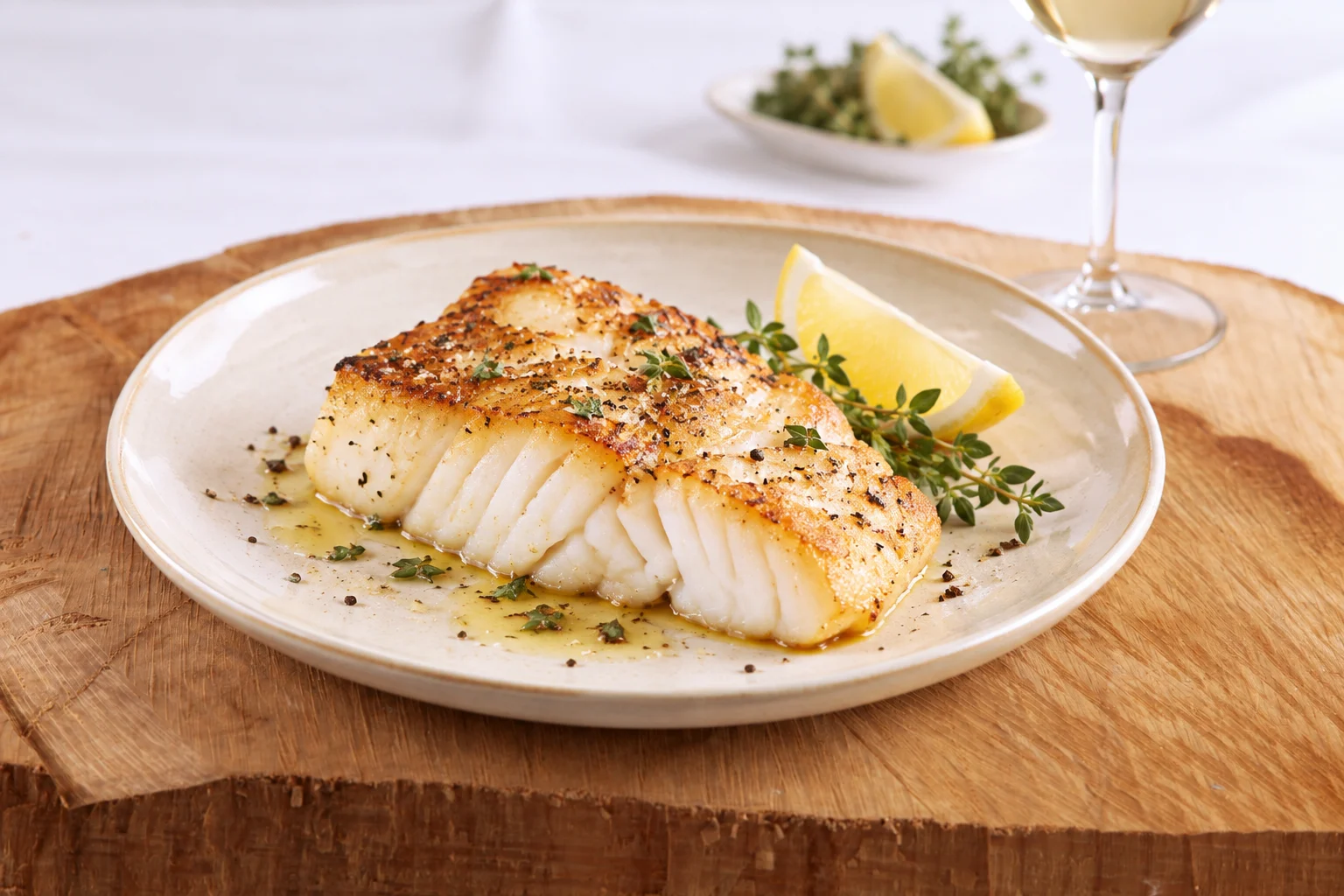
- Steamed haddock fillet with crispy spinach and lime zest. The wine brings clarity, tension, and length to the fish.
| Type of Wine | White |
|---|---|
| Country | Germany |
| Region | Nahe |
| Winery | Weingut Donnhoff |
| Grape | Riesling |
| Biological certified | No |
| Natural wine | No |
| Vegan | No |
| Vintage | 2024 |
| Drinking as of | 2025 |
| Drinking till | 2040 |
| Alcohol % | 12 |
| Alcohol free/low | No |
| Content | Standard (0.75 ltr) |
| Oak aging | Yes |
| Sparkling | No |
| Dessert wine | No |
| Closure | Screw cap |
| Parker rating | 92 |
| James Suckling rating | 94 |
| Vinous rating | 91 |
| Tasting Profiles | Aards, Aromatisch, Bloemig, Complex, Droog, Fris, Fruitig, Krachtig, Mineraal, Rijk, Rond, Steenfruit, Strak, Tropisch fruit, Vol, Wit fruit |
| Drink moments | Barbecue, Borrelen, Iets te vieren, Open haard, Romantisch, Terras, Voor alledag |
| Sommy Pairing Beschrijving | De 2024 Weingut Dönnhoff Tonschiefer Trocken biedt een zuivere, gespannen Riesling met heldere citruskruiden, groene appel en een mineraliteit van natte leisteen die continu fris en elegant blijft. De knipoog van ziltige mineraliteit en een fruitig middenpalet zorgen voor een lange, verfijnde finale die telkens uitspeelt op frisheid en finesse. Deze wijn past uitmuntend bij gegrilde gamba’s met limoen en dille, asperges met beurre hollandaise, geitenkaas-salades en lichte wokkruiden curry omdat de zuurgraad en minerale kern het gerecht laten ademen en de sauzen en kruiden prachtig ondersteunen. Voor extra wijn-spijsbinding werkt een koele serveertemperatuur van 8-10 °C in een Bourgogne-glas goed, en bereidingswijzen zoals kort gegrilde vis, gestoomde schelvis of frisse salades laten de minerale spanning volledig tot zijn recht komen. |
Parker
The Wine Advocate
RP 92
Reviewed by:
Stephan Reinhardt
Release Price:
NA
Drink Date:
2025 - 2040
Predominantly sourced in the Leistenberg, the 2024 Riesling trocken Tonschiefer VDP.Gutswein is pure as well as intense on the concentrated and aromatic nose that comes like a desert of crushed blue slate and salts. This is fascinating and represents a superb terroir that has always been one of my all-time favorites when it comes to easy drinking but complex and unique Rieslings. Mouthfilling but light, refined and elegant on the palate, this is a dense and sustainable, quite powerful dry Riesling with a long, aromatic, intense and seriously structured finish. The acidity is an electric beam but focused on fully ripe and textured fruit. There is no need to open a bottle of this classic wine all too soon. Bottled in April with 11.5% stated alcohol.
If, as a winegrower, 90% of your potential harvest is robbed by frost early in the year, you have to rely on the solidarity of colleagues who have been hit less hard or not at all. This was the case a year ago when Cornelius Dönnhoff had to lament the loss of his best vineyards (Hermannshöhle, Felsenberg, Dellchen) at the annual Mainz Weinboerse of the VDP. Philipp Wittmann (Rheinhessen) and later also Nicola Libelli (Weingut Dr. Bürklin-Wolf, Pfalz) spontaneously offered to provide their colleague with grapes next autumn. They would cultivate the vineyards—in the Kirchspiel and Steingrube "Grosse“ also "Erste Lage“ in Westhofen (Rheinhessen) and in the Gerümpel and Rechbächel premiers crus in Wachenheim (Pfalz)—according to their (biodynamic) system, and Dönnhoff would then take over from the harvest onward.
And so it happened. A team of 30 harvesters from the Nahe picked the grapes in both Wachenheim and Westhofen and brought the harvest to the vineyard in Oberhausen/Nahe, where it was processed according to the "Dönnhoff system." As a result, Dönnhoff presented a "Wachenheimer" and a "Westhofener" Ortswein Riesling for the first time—and probably uniquely—at this year's VDP Mainz Weinboerse in late April, alongside the "Schlossböckelheimer" Riesling from the Nahe. Whether the respective terroir (i.e., the site cultivated by Bürklin or Wittmann) or the "Dönnhoff system" prevails in these wines is for everyone to decide. Having tasted all of them blind side by side, I recognized Westhofen immediately and also Schlossböckelheim (which in fact includes the Felsenberg, which won't be bottled as a GG this year), whereas the Wachenheimer was clearly a Dönnhoff wine from sandstone soils. It was less complex than the other two, but after I drank the wine from the same bottle two weeks later, it became my favorite. I will taste all three wines again later this year to complete the 2024 reviews of this producer who experienced the most challenging vintage for at least two generations.
Published: May 22, 2025
Lorem ipsum dolor sit amet, consectetur adipiscing elit. Sed do eiusmod tempor incididunt ut labore et dolore magna aliqua...
James Suckling
Score
92
Avg Price (ex-tax)
$ 24
Dönnhoff Riesling Nahe Tonschiefer Trocken 2024
Monday, Aug 04, 2025
Color
White
Country
Germany
Region
Nahe
Vintage
2024
Download Shelftalker
Very cool and lemony, with plenty of garden herb aromas, this is a very sleek and focused dry riesling that’s barely medium-bodied. Very crisp finish with some herbal and green apple flavors. Drink or hold. Screw cap.
Stuart Pigott
Senior Editor
Lorem ipsum dolor sit amet, consectetur adipiscing elit. Sed do eiusmod tempor incididunt ut labore et dolore magna aliqua...
Vinous
91
Drinking Window
2025 - 2040
From: Rheingau and Nahe 2024: Rain, Frost and Unexpected Brilliance (Sep 2025)
The 2024 Riesling Tonschiefer was picked chiefly in the Oberhäuser Leistenberg, but this year it was supplemented with fruit from Niederhauser Klamm, Hermannshöhle and Norheim. A gentle, smoky reduction spreads across the superbly clean-cut palate. This is the picture of clarity and poise, with a deep-seated zestiness, a core of coolness and exquisite, fluid ripeness. The 2024 is totally ripe but svelte and utterly disarming. (Bone-dry)
- By Anne Krebiehl, MW on June 2025
Talking about the April spring frosts, Cornelius Dönnhoff said, “The Nahe valley, from von Bad Münster almost all the way to Monzingen, was hit. We had losses of 80-90% per site. Frost hit everywhere, not just in the lowest sites, even at altitudes of 200-300 meters. It went down to -5°C on the nights of April 22 and 23. We put up candles in the Brücke site, but that was like a drop in the ocean. The year was difficult because we had to look after the shoots that did not frost. Canopy management was a challenge as everything was so bushy, but the psychological challenge was worse. We knew there was going to be almost nothing to harvest, and yet we had to do the work. Financially this was also tough, but it has to be part of the calculation.”
Philip Wittmann of the Wittmann estate in Rheinhessen and Nicola Libelli of the Bürklin Wolf estate in the Pfalz offered Dönnhoff one hectare of their vines each, and Dönnhoff ended up making three one-off village wines: the Schlossböckelheimer from all the frosted sites, a Westhofener and a Wachenheimer. These three wines are a fascinating comparison between Tertiary limestone and Triassic sandstone soils, respectively, combined with the Dönnhoff house style. “I said that I would not get involved in their farming methods, but we offered that we would go and harvest the grapes ourselves,” Dönnhoff explained. “We brought the grapes here and made the wines in our cellar. In the end, it was really interesting for everyone.”
These wines all have the Dönnhoff tautness but are subtly different: the Nahe is the zestiest, Westhofen the juiciest and Wachenheim the creamiest. All in all, Dönnhoff presented a beautiful collection this year. Svelteness, lightness and expressiveness are inherent. The sweet wines, where Spätlese was the highest Prädikat achieved, are on a different plane. They are otherworldly and weightless with ethereal poise.
Lorem ipsum dolor sit amet, consectetur adipiscing elit. Sed do eiusmod tempor incididunt ut labore et dolore magna aliqua...
Exclusive Content
Sign in to unlock professional wine reviews from world-renowned critics
Weingut Dönnhoff is a winery located in the Nahe, Germany. The estate is known for producing high-quality Rieslings, which are considered some of the best in the world. The winery has a long history of winemaking and is widely respected for its dedication to producing exceptional wines with a sense of place and terroir.
History of Weingut Dönnhoff
The Dönnhoff family has been involved in the wine world for generations, and the history of the estate dates back to the mid-18th century. Helmut Dönnhoff, who took over the estate in the 1980s, has been instrumental in improving production. Under his leadership, Weingut Dönnhoff saw a significant transformation and gained recognition as one of the best wineries in Germany. Helmut Dönnhoff's approach to winemaking is rooted in a commitment to quality and terroir expression. He implemented meticulous vineyard management and winemaking techniques to produce wines that reflect the unique characteristics of the Nahe. The estate's focus on Riesling has been a defining feature of its history.
Nahe
The Nahe region is located between the Palatinate in the south and the Moselle wine region in the north. The Nahe River flows through the region and gives it its name. The region's diverse topography includes valleys, hills, and terraced vineyards. One of the most distinctive features of the Nahe is its varied terroir. The soil types here range from volcanic, shale and sandstone to clay and limestone. This diversity allows for the cultivation of a wide range of grape varieties and wine styles.
The Nahe region is known for the production of high-quality Rieslings. Riesling thrives in these diverse soil and microclimate conditions of the region. In addition to Riesling, other white grape varieties such as Müller-Thurgau, Silvaner and Weissburgunder (Pinot Blanc) are also grown, and some red varieties such as Pinot Noir (Spätburgunder) can be found. The Nahe benefits from a variety of microclimates, influenced by its topography and proximity to the Rhine. The region has warmer and drier areas in the valleys, as well as cooler, higher elevation locations, which allow for the production of different styles of wine, from dry to sweet. The Nahe is known for producing a wide range of wine styles, from bone-dry and crunchy Rieslings to deliciously sweet and botrytized dessert wines (noble rot). The region is also known for its sparkling wines and rosé wines.
Production by Weingut Dönnhoff
Weingut Dönnhoff is especially praised for its Rieslings, which are known for their elegance, precision, and terroir expression. They produce a variety of Riesling styles, from dry to sweet, as well as noble sweet wines made from grapes with botryt. The estate is committed to sustainable viticulture and uses environmentally friendly farming methods. They strive to minimize their impact on the environment while producing high-quality grapes. Weingut Dönnhoff's wines have received wide recognition and numerous awards from wine critics and organizations. They are highly sought after by collectors and wine lovers around the world. In addition to Riesling, Weingut Dönnhoff also produces other white grape varieties, including Weissburgunder (Pinot Blanc), Grauburgunder (Pinot Gris) and Silvaner.
De 2024 Weingut Dönnhoff Tonschiefer Trocken biedt een zuivere, gespannen Riesling met heldere citruskruiden, groene appel en een mineraliteit van natte leisteen die continu fris en elegant blijft. De knipoog van ziltige mineraliteit en een fruitig middenpalet zorgen voor een lange, verfijnde finale die telkens uitspeelt op frisheid en finesse. Deze wijn past uitmuntend bij gegrilde gamba’s met limoen en dille, asperges met beurre hollandaise, geitenkaas-salades en lichte wokkruiden curry omdat de zuurgraad en minerale kern het gerecht laten ademen en de sauzen en kruiden prachtig ondersteunen. Voor extra wijn-spijsbinding werkt een koele serveertemperatuur van 8-10 °C in een Bourgogne-glas goed, en bereidingswijzen zoals kort gegrilde vis, gestoomde schelvis of frisse salades laten de minerale spanning volledig tot zijn recht komen.
Choose a category to discover dishes that pair well with this wine.
Do you already have a dish in mind?
Let Sommy find wines to pair with your meal.
Discover Wine Trivia
Sign in to unlock fascinating facts about this wine and expand your knowledge.
Sign In