

GRANDCRUWIJNEN INSIGHTS 01 | Reading a German Riesling Label
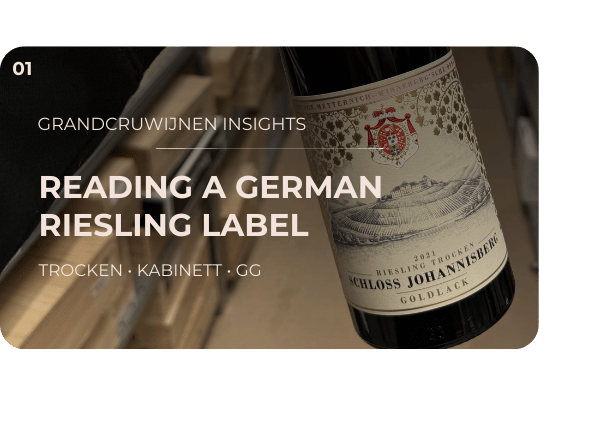
German Riesling is known for its freshness, precision and remarkable versatility. The label, however, can sometimes be confusing.
Terms such as Kabinett, Spätlese or GG do not always tell you straight away whether a wine is dry or has some sweetness.
With a few simple cues, however, you can read a German Riesling label surprisingly quickly.
The short version
If you want to quickly understand what you have in your glass, look for these cues:
1. Look for Trocken or Dry
If you see Trocken or Dry on the label, the wine is dry.
2. Kabinett, Spätlese and Auslese
These terms refer to the ripeness of the grapes at harvest, not automatically to sweetness.
3. Do you see GG
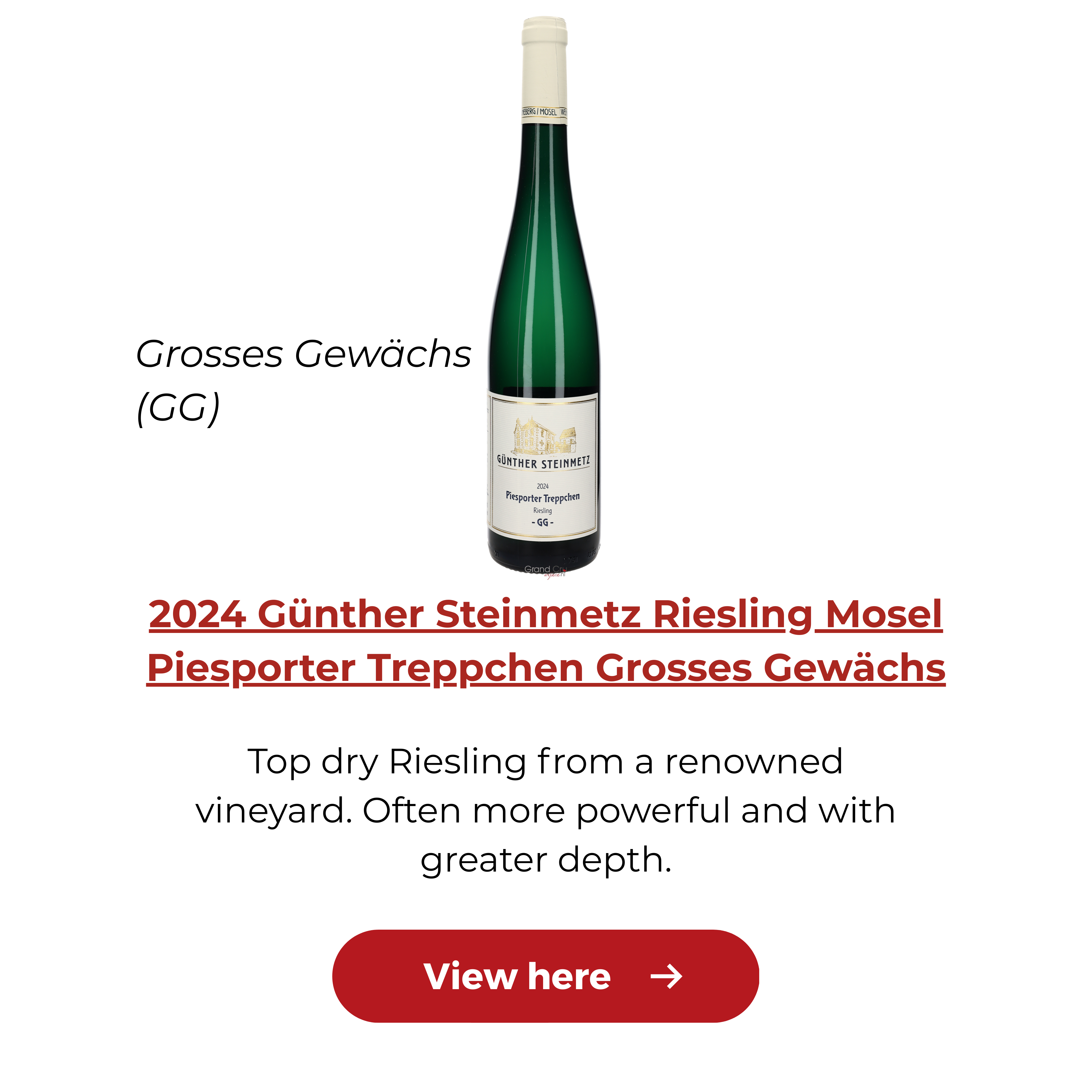
GG stands for Grosses Gewächs. These are top dry Rieslings from classified vineyards. Grosses Gewächs is always Spätlese or Auslese quality.
4. Look at the region
- Mosel is often known for finesse and tension.
- Rheingau and Pfalz often give a bit more power and body.
- Nahe often sits nicely in between these styles.
5. Alcohol as a quick hint
Lower alcohol often means a lighter and fresher style.
Higher alcohol usually feels fuller and riper.
Examples
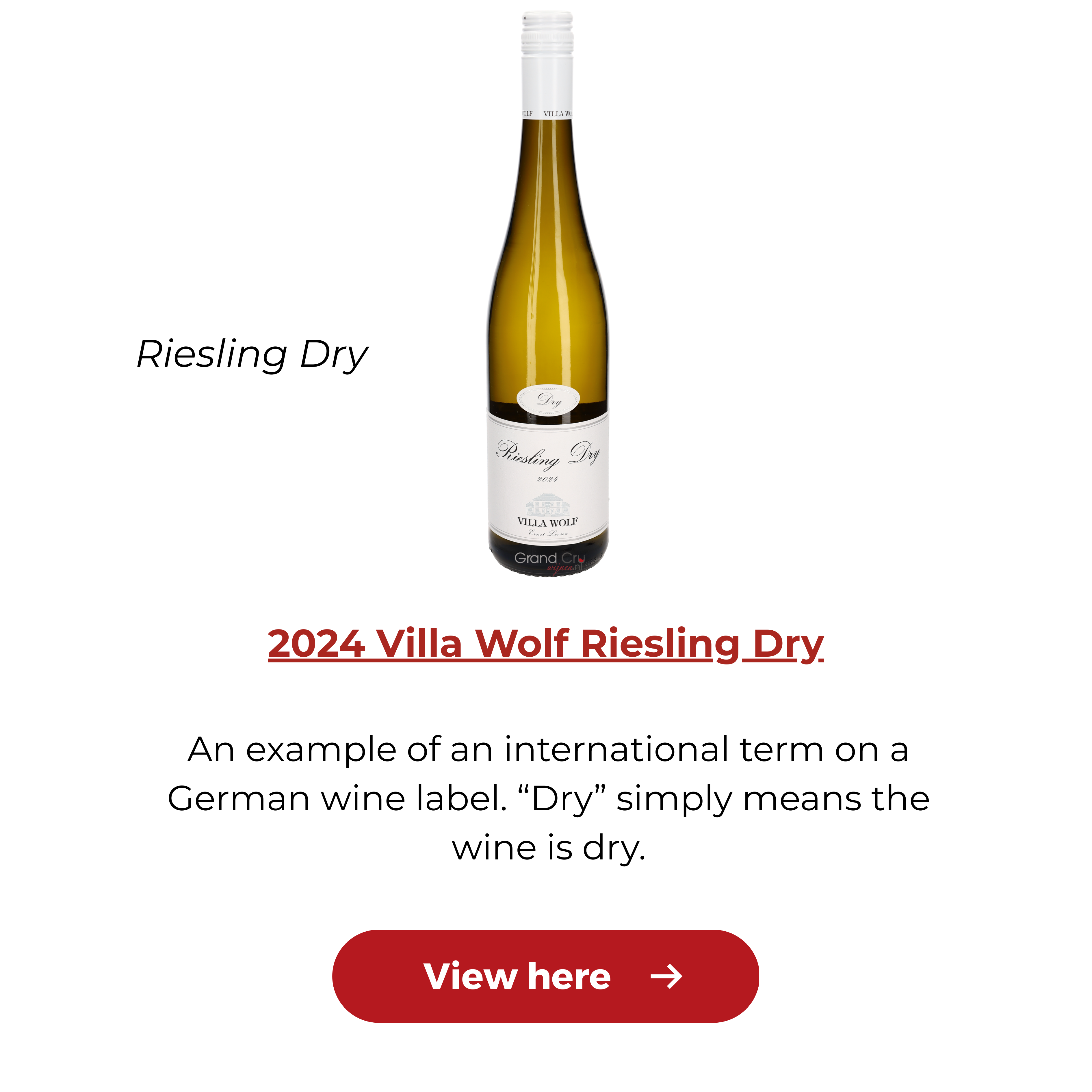
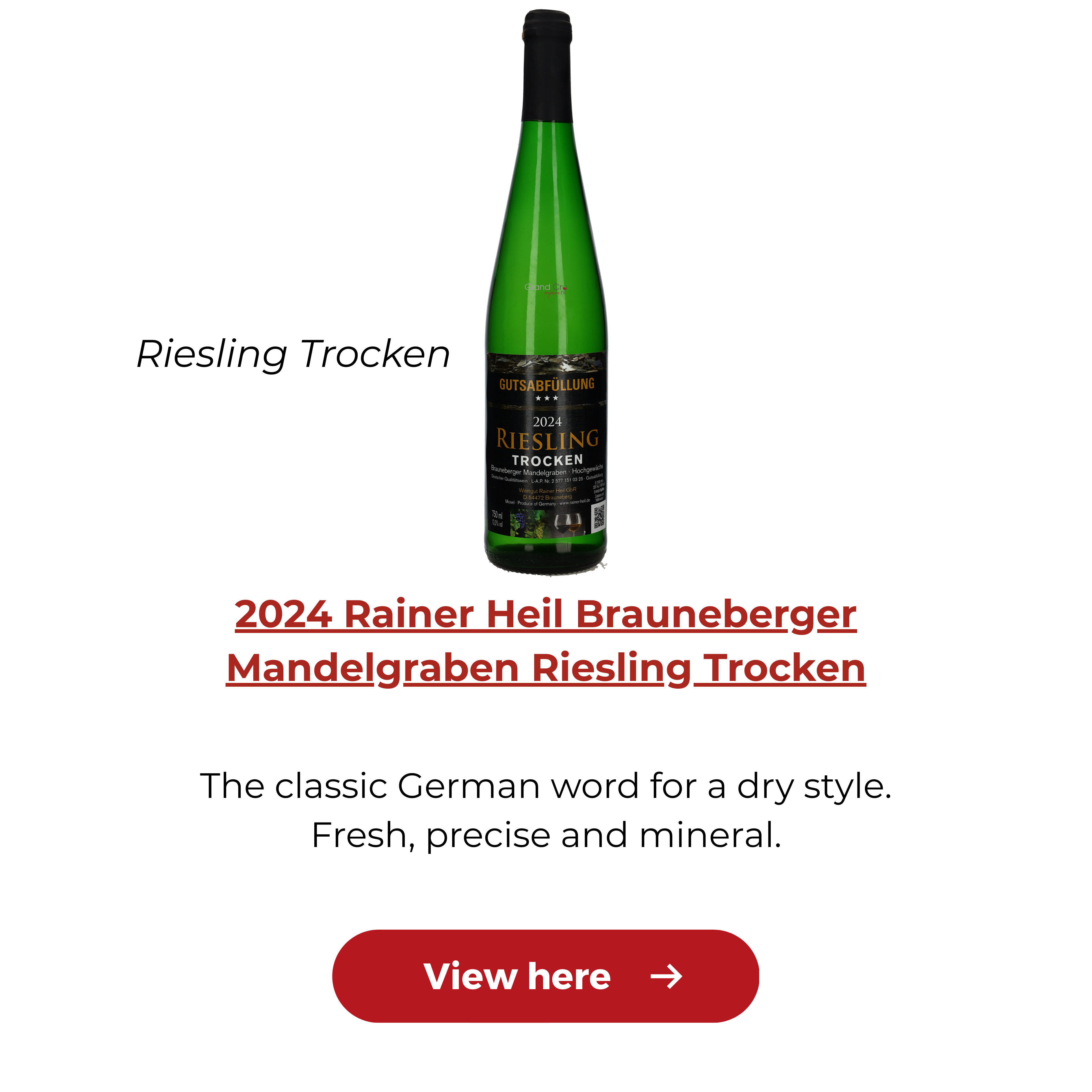
Below you will find six Rieslings that each show a different type of label. From Dry and Trocken to Spätlese and Grosses Gewächs. Together they give a clear picture of how German Riesling is classified.
More about German Riesling labels
Trocken and Dry
These are the clearest words you can find on a German wine label. Both Trocken and Dry simply mean the wine is dry. Many producers today also use the international term Dry.
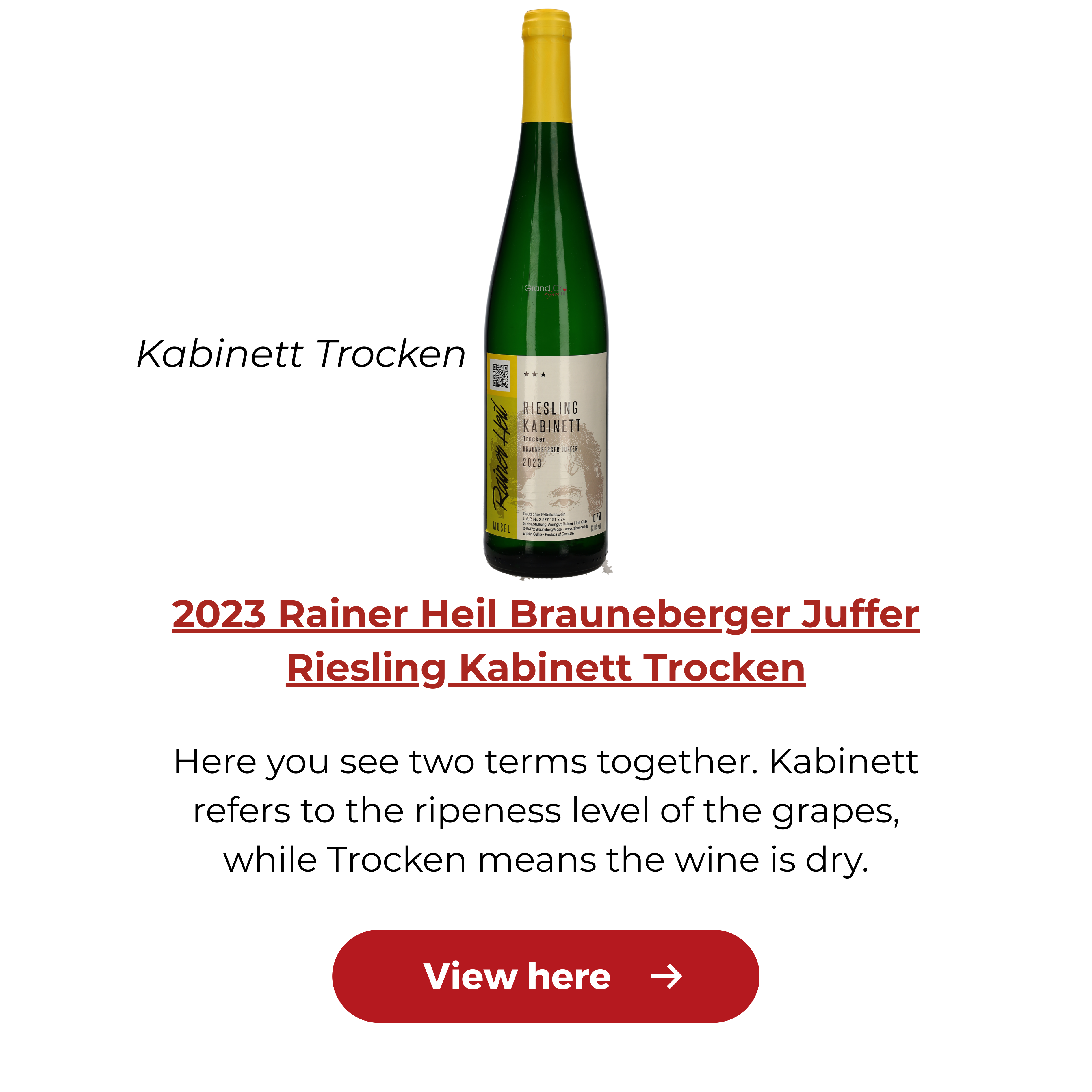
Kabinett
Kabinett refers to the ripeness level of the grapes at harvest. Traditionally, Kabinett wines are lighter in alcohol and very fresh in style. They can be dry, but they may also contain some residual sugar. That is why it is important to check whether the word Trocken also appears on the label.
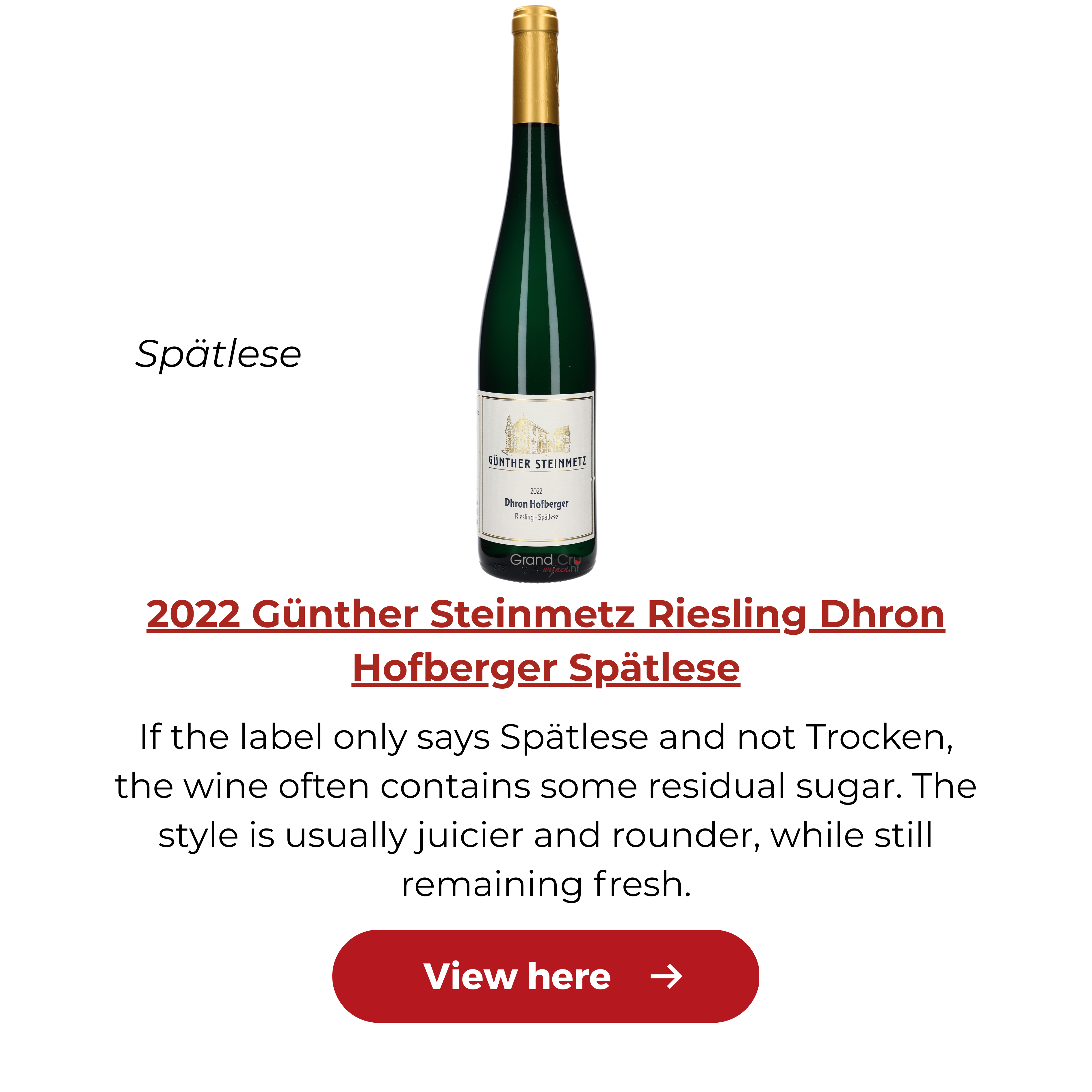
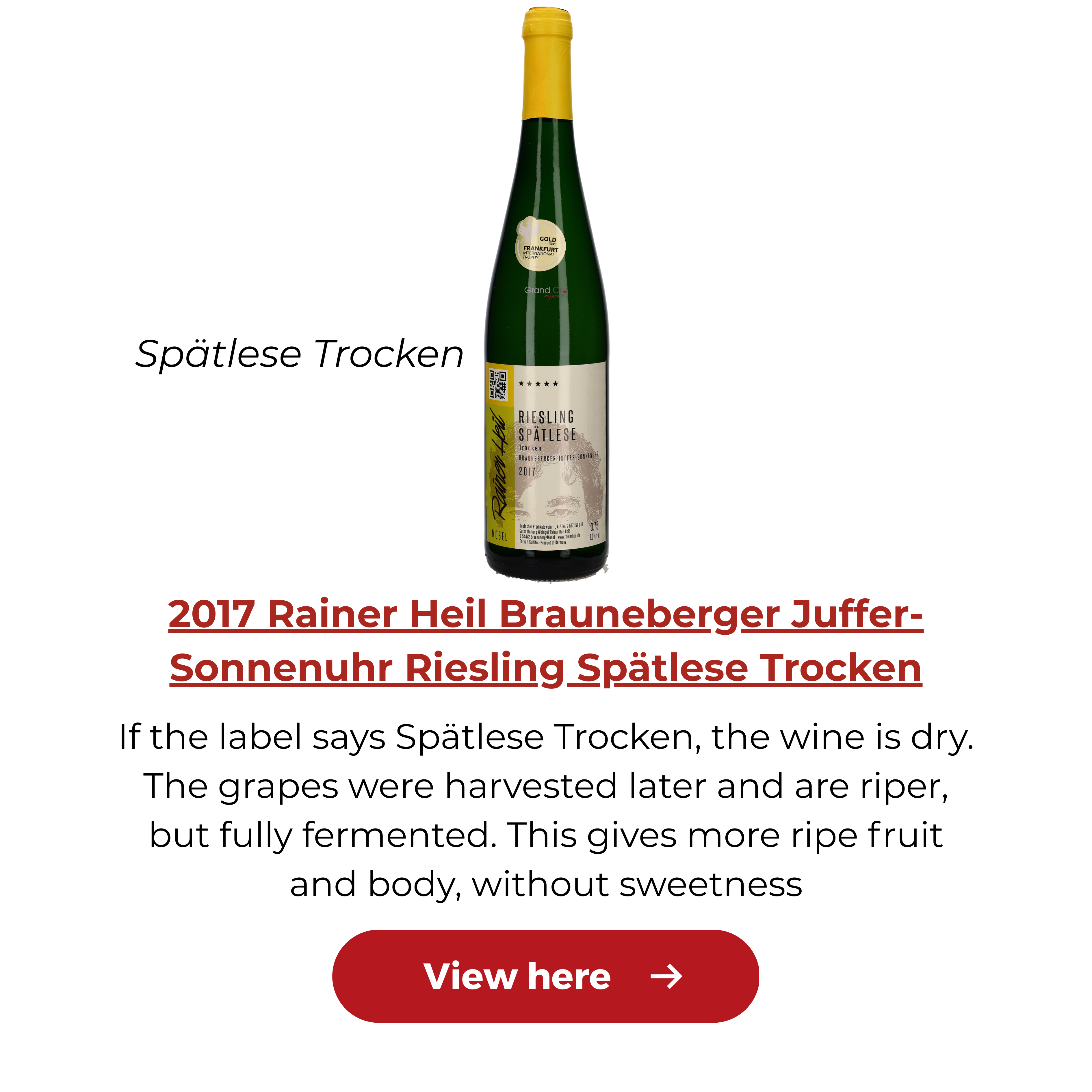
Spätlese
Spätlese literally means “late harvest”. The grapes are picked later and are therefore riper, often resulting in more concentration and riper fruit flavors.
Important: Spätlese itself does not indicate whether the wine is dry or sweet.
If you see Spätlese Trocken, the wine is dry.
If the label only says Spätlese, the wine often contains some residual sugar.
Grosses Gewächs (GG)
GG stands for Grosses Gewächs and comes from the VDP classification system. These are dry wines from top-classified vineyards. They usually offer more structure, depth and often have good ageing potential.
The regions
Germany has several Riesling regions, each with its own style.
- Mosel is known for finesse, tension and often lower alcohol.
- Rheingau often shows a bit more structure.
- Pfalz tends to be riper and fuller.
- Nahe often sits nicely between these styles.
With this basic knowledge, you can usually interpret a German Riesling label quite easily.
Explore further
Want to discover more German Rieslings? Explore our full selection.