

Chassagne-Montrachet
Chassagne-Montrachet
Le Montrachet is the name of a Grand Cru vineyard with an area of 8.00 hectares (4.01 hectares in the village of Puligny-Montrachet and 3.99 hectares in Chassagne-Montrachet in the Côte de Beaune, Burgundy). The average yield is 393 hectoliters (52,272 bottles) per year of some of the most expensive dry white wines in the world, made from Chardonnay. The wine requires at least 10 years of aging to reveal its exceptional qualities.
Le Montrachet is the name of a Grand Cru vineyard with an area of 8.00 hectares (4.01 hectares in the village of Puligny-Montrachet and 3.99 hectares in Chassagne-Montrachet in the Côte de Beaune, Burgundy). The average yield is 393 hectoliters (52,272 bottles) per year of some of the most expensive dry white wines in the world, made from Chardonnay. The wine requires at least 10 years of aging to reveal its exceptional qualities.
Chassagne-Montrachet: one of the most famous appellations of Burgundy
Chassagne-Montrachet is a prestigious appellation in the Côte de Beaune, located in Burgundy. Together with the villages of Puligny-Montrachet and Meursault, it forms the heart of one of the world’s most renowned wine regions, known for its high-quality Chardonnay and Pinot Noir wines. The appellation covers about 350 hectares, with a significant portion dedicated to white wines. But what makes Chassagne-Montrachet so special?
Soil and location influence of the Chassagne-Montrachet vineyards
The vineyards of Chassagne-Montrachet lie on soil mainly composed of clay and limestone, with the famous stones of Chassagne. This unique composition gives the wines a noticeable minerality. The vineyards, located on eastern slopes, benefit from sufficient sunlight and a cool breeze, which contributes to the purity and freshness of the wines.
Grand Cru vineyards of Chassagne-Montrachet
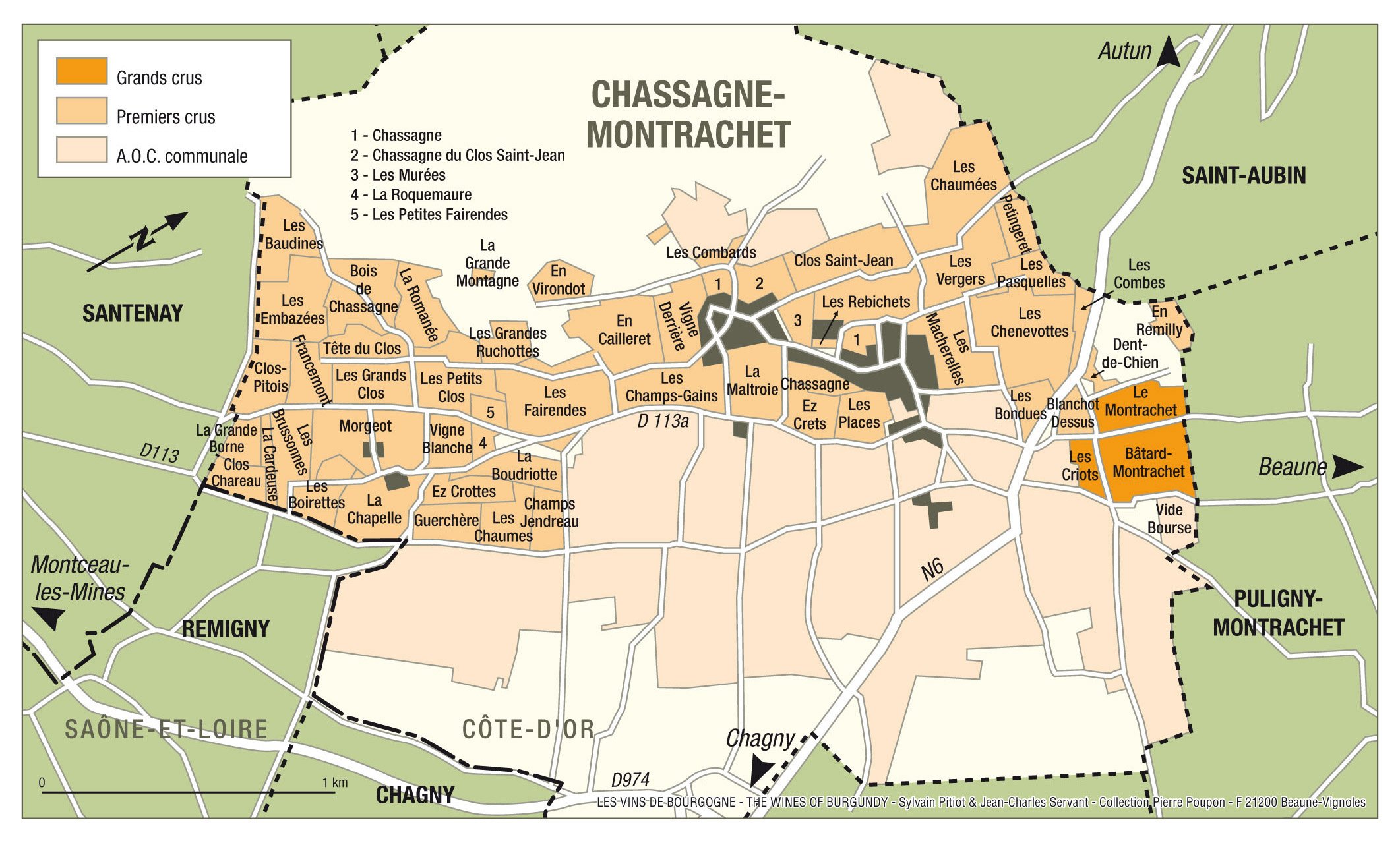
Chassagne-Montrachet shares three famous Grand Cru vineyards with neighboring Puligny-Montrachet: Le Montrachet, Bâtard-Montrachet, and Criots-Bâtard-Montrachet. These vineyards are known for producing some of the world’s most prestigious and expensive dry white wines, made from Chardonnay. Le Montrachet is perhaps the most well-known, covering 8 hectares with an average yield of about 393 hectoliters per year.
While Chassagne-Montrachet is primarily known for its white wines, red wine is also produced. Approximately 65% of the production is white, mainly from Chardonnay, while the remaining 35% consists of red wine from Pinot Noir. Interestingly, a significant part of the soil in Chassagne is actually better suited for Pinot Noir, but due to the higher market value of white wines, Chardonnay is predominantly planted, especially in the top vineyards.
Characteristics of Chassagne-Montrachet wines
The white wines of Chassagne-Montrachet are known for their minerality, combined with fruity aromas like white grapefruit and peach. These wines often benefit from aging for at least 10 years to fully develop their potential. The red wines, though less prominent, can also be of high quality, often showing an elegant balance between fruit and earthy tones.
Premiers Crus of Chassagne-Montrachet
In addition to the Grand Crus, Chassagne-Montrachet is home to 50 Premier Cru vineyards. Some of the most well-known include La Maltroie, Clos Saint-Jean, and Les Chaumées. These wines carry the label "Chassagne-Montrachet Premier Cru," followed by the vineyard name. Premier Cru wines are often more approachable than Grand Cru wines but can still offer impressive complexity and depth.
The history of Chassagne-Montrachet goes back centuries. In 1879, the village name was officially changed from Chassagne-le-Haut to Chassagne-Montrachet, after the famous Grand Cru plot Le Montrachet. Like many other villages in Burgundy, Chassagne added the name of its most renowned vineyard to emphasize the reputation of its local wines.
Buying Chassagne-Montrachet wines at Grandcruwijnen
Chassagne-Montrachet is an iconic appellation within Burgundy, praised for its elegant and complex white wines made from the Chardonnay grape. With its unique soil, climatic advantages, and rich tradition, this appellation remains an essential part of the global wine scene. Whether it’s a Grand Cru, Premier Cru, or Village wine, Chassagne-Montrachet offers wine lovers an unforgettable tasting experience. Grandcruwijnen offers exquisite wines from Chassagne-Montrachet.
Chassagne-Montrachet: one of the most famous appellations of Burgundy
Chassagne-Montrachet is a prestigious appellation in the Côte de Beaune, located in Burgundy. Together with the villages of Puligny-Montrachet and Meursault, it forms the heart of one of the world’s most renowned wine regions, known for its high-quality Chardonnay and Pinot Noir wines. The appellation covers about 350 hectares, with a significant portion dedicated to white wines. But what makes Chassagne-Montrachet so special?
Soil and location influence of the Chassagne-Montrachet vineyards
The vineyards of Chassagne-Montrachet lie on soil mainly composed of clay and limestone, with the famous stones of Chassagne. This unique composition gives the wines a noticeable minerality. The vineyards, located on eastern slopes, benefit from sufficient sunlight and a cool breeze, which contributes to the purity and freshness of the wines.
Grand Cru vineyards of Chassagne-Montrachet
Chassagne-Montrachet shares three famous Grand Cru vineyards with neighboring Puligny-Montrachet: Le Montrachet, Bâtard-Montrachet, and Criots-Bâtard-Montrachet. These vineyards are known for producing some of the world’s most prestigious and expensive dry white wines, made from Chardonnay. Le Montrachet is perhaps the most well-known, covering 8 hectares with an average yield of about 393 hectoliters per year.
While Chassagne-Montrachet is primarily known for its white wines, red wine is also produced. Approximately 65% of the production is white, mainly from Chardonnay, while the remaining 35% consists of red wine from Pinot Noir. Interestingly, a significant part of the soil in Chassagne is actually better suited for Pinot Noir, but due to the higher market value of white wines, Chardonnay is predominantly planted, especially in the top vineyards.
Characteristics of Chassagne-Montrachet wines
The white wines of Chassagne-Montrachet are known for their minerality, combined with fruity aromas like white grapefruit and peach. These wines often benefit from aging for at least 10 years to fully develop their potential. The red wines, though less prominent, can also be of high quality, often showing an elegant balance between fruit and earthy tones.
Premiers Crus of Chassagne-Montrachet
In addition to the Grand Crus, Chassagne-Montrachet is home to 50 Premier Cru vineyards. Some of the most well-known include La Maltroie, Clos Saint-Jean, and Les Chaumées. These wines carry the label "Chassagne-Montrachet Premier Cru," followed by the vineyard name. Premier Cru wines are often more approachable than Grand Cru wines but can still offer impressive complexity and depth.
The history of Chassagne-Montrachet goes back centuries. In 1879, the village name was officially changed from Chassagne-le-Haut to Chassagne-Montrachet, after the famous Grand Cru plot Le Montrachet. Like many other villages in Burgundy, Chassagne added the name of its most renowned vineyard to emphasize the reputation of its local wines.
Buying Chassagne-Montrachet wines at Grandcruwijnen
Chassagne-Montrachet is an iconic appellation within Burgundy, praised for its elegant and complex white wines made from the Chardonnay grape. With its unique soil, climatic advantages, and rich tradition, this appellation remains an essential part of the global wine scene. Whether it’s a Grand Cru, Premier Cru, or Village wine, Chassagne-Montrachet offers wine lovers an unforgettable tasting experience. Grandcruwijnen offers exquisite wines from Chassagne-Montrachet.
Need help from our sommelier?
Our sommelier will help you within 🕐 1 minute to find your perfect wine - personal, fast and for 💚 free.