

2018 Giacomo Conterno Barolo Arione
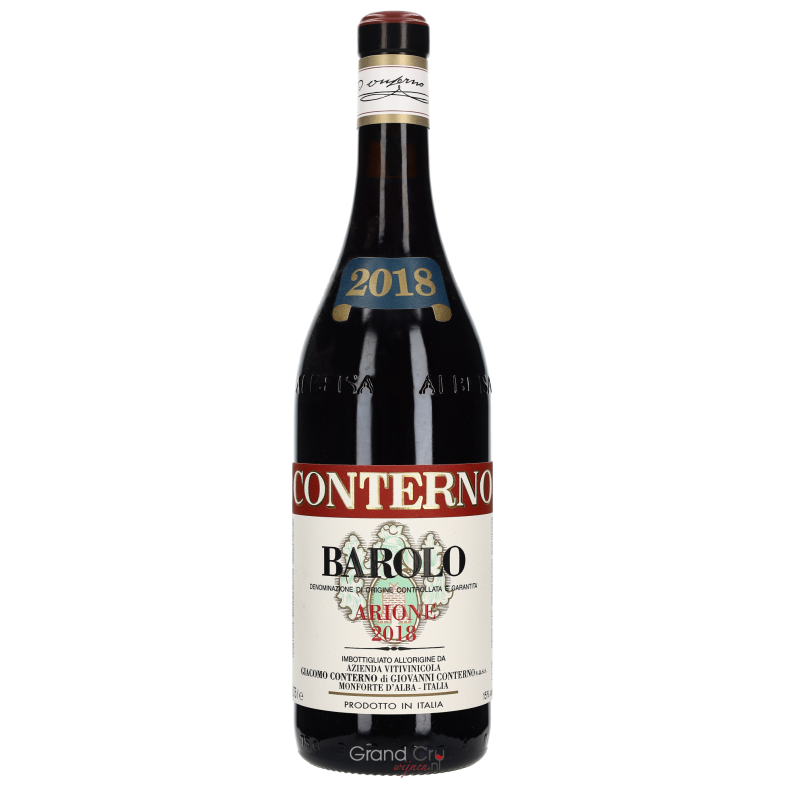
| Type of Wine | |
|---|---|
| Country | Italy |
| Region | |
| Appellation | |
| Winery | |
| Vintage | 2018 |
| Grape | |
| Content (Alc) | Standard (0.75 ltr) (15%) |
| Drink window | 2027 - 2052 |
Ordering in bulk? Log in to request a quote
Low Stock
Only 2 left
Notities
Foto
Proefnotities
Heb je deze wijn geproefd?
Bewaar je beoordeling en aantekeningen.
Bewaar je beoordeling en aantekeningen.
Heb je deze wijn geproefd?
Log in om je proefnotitie op te slaan.
Log in om je proefnotitie op te slaan.
Log inHoe wil je je wijn beoordelen?
Max 5 MB. JPG, PNG, WebP.
Hoe smaakt het?
Klik op wat het beste past. Alles is optioneel.
Welke geuren en smaken herken je?
Klik op alles wat je herkent. Dit is optioneel.
Uiterlijk
Neus
Aroma's (neus)
Smaak
Smaken (mond)
Afdronk
Wijngegevens
Automatisch ingevuld vanuit productgegevens.
Persoonlijke gegevens
Giacomo Conterno
Giacomo Conterno is among Barolo's most admired producers. His wines are regarded worldwide as examples of classic Nebbiolo, made with an almost unwavering dedication to tradition and extended aging. Roberto Conterno is known for his meticulous approach, where each grape, each barrel, and each phase in the cellar plays a unique role in the wine's final character. The wines are slowly developed and released only when, according to the estate, they have reached their full potential.
Barolo Arione is a relatively new addition to the range, originating from a plot in Serralunga d'Alba. This part of Barolo is known for wines with a firm structure and deep, dark aromas. Arione offers a characterful counterpart to Barolo Francia and Barolo Cerretta, showcasing a different, more ethereal side of Serralunga. The plot boasts a unique location on chalky, stony soils that give the wine a striking tension and minerality.
The 2018 vintage and the development of the wine
The 2018 Barolo Arione is still in its developmental stage. The sample was tasted while the wine was still aging for a year in large wooden barrels. The 2018 vintage produced Barolo wines with aromatic finesse, good maturity, and sufficient structure for extended aging. For Arione, this means the wine appears softer and more approachable in its youth, yet beneath the surface, it clearly reveals power, tension, and depth.
The long aging in large bottles is one of the house's hallmarks. This allows Nebbiolo to develop naturally, while maintaining freshness and a pure expression of the fruit. Arione 2018 still has this time ahead of it, meaning the final bottle will offer an even more complete and refined representation of what this plot has to offer.
Color, smell and taste of the 2018 Barolo Arione
The color is bright ruby red with an elegant lightness at the rim, typical of young Nebbiolo. Despite its youth, the wine is open and inviting on the nose. Aromas of wild berries and raspberries intersperse with floral notes such as violet. In the background, earthy nuances and light metallic notes reminiscent of rust, a typical expression of the Serralunga soil, emerge. A subtle hint of blood orange adds freshness and tension to the overall experience.
On the palate, the wine is supple at first, but its structure gradually emerges. The tannins are fine but distinct, giving the wine a backbone characteristic of this terroir. The palate builds from red fruit to slightly darker notes, followed by spices and a light minerality. The whole still feels compact, but the layering gradually emerges. At this stage, the wine is still building volume, which is clearly noticeable in the growing intensity on the palate.
The finish is clean and long, with fresh acidity that gives the wine tension and length. The combination of floral notes, subtle earthy accents, and light citrus nuances creates an elegant finale. The wine is not yet ready to drink and is clearly showing its full potential. Development into 2027 and beyond will further integrate these elements into a more complete wine.
Reviews
The Wine Advocate – (94-96) points (Monica Larner): Open aroma, wild berries, violets, earthy notes, rust, and blood orange. In its youth, it's still soft and approachable, but clearly powerful and deep beneath the surface. Potential for long aging.
Would you like to order Giacomo Conterno wines online?
If available, you'll find the official fact sheet and additional information about this fine wine in the "Attachments" tab. We'll automatically send you these when you order this wine. The wine is stored in our climate-controlled Wine Warehouse, and if you pick it up, you'll often receive a nice discount. You'll see your discount immediately when you select "Pick up" at the checkout page. We're located in Dordrecht, just off the A16 motorway with ample parking. Click here for our address. You can read full wine reviews from publications like Parker, Suckling, Vinous, and Wine Spectator.
Need advice on finding the perfect wine to pair with your dish? Click here for our exclusive Sommelier. Free for Grand Cru customers.
Wine and food pairings
- Pappardelle with slow-braised beef. The wine's structure and freshness create a tension alongside the tender meat.
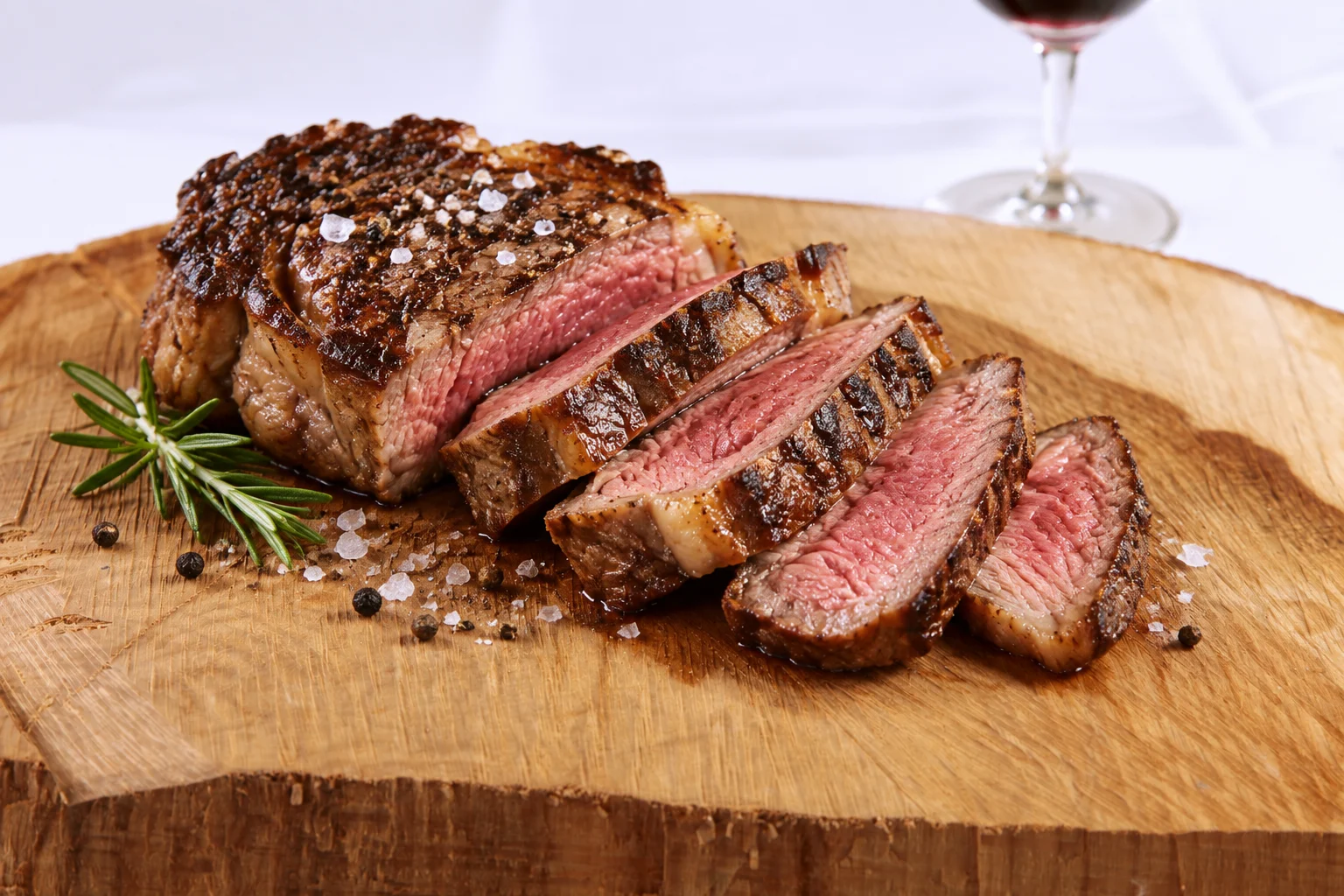
- Grilled sirloin steak with rosemary. The wine's strength complements the grilled character beautifully.
- Risotto with porcini mushrooms. The earthy notes of the risotto enhance the floral and mineral elements of the Nebbiolo.
- Veal shank with sage and white wine. The acidity in the wine keeps the dish light and lively.
- Mushroom ravioli with butter and thyme. The soft spiciness complements the finesse of the wine.
- Aged Taleggio or Castelmagno. The creamy, powerful flavor beautifully offsets the tannins.
| Type of Wine | Red |
|---|---|
| Country | Italy |
| Region | Piemonte |
| Appellation | Barolo |
| Icons | Icon Italy |
| Winery | Giacomo Conterno |
| Grape | Nebbiolo |
| Biological certified | No |
| Natural wine | No |
| Vegan | No |
| Vintage | 2018 |
| Drinking as of | 2027 |
| Drinking till | 2052 |
| Alcohol % | 15 |
| Alcohol free/low | No |
| Content | Standard (0.75 ltr) |
| Oak aging | Yes |
| Sparkling | No |
| Dessert wine | No |
| Closure | Cork |
| Parker rating | 96 |
| Vinous rating | 95 |
| Tasting Profiles | Aards, Complex, Donker fruit, Houtgerijpt, Krachtig, Kruidig, Mineraal, Rood fruit, Tannines, Vol |
| Drink moments | Barbecue, Iets te vieren, Lekker luxe, Met vrienden, Open haard, Romantisch, Terras |
| Sommy Pairing Beschrijving | De 2018 Giacomo Conterno Barolo Arione toont helder robijnrood fruit van framboos en wilde bessen, verfijnde viool- en florale tonen, een koele mineraliteit met licht aardse en roestige nuances en een stevige, fijne tanninestructuur die door frisse zuren lange lengte en spanning geeft. Daardoor sluit de wijn prachtig aan bij rijke rund- en lamsgerechten, geconcentreerd wild en volle, gerijpte kazen omdat het fruit en de zuurgraad het vet doorsnijden en de tannines textuur bieden zonder te overheersen. Specifieke bereidingen die extra goed werken zijn langzaam gestoofd rundvlees of kalfsschenkel om de saus en jus te laten harmoniëren met de wijn, gegrild vlees met rozemarijn of zwarte peper voor een rokerige tegenhanger, en paddenstoelenrisotto of gerijpte Taleggio om de aardse en florale elementen van de nebbiolo te accentueren. |
Parker
The Wine Advocate
RP (94-96)
Reviewed by:
Monica Larner
Release Price:
NA
Drink Date:
2027 - 2055
Tasted from barrel, the 2018 Barolo Arione still has another year in botte and time in bottle before its commercial release. However, the wine shows a distinct personality that is immediately gentle and open-knit despite its very young age. With fruit from Serralunga d'Alba, there is ethereal softness here, but this characterization is relative considering the ample power and depth always associated with this site. It feels like this 2018 vintage is still warming up and is slowly putting on volume and weight. Its metamorphosis is far from complete. However, what you can read into the wine now is the quality of its fruit and its classic Nebbiolo aromas of wild berry, pressed violet, rust and blood orange.
We know Roberto Conterno of the Giacomo Conterno estate as one of Italy’s most talented Barolisti, a taciturn genius in the vineyard and cellar who is capable of casting out the inner soul from the Nebbiolo grape and trapping it for near-eternal safekeeping in a glass bottle. But the Roberto Conterno I met this summer had reinvented himself during the doldrums of lockdown, moving toward increasingly varied pursuits. Thanks to this total transformation, his many new identities today also make him an architect, a restaurateur, a stemware designer and the inventor of a futuristic army of robots on tank treads that will be dispatched at random throughout the Italian countryside and beyond. (Sorry folks, on this last point, I have been sworn to absolute secrecy, but I promise to say more when I can).
As I discovered this past July, there is indeed a lot of news to report from Piedmont. I visited both of Roberto’s estates, his new winery in Gattinara (Alto Piemonte) and his historic cellars in Monforte d’Alba (Barolo), to taste the 23 wines reviewed in this report. What I thought would be a quick tour became instead an epic foray into Mondo Conterno.
I left Nice, France, in early morning and drove past the flooded rice patties of Arborio to the beautiful town of Gattinara, which sits south of the Italian Alps and the Lake District west of the Sesia River. Roberto came to greet me and told me that just 24 hours earlier the area had suffered from a terrible summer hailstorm. He was still assessing damage to his Nebbiolo vines planted a short distance north of the winery on the nearby hillsides.
Roberto purchased the historic Nervi winery in 2018. (For more info on this acquisition, you can read my May 2018 article called "Italy, Piedmont: The Nebbiolo Whisperer – Roberto Conterno Buys Gattinara’s Nervi.") By buying the estate, with its 27 hectares of vines and a winery in the city center of Gattinara (with roots spanning back to the early 1900s), Roberto sent the ultimate vote of confidence in Nebbiolo-based wines made in the often-overlooked appellation of Gattinara.
The man credited with making some of Barolo’s greatest wines, and arguably its most collectable icon wine, Monfortino, had unexpectedly set up shop in Gattinara. It was a move driven purely by instinct and passion.
His first step was to design and construct a new, state-of-the-art winery. No expense was spared, and Roberto reproduced the breakthrough technology we can admire today at his home-base winery in Monforte d’Alba in Barolo. In addition to the modern fermentation area and aging cellars, some of the older cement tanks and facilities left over from the original Nervi winery were refurbished and kept in place.
Understanding that wine might not be enough to draw visitors to this undiscovered corner of Piedmont, Roberto converted the front offices of the old Nervi winery into a restaurant called Cucine Nervi. It serves regional dishes with a contemporary twist. A smooth wooden counter made with imported kauri wood from New Zealand surrounds an open kitchen where you can watch the talented chef Alberto Quadrio and his team at work. The restaurant wine list of course offers an enviable collection of Conterno Neri and Giacomo Conterno recent releases and back vintages.
Roberto had prepared a beautiful tasting for me in the glass-enclosed visitors’ room with views of the barrel fermentation area below. From the Conterno Nervi portfolio, I tasted the 2018, 2017 and 2016 vintages of his Gattinara, plus the 2018 and 2016 vintages of his two single-vineyard wines, Molsino and Valferana. These wines were not made in 2017, and fruit from these sites went into the classic Gattinara instead. I also tasted the Nebbiolo-based rosé as well as the rosé metodo classico sparkling wine.
“Gattinara beats Barolo three to one in the 2018 vintage,” he tells me. “Nebbiolo is crazy sensitive to place, and the 2018 vintage gave beautiful tannic structure here, making for complete wines.”
Following his presentation from Conterno Nervi, Roberto poured wines from his Barolo brand, Giacomo Conterno. I had previewed many of these wines over the past years during my annual barrel tastings, but this was my first opportunity to taste the finished products. The lineup included the 2019 Barbera Vigna Cerretta and the 2019 and 2018 vintages of Barbera d’Alba Vigna Francia.
In terms of Barolo, we sampled the 2017 and 2016 vintages of Barolo Cerretta, Barolo Arione and Barolo Francia. To conclude, he poured the 2014 and the 2015 Barolo Riserva Monfortino. Monfortino was not made in 2016 or 2017, and he hadn’t yet decided if he will make the wine in 2018.
“Barolo beats Gattinara in 2019; and in 2020, the two regions are about the same,” he says. “I love 2019 in Barolo. The season saw two full months of beautiful weather before harvest. The 2019 vintage made long-term wines with extra concentration and structure. The 2020 vintage has more obvious fruit and less structure compared to 2019.”
Roberto Conterno often takes conventional wisdom regarding a vintage and turns it on its head. He showed extreme confidence in the 2014 vintage, calling it “the vintage of the century”; meanwhile, it was largely panned by his peers because of summer rains and below average temperatures. That counterintuitive approach, which is part mischievous and part moxie, had him cheering for 2015 over the widely applauded 2016 vintage. Indeed, he had originally made one barrel of a possible 2016 Monfortino, but that wine ultimately went to his Barolo Francia instead.
The message delivered loud and clear this summer is that Roberto Conterno is especially excited about his 2019 Barolo wines now in barrel.
As a side gig, Roberto Conterno designs stemware. In 2017, he introduced his Sensory glass (which I use daily for all my professional tastings of reds and whites) with its extra wide balloon, soft tulip curve and short stem for better stability. This summer, I tasted sparkling wine from his newest glass, Symphony, introduced in 2021.
Published: Nov 30, 2021
Lorem ipsum dolor sit amet, consectetur adipiscing elit. Sed do eiusmod tempor incididunt ut labore et dolore magna aliqua...
Vinous
95
Drinking Window
2024 - 2043
From: The 2018 Barolos, Part 2 (Oct 2022)
The 2018 Barolo Arione is an imposing wine. It's presence alone is impossible to miss. Arione is a wine that demands attention. There is something wild and exotic - almost animalistic - about the Arione and the way it asserts itself. Time in the glass brings out scents of sage, menthol, white pepper and orange peel. A generous kick of Serralunga acidity and tannin punctuates the finish. It's still early days for Roberto Conterno's Barolo from Arione. I can't wait to see how this ages.
- By Antonio Galloni on September 2022
Never one to mince words, Roberto Conterno has no problem talking about all of the changes he has introduced at his family’s domaine over the last twenty years or so. “If my father asked me if I had changed anything at the estate since he passed away and I replied: ‘No, we haven’t changed a thing’ he would tell me I was an idiot. Of course things have changed. Everything has changed.” So begins a tasting that spans a wide range of new releases from both of Conterno’s properties.
One of the privileges of this job is having the opportunity to visit leading estates all over the world. It’s something that affords a great deal of perspective. The Giacomo Conterno winery was already quite established when Roberto Conterno took over following his father’s death in 2004. Since then, Conterno has not only elevated the family winery to the top in Italy, he has placed it firmly among the greatest estates anywhere in the world. As for the 2018 Barolos, they reflect the less than ideal conditions of the year. I find the wines a bit nervous. It will be fascinating to see how they develop.
Lorem ipsum dolor sit amet, consectetur adipiscing elit. Sed do eiusmod tempor incididunt ut labore et dolore magna aliqua...
97/100
97/100 Decanter
Lorem ipsum dolor sit amet, consectetur adipiscing elit. Sed do eiusmod tempor incididunt ut labore et dolore magna aliqua...
Exclusive Content
Sign in to unlock professional wine reviews from world-renowned critics
Giacomo Conterno is an iconic Italian wine producer based in the Barolo wine region of Piedmont, Italy. The winery is known for its traditional winemaking practices and dedication to producing high-quality Barolo's.
History of Giacomo Conterno
The winery was founded in 1908 by Giacomo Conterno in the town of Monforte d'Alba, located in the heart of the Barolo wine region in Piedmont, Italy. In its early years, the winery focused on making wines from Nebbiolo, the main grape variety used in the production of Barolo. After the death of Giacomo Conterno in 1930, his son Giovanni Conterno took over the estate. Giovanni continued the family tradition of producing high quality Barolo's. An important milestone for the winery was the acquisition of the Cascina Francia vineyard in the 1970s. Located in the municipality of Serralunga d'Alba, this vineyard became an important source for some of Giacomo Conterno's most prestigious wines. In the 1980s, a divorce occurred within the Conterno family, leading to the creation of two separate wineries, Giacomo Conterno and Aldo Conterno. Aldo, Giovanni's brother, subsequently founded his own successful winery.
Giacomo Conterno, under the leadership of Giovanni's son Roberto Conterno, continued the family's focus on traditional winemaking methods.
Production by Giacomo Conterno
Giacomo Conterno is often associated with the traditional style of Barolo production. Traditional Barolo is characterized by longer maceration periods and aging in large Slavonian oak barrels. These practices contribute to wines with complex flavors, firm tannins and excellent aging potential. It also has to do with the specific vineyards of the winery. The winery is located in the municipality of Monforte d'Alba, one of the most important areas within Barolo. Giacomo Conterno's specific vineyards include some of the best crus (individual vineyards) in the region, including the famous Cascina Francia vineyard. The estate's dedication to specific vineyards emphasizes the importance of terroir in the production of their wines. The Cascina Francia vineyard is also particularly important to Giacomo Conterno. The wines produced from this vineyard are highly sought after for their depth, structure and aging potential. Cascina Francia has been a major source for some of the estate's most prestigious Barolo wines.
Philosophy of Giacomo Conterno
Giacomo Conterno is known for his minimalist and traditional winemaking approach. The winery typically uses long maceration periods, maturation in large Slavonian oak barrels for an extended period and minimal intervention to allow the wines to express the characteristics of the terroir. Giacomo Conterno's wines are highly regarded among collectors and enthusiasts for their complexity and ability to showcase the unique characteristics of the region. The estate has played a major role in shaping Barolo's reputation as one of Italy's finest wine regions.
De 2018 Giacomo Conterno Barolo Arione toont helder robijnrood fruit van framboos en wilde bessen, verfijnde viool- en florale tonen, een koele mineraliteit met licht aardse en roestige nuances en een stevige, fijne tanninestructuur die door frisse zuren lange lengte en spanning geeft. Daardoor sluit de wijn prachtig aan bij rijke rund- en lamsgerechten, geconcentreerd wild en volle, gerijpte kazen omdat het fruit en de zuurgraad het vet doorsnijden en de tannines textuur bieden zonder te overheersen. Specifieke bereidingen die extra goed werken zijn langzaam gestoofd rundvlees of kalfsschenkel om de saus en jus te laten harmoniëren met de wijn, gegrild vlees met rozemarijn of zwarte peper voor een rokerige tegenhanger, en paddenstoelenrisotto of gerijpte Taleggio om de aardse en florale elementen van de nebbiolo te accentueren.
Choose a category to discover dishes that pair well with this wine.
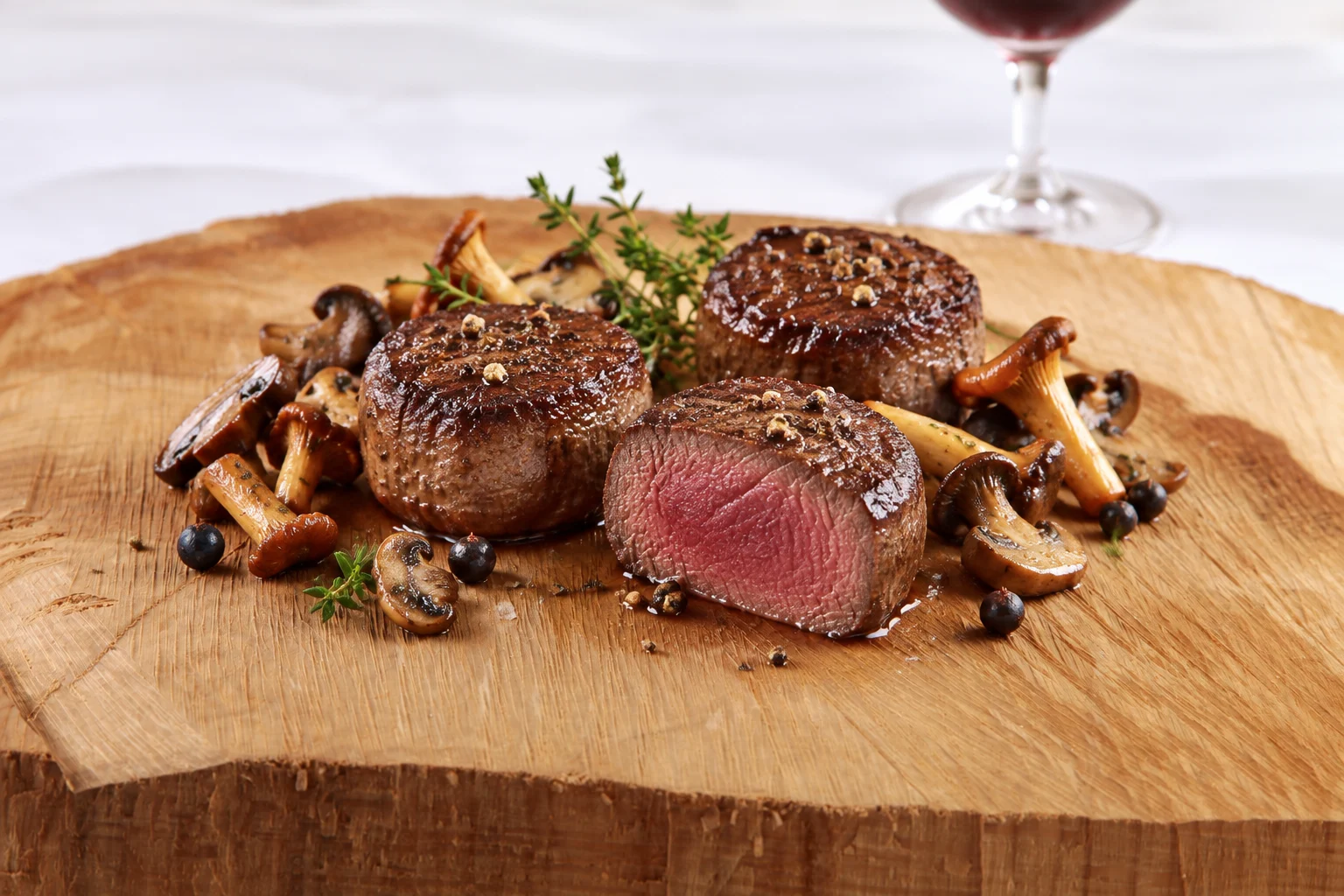
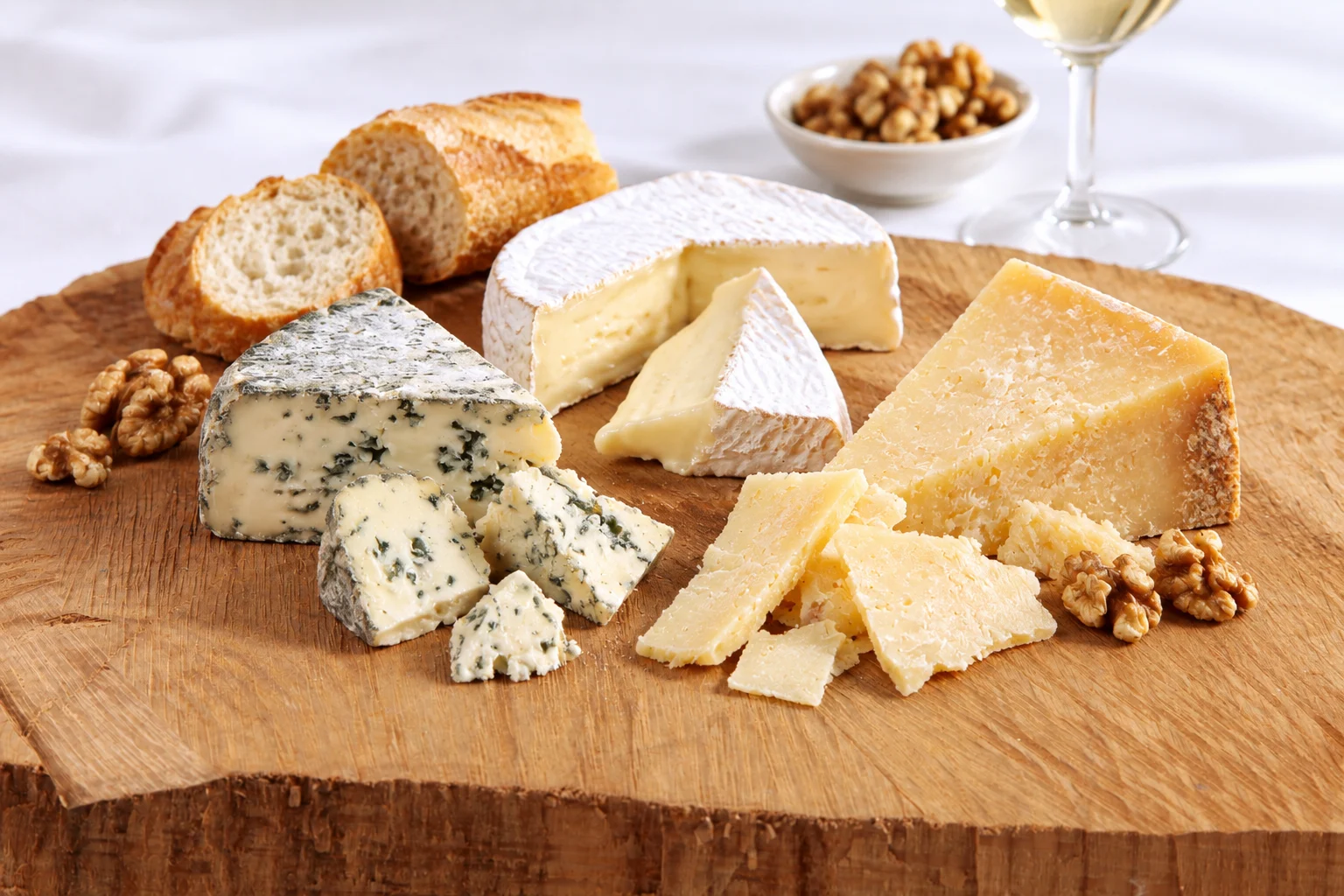
Do you already have a dish in mind?
Let Sommy find wines to pair with your meal.
Discover Wine Trivia
Sign in to unlock fascinating facts about this wine and expand your knowledge.
Sign In