

2024 Château Phélan Ségur Saint-Estèphe
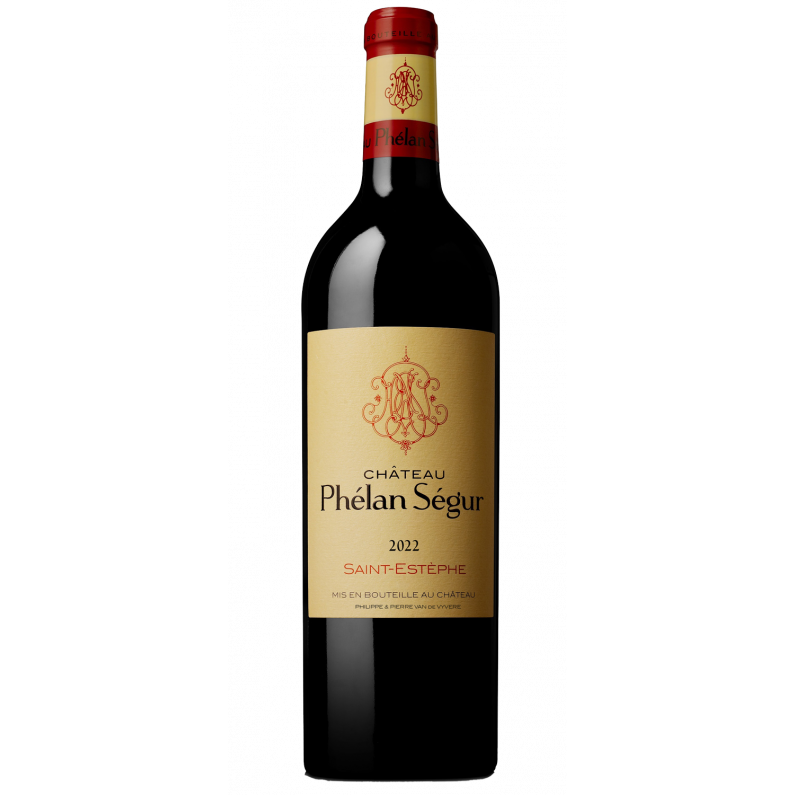
De specificaties zoals vermeld bij de wijn (o.a. wijnjaar) en in de titel zijn leidend en er kunnen geen rechten worden ontleend aan de afbeelding die wordt getoond. Lees meer in onze Frequenty asked questions
| Type of Wine | |
|---|---|
| Country | France |
| Region | |
| Appellation | Saint-Estèphe |
| Winery | |
| Vintage | 2024 |
| Grape | , , |
| Content (Alc) | Standard (0.75 ltr) (14.5%) |
| Drink window | 2029 - 2056 |
| Available as of | Apr 30, 2027 |
Out of Stock
Currently unavailable
Backorder Information
It is possible to order this article in backorder. This is possible with items that we can generally have in stock again in 3-5 working days. You can simply order it, but it is important to mention that we only send the order when it is complete.
Notify me when this product is back in stock
Notities
Foto
Proefnotities
Heb je deze wijn geproefd?
Bewaar je beoordeling en aantekeningen.
Bewaar je beoordeling en aantekeningen.
Heb je deze wijn geproefd?
Log in om je proefnotitie op te slaan.
Log in om je proefnotitie op te slaan.
InloggenHoe wil je je wijn beoordelen?
Max 5 MB. JPG, PNG, WebP.
Hoe smaakt het?
Klik op wat het beste past. Alles is optioneel.
Welke geuren en smaken herken je?
Klik op alles wat je herkent. Dit is optioneel.
Uiterlijk
Neus
Aroma's (neus)
Smaak
Smaken (mond)
Afdronk
Wijngegevens
Automatisch ingevuld vanuit productgegevens.
Persoonlijke gegevens
Château Phélan Ségur is located in Saint-Estèphe. The vineyard covers approximately 70 hectares of beautiful clay-gravel soil on the hills and plateaus of Saint-Estèphe. The parcels consist of four large sections and border the vineyards of Châteaux Montrose and Calon Ségur, among others. The planting density is high. The grape varietal blend is traditional: the talented duo of Médoc grapes (58% Cabernet Sauvignon and 39% Merlot) is complemented by a touch of Cabernet Franc and Petit Verdot (1.5% of each).
Cabernet Sauvignon, the king of the Médoc grape varieties, brings incomparable power and structure: it is the backbone of the Grand Vin. Merlot exudes an attractive roundness and unparalleled suppleness. To preserve diversity and introduce a touch of spice, Petit Verdot arrived at the winery in 2015. It excels in heavier soils where clay predominates. A vigneron variety, it is impetuous and demands perfect control. Cabernet Franc, which has always held its place at the Château, is a precious asset in the blend, with its finesse and floral notes.
Soil, climate and cultivation methods of the winery
The vineyards of Château Phélan Ségur are planted on a mosaic of gravel, clay, and limestone soils. These soils offer excellent drainage and heat retention, which promotes grape ripeness. The planting density is 10,000 vines per hectare, which naturally limits yield and increases grape concentration. The temperate Atlantic climate and proximity to the Gironde estuary provide coolness and stability during the growing season.
Grape varieties and harvest for Château Phélan Ségur 2024
The 2024 blend consists of 58% Cabernet Sauvignon, 39% Merlot, 1.5% Petit Verdot, and 1.5% Cabernet Franc. The grapes were hand-harvested between September 30 and October 14, 2024. The average yield was 30 hl/ha, indicating strict selection and optimal ripeness. Plot selection and spontaneous fermentation with selected indigenous yeasts were used.
Vinification and maturation of Château Phélan Ségur 2024
After careful sorting, the grapes were vinified in temperature-controlled tanks. The wine underwent fermentation with indigenous yeasts from each plot. The aging took place in French oak, 55% of which was new, for several months. This approach enhances complexity and aging potential without overshadowing the fruit.
Color, aroma and taste of Château Phélan Ségur 2024
The 2024 displays a deep ruby red color with a purple hue. The nose is refined and expressive, with notes of black fruit, violets, graphite, and subtle toasted wood. On the palate, the attack is smooth and elegant, followed by a beautiful structure with refined tannins. The wine combines power with a certain charm and concludes with a long, harmonious finish.
Would you like to order wines from Château Phélan Ségur online?
The Château Phélan Ségur 2024 is stored in our professionally conditioned Wine Warehouse. If you choose to collect your order, you'll often receive a generous discount. You'll see this discount immediately when you select "Collect" at checkout. We are located in Dordrecht, just off the A16 motorway with ample parking. Click here for our address.
If available, you'll find the official fact sheet for this wine in the attachment. Full reviews by international wine journalists like Parker, Suckling, and Vinous can be found on the website via the links next to the image. This is a free service for our customers.
Need advice on finding the perfect wine to pair with your dish? Click here for our exclusive Sommelier. Free for Grand Cru customers.
Wine and food pairings with Château Phélan Ségur 2024
- Beef cheek braised in red wine with root vegetables – deep flavours complement the wine’s structure perfectly.
- Grilled lamb chops with rosemary – the spicy notes enhance the Cabernet components.
- Mushroom lasagna with béchamel sauce – a creamy, earthy pairing for the elegance of the wine.
- Veal tenderloin with morels and tarragon – refined meat with umami that emphasises the complexity of the wine.
- Date and walnut terrine with beetroot – a surprising combination that brings together sweet and earthy elements.
- Ravioli filled with roasted pumpkin and sage butter – soft, sweet notes in harmony with the structure and fruit of the wine.
| Available as of | Apr 30, 2027 |
|---|---|
| Packing information | Box |
| Block Bundle Options | No |
| Type of Wine | Red |
| Country | France |
| Region | Bordeaux |
| Appellation | Saint-Estèphe |
| Winery | Chateau Phélan Ségur |
| Grape | Cabernet Franc, Cabernet Sauvignon, Merlot |
| Biological certified | No |
| Natural wine | No |
| Vegan | No |
| Vintage | 2024 |
| Drinking as of | 2029 |
| Drinking till | 2056 |
| Alcohol % | 14.5 |
| Alcohol free/low | No |
| Content | Standard (0.75 ltr) |
| Oak aging | Yes |
| Sparkling | No |
| Dessert wine | No |
| Closure | Cork |
| James Suckling rating | 94 |
| Vinous rating | 93 |
| Tasting Profiles | Bloemig, Complex, Donker fruit, Houtgerijpt, Krachtig, Tannines |
| Drink moments | Iets te vieren, Indruk maken, Lekker luxe |
| Sommy Pairing Beschrijving | De Château Phélan Ségur 2024 toont diep zwart fruit, viooltjes en een subtiele grafietachtige rokerigheid met verfijnde tannines en een elegante houttoon die zorgen voor kracht en lengte in de afdronk. Dankzij die stevige structuur en het rijpe fruit vormt hij een perfecte tegenhanger voor rundvlees, lamsgerechten, rijke kazen en stoofschotels omdat de tannines vet en umami verzachten terwijl de fruitigheid de smaken complimenteert. Extra geslaagd zijn langzame garingen zoals sudderen of stoven, gegrild of geroosterd vlees met een redutie van rode wijn en kruiden zoals rozemarijn, en paddenstoelen- of romige sauzen die de complexiteit van de wijn naar voren brengen. |
James Suckling
Score
93-94
Château Phélan Ségur St.-Estèphe 2024
Friday, Apr 18, 2025
Color
Red
Country
France
Region
Bordeaux
Vintage
2024
A structured and tannic wine that frames the fruit nicely, with a medium body and a juicy finish. Some lemon character at the end.
Lorem ipsum dolor sit amet, consectetur adipiscing elit. Sed do eiusmod tempor incididunt ut labore et dolore magna aliqua...
Vinous
(91-93)
Drinking Window
2028 - 2045
From: Event Horizon: Bordeaux 2024 Primeur (May 2025)
The 2024 Phélan Ségur was picked between September 30 and October 14 at 30 hl/ha, and will be matured in 55% new oak barrels. There is 12.9% alcohol (analytical). Cabernet Sauvignon clearly exerts the most influence over its understated bouquet with blackberry, cedar and light graphite scents. The nose displays fine delineation, though obviously not the intensity of, say, the 2022 vintage. The palate is medium-bodied and linear in style with lighter tannins than in recent vintages and an attractive sapid note that runs from start to finish. The strict, black-olive-tinged finale seems almost Pauillac-like. There is an appealing classicism to the 2024, and it should drink well for a couple of decades.
- By Neal Martin on April 2025
“The summer was pretty dry, but cool,” Véronique Dausse tells me on the first day of my Bordeaux marathon. “There was 150 mm more rain during 2024 in the northern weather station than the one to the south. Temperatures were a little bit higher in the north. There was 50% more rainfall in the year: around 1,500 mm of rain at Phélan Ségur. Saint-Estèphe has more clay, so it is better at absorbing the water. In winter, there was 1033 mm of rain between October to May compared to an average of 680 mm. So budding was early (March 28) but it took some time, and growth was retarded at the beginning. Flowering was earlier (June 5) but strung out over 10 to 12 days, with heavy rain mixed with hail that affected the Merlot in our central block. We had a nice summer without much rain in August. At the end of August, there was a bit of rain and this delayed véraison. So, we deleafed 70% of the vines in two steps, first on the east side of the vine, then on both sides of the vines, as we knew we had to wait for ripeness.”
Dausse continues, “We started picking the Merlot on September 30 and pushed it to the max, even though we might risk botrytis. We started the Cabernet Sauvignon a week later. In the end, we picked over nine days, the shortest ever, finishing on October 14. We did have a bit of botrytis, but this could be sorted out using optical sorting. For the first time, we used subcontracted pickers, which gave us more flexibility in terms of timing. The vinification was gentler with less extraction, stopping at 1010 density, plus a shorter maceration, as we did not want too much tannin. The average maceration was about 25 days instead of 28 to 30 days. It was the first year that we used 100% of our own yeast. We have 15 different indigenous yeasts spread over the vineyard. We used barrels that tend to give lighter wood tannins, and the élevage may be a little shorter.”
(92-94)
Drinking Window
2028 - 2039
From: 2024 Bordeaux En Primeur: The Razor’s Edge (Apr 2025)
The 2024 Phélan Ségur is an absolute delight. Dark and ample, the 2024 offers up a compelling mix of black cherry, leather, game, incense, licorice, gravel and pipe tobacco. All the elements are so well balanced. The blend is 68% Cabernet Sauvignon, 30% Merlot and 2% Petit Verdot, in other words, a very high percentage of Cabernet. That comes through nicely in the wine's aromatic finish. Phélan Ségur is shaping up to be one of the highlights of the year. Tasted four times.
- By Antonio Galloni on April 2025
Lorem ipsum dolor sit amet, consectetur adipiscing elit. Sed do eiusmod tempor incididunt ut labore et dolore magna aliqua...
Exclusive Content
Sign in to unlock professional wine reviews from world-renowned critics
Winery Château Phélan Ségur is located in Saint-Estèphe. The vineyard covers some 70 hectares with beautiful clay-gravel soil on the hills and plateaus of Saint-Estèphe. The plots consist of 4 large sections and are adjacent to the vineyards of Châteaux Montrose and Calon Ségur, among others. The plant density is high. The blend of grape varieties is traditional: the talented duo of the Médoc (58% Cabernet Sauvignon and 39% Merlot) is complemented by a touch of Cabernet Franc and Petit Verdot (1.5% of each).
Cabernet Sauvignon, the king of the Médoc grape varieties, brings incomparable strength and structure: it is the backbone of the Grand Vin. Merlot exudes an attractive roundness and unparalleled suppleness. To preserve diversity and bring a touch of spice, Petit Verdot entered the winery in 2015. It excels on heavier soils where clay dominates. It is a vigneron variety, boisterous and requires perfect control. Cabernet Franc, which has always had its place at the Château, is a precious asset in the blend, with its finesse and floral notes.
The Médoc is characterized by its mild, temperate maritime climate and has ideal conditions for a seasonal cycle that is clear enough to accompany the annual growth of the vine and mild enough to dampen climate extremes. The vines of Château Phélan Ségur are close to the estuary: this protects them from harsh winters and sometimes very hot summers. The soil of Saint-Estèphe is very complex and Château Phélan Ségur is a perfect illustration of this. It consists of a thick layer of gravel that was deposited by the river several hundred thousand years ago. The pebbles and especially the gravel covered with clay sand (clay gravel) form the sloping landscape of a large part of Saint-Estèphe.
History
Winery Phélan Ségur, with its Irish roots, has been working for 4 generations for more than 2 centuries with passion and respect for the terroir to make the most beautiful wines. At the end of the 18th century, the young Irish wine merchant Bernard O'Phelan (1770-1841) left his native Tipperary and decided to settle in Bordeaux. The city of Bordeaux was then an important trade hub with the British Isles. Close relationships were built up between the families that bought and sold regional wines. These ties were such that they led to alliances and even marriages, in particular that of Bernard Phélan with one of the daughters of Daniel Guestier, a well-known merchant in the Bordeaux wine market. Aided by his father-in-law's experience, he also had a vision to start producing his own wines. In 1805 he bought Clos de Garramey, located in Saint-Estèphe, and then in 1810 the estate Ségur de Cabanac.
In the middle of a park whose fields extend as far as Saint-Estèphe, the Palladian-style castle dominates the top of a hill overlooking the estuary. When designing the château, the owners, the Phélan family, did not hesitate to break with the architectural habits of the time, to build a castle centered on wine. Rather than designing it as a prestigious mansion, isolated from the manufacturing activity, they preferred to include the barrel room and cellar in the heart of the castle, in an undeniably beautiful ensemble. At the time, they were one of the first to furnish their barrel chamber in the “Médoc style”.
After the death of Bernard O'Phelan in 1841, the estate, jointly named Château Ségur de Garramey, was passed on to his son Frank (1820-1883). The latter, a médocain at heart, even though he was a true Irishman, would dedicate his life to further enhancing the fame and quality of the winery's wines. In addition, he became mayor of Saint-Estèphe and as such remained in that post for 30 years. He made progress within the Irish community in Bordeaux, which included the Johnston, Barton, Clarke and Lynch families. At the beginning of the 20th century, Château Ségur de Garramey was given its current name Château Phélan Ségur. A name synonymous with classical and noble values that subtly combines a sense of innovation and heritage.
The Gardinier family has, after more than 30 years running the winery, decided to hand over the baton to Philippe Van de Vyvere. For Philippe, who is a great wine lover, this acquisition is the fulfillment of one of his most cherished dreams.
De Château Phélan Ségur 2024 toont diep zwart fruit, viooltjes en een subtiele grafietachtige rokerigheid met verfijnde tannines en een elegante houttoon die zorgen voor kracht en lengte in de afdronk. Dankzij die stevige structuur en het rijpe fruit vormt hij een perfecte tegenhanger voor rundvlees, lamsgerechten, rijke kazen en stoofschotels omdat de tannines vet en umami verzachten terwijl de fruitigheid de smaken complimenteert. Extra geslaagd zijn langzame garingen zoals sudderen of stoven, gegrild of geroosterd vlees met een redutie van rode wijn en kruiden zoals rozemarijn, en paddenstoelen- of romige sauzen die de complexiteit van de wijn naar voren brengen.
Click on a category to discover delicious recipes that pair perfectly with this wine.
Do you already have a dish in mind?
Let our AI sommelier help you find the ideal wine for your dish
Start the Sommy Wine Advice Tool
Related Products

Low Stock
Only 1 left