Country
France
Region
Bordeaux
Vintage
2019
Score
95-96
Dark-berry and blue-fruit character to the firm, chewy tannins that are polished and solid. Medium to full body. Wood and walnut undertones now. Impressive.

We could not find any products matching the term
We are happy to help you, please don't hesitate to contact us.
Go to customer serviceCheckout using your account
Checkout as a new customer
Creating an account has many benefits:
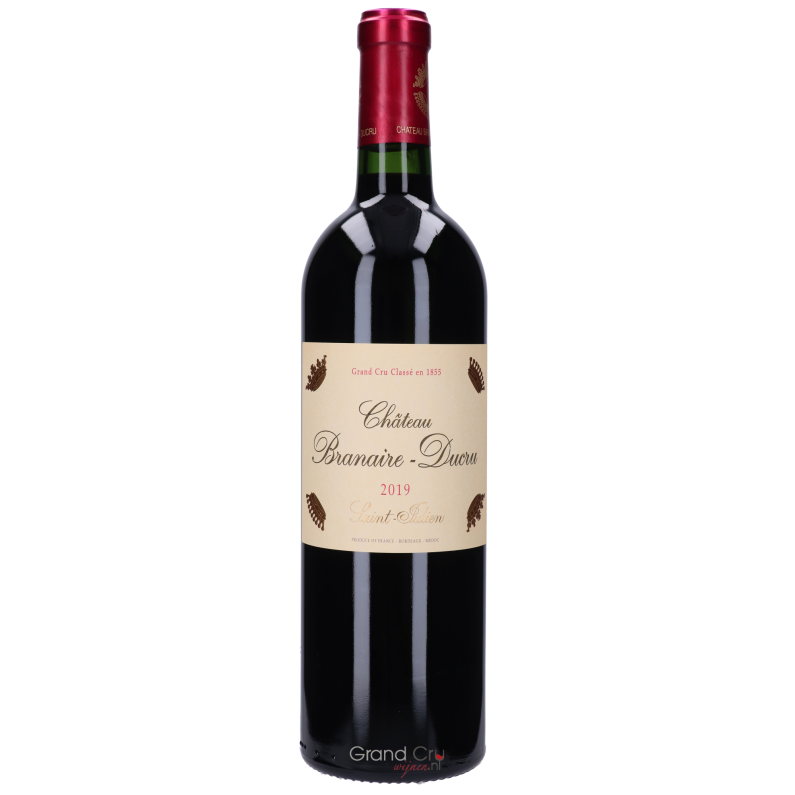
De specificaties zoals vermeld bij de wijn (o.a. wijnjaar) en in de titel zijn leidend en er kunnen geen rechten worden ontleend aan de afbeelding die wordt getoond. Lees meer in onze Frequenty asked questions
How full and heavy the wine feels in your mouth, like the difference between skimmed milk and cream. More alcohol, sugar and oak ageing make a wine fuller.
The drying, grippy feel on your gums and tongue, as with strong tea. It comes from the skins and seeds of black grapes and from oak, and softens with age.
How much sugar you taste, from dry to sweet. Fruity is not the same as sweet: a dry wine can taste of ripe fruit.
How fresh and juicy the wine is: acidity makes your mouth water. High acidity tastes lively and refreshing, low acidity soft and round.
What we taste What you taste Click a taste for what it means
The bars follow how sommeliers taste (WSET): body, tannin, sweetness and acidity, each from low to high.
Body: full-bodied. Like most red wines from ; 13.5% alcohol.
Tannin: firm. Aged in oak.
Sweetness: dry. Red wine from is almost always dry.
Acidity: medium. The temperate climate of Médoc.
Nothing noted for this wine yet. What do you smell, and how long does the taste linger?
Have you tasted this wine?
Save your rating and notes.
Save your rating and notes.
Have you tasted this wine?
Log in to save your tasting note.
Log in to save your tasting note.
Log inThis Chateau Branaire-Ducru is a blend of 65% Cabernet Sauvignon , 32% Merlot and 3% Cabernet Franc grapes. The harvest took place at Chateau Branaire from Beychebelle (Saint-Julien) between September 18 and October 8. The wine was aged in about 60% new oak. The wine comes into its own when it is first stored for a few years.
The Saint-Julien is one of the most famous red wines of the growing region of Bordeaux. The area of controlled Appellation contains wines from the commune of Saint-Julien-Beychevelle in the Medoc and covers an area of 3.5 to 4 km. It is located about 10 km north of Margaux on the Gironde, bordering directly on Pauillac to the north.
This commendable Chateau Branaire-Ducru has a beautiful garnet-purple color, a bit earthy on the nose, aromas of red cherry, berries, spices, nuts, cocoa and oak. Medium-bodied, firm with fruit, light spices, white pepper and a hint of sage. Nice tannins and commendable, lively finish.
(95-96) Suckling
95 Parker
Rating
95
Release Price
NA
Drink Date
2029 - 2065
Reviewed by
William Kelley
Issue Date
7th Apr 2022
Source
April 2022 Week 1, The Wine Advocate
The 2019 Branaire-Ducru unwinds in the glass with aromas of raspberries, blackcurrants, sweet soil tones and hints of cigar wrapper, rose petals and cedar. Medium to full-bodied, deep and layered, it's youthfully tightly wound, with terrific concentration, tangy acids, powdery tannins and a long, saline finish. While this is a little reserved out of the gates, its energy and classical proportions will richly reward bottle age.
Branaire-Ducru occupies 60 hectares of deep gravel soils, in 80 or so different parcels, on the plateau of Beychevelle. Cabernet Sauvignon dominates, but plantings of Petit Verdot on good soils are also a particularity of Branaire. When the Maroteaux family purchased the estate in 1988, a new winery followed a few years later; and now, another is under construction, which will almost double the number of fermentation vats, permitting more precise parcel-by-parcel vinification. Winemaking is very classical, and maturation is in around 60% new oak, with three or four traditional rackings. There are no smoke or mirrors at this address, just extremely good, age-worthy Saint-Julien that's always elegant and impeccably balanced. The 2019 vintage has turned out especially well and is worth a special effort to seek out.
Lorem ipsum dolor sit amet, consectetur adipiscing elit. Sed do eiusmod tempor incididunt ut labore et dolore magna aliqua...
Lorem ipsum dolor sit amet, consectetur adipiscing elit. Sed do eiusmod tempor incididunt ut labore et dolore magna aliqua...
(94-96)
From: 2019 Bordeaux: A Long, Strange Trip (Jun, 2020)
The 2019 Branaire-Ducru dazzles from start to finish. All the Brainaire signatures - rose petal, lavender, red and purplish fruit - are present, but they are kicked up a few notches, with all of the radiance of the year on full display. Soft, plush and so alluring, the 2019 Branaire is one sexy wine. Impressive. Tasted two times.
- By Antonio Galloni on
Lorem ipsum dolor sit amet, consectetur adipiscing elit. Sed do eiusmod tempor incididunt ut labore et dolore magna aliqua...
Sign in to unlock professional wine reviews from world-renowned critics
After acknowledging the unrealized potential of this sleeping beauty in viticulture, Patrick Maroteaux and his family bought Château Branaire-Ducru in 1988. They decided to write a new chapter in the history of this fourth grand cru classé from 1855 and embarked on a large-scale renovation and work involving all the components that contribute to the production of great wine: the vines, the barrel house and the cellars, as well as the Château itself, which is the most visible representation of an estate.
Patrick Maroteaux also became an ambassador of Bordeaux and Branaire-Ducru, where he was president of the Union des Grands Crus de Bordeaux from 2000 to 2008 and the Saint-Julien appellation from 2004 to 2017. François-Xavier Maroteaux took over management of the domain in 2017.
Château Branaire-Ducru is located in the heart of the Medoc, between Margaux and Pauillac in the Saint-Julien appellation. It is surrounded by the other great Classified Growths that populate this excellent terroir. The vines grow in a mixture of gravel and pebbles, deposited there by the Garonne River in the Quaternary. From the top of their hills, called "hills", they overlook the vast estuary of the Gironde, locally referred to as "the river".
The vineyard is made up of about fifteen different micro-terroirs and covers 60 hectares (nearly 150 hectares) that lie east to west across the southern part of the appellation area. The average age of the vines is 35 years. They grow in quaternary silicon and gravelly alluvium, making this terroir one of the warmest in the region. This allows our Cabernet Sauvignon grapes to reach perfect phenolic maturity here, while the Merlot thrives on clay beds.
The Cabernet Sauvignon accounts for 65%, the largest part of our vines. It really is a star variety that has multiple layers, structure and great presence on the palate while remaining fresh and fruity with an intense array of aromas. 28% of our vines is Merlot, the good companion that makes our wines round and smooth. The 3% Cabernet Franc proportion builds on the floral notes of the wine. And last but not least, 4% Petit Verdot, the signature Medoc variety, adds spicy notes to our best blends.
The decisions made here have always been motivated by the need to protect the exceptional terroir on which the estate is located. We are aware of the impact of our production on the environment, which is why we are committed to the Bordeaux Wine Environmental Management System, based on the international ISO 14001 standard. The estate has been certified since 2020. The property has also been classified as High Environmental Value (HVE) level 3 since 2017. Château Branaire-Ducru is constantly working on improvement and acts as a responsible player in the protection of the environment, applying a CSR approach, in which the social and environmental dimensions are integrated into its economic strategy. It obtained the CSR label "Bordeaux Cultivons Demain" (level 1) in 2022.
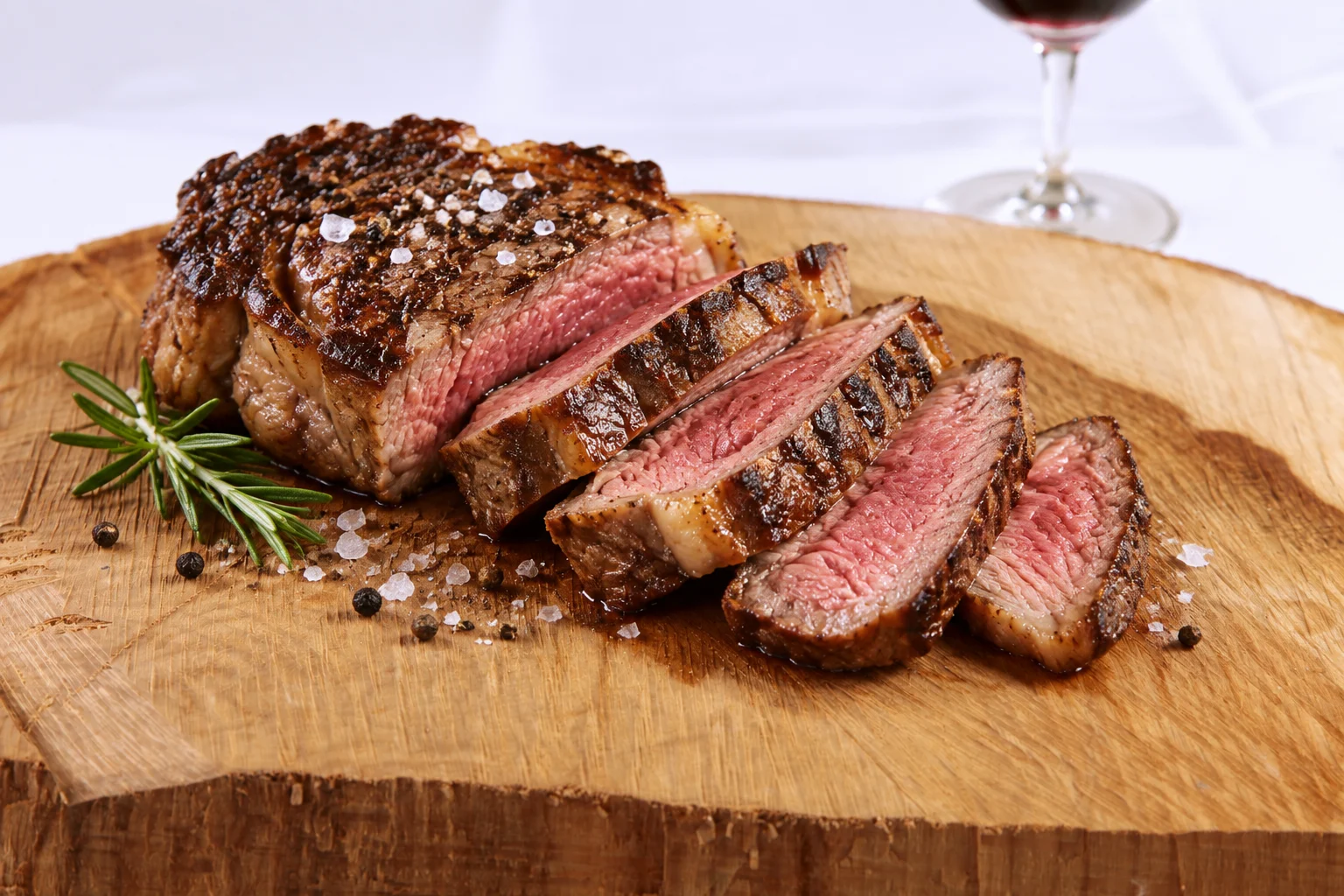
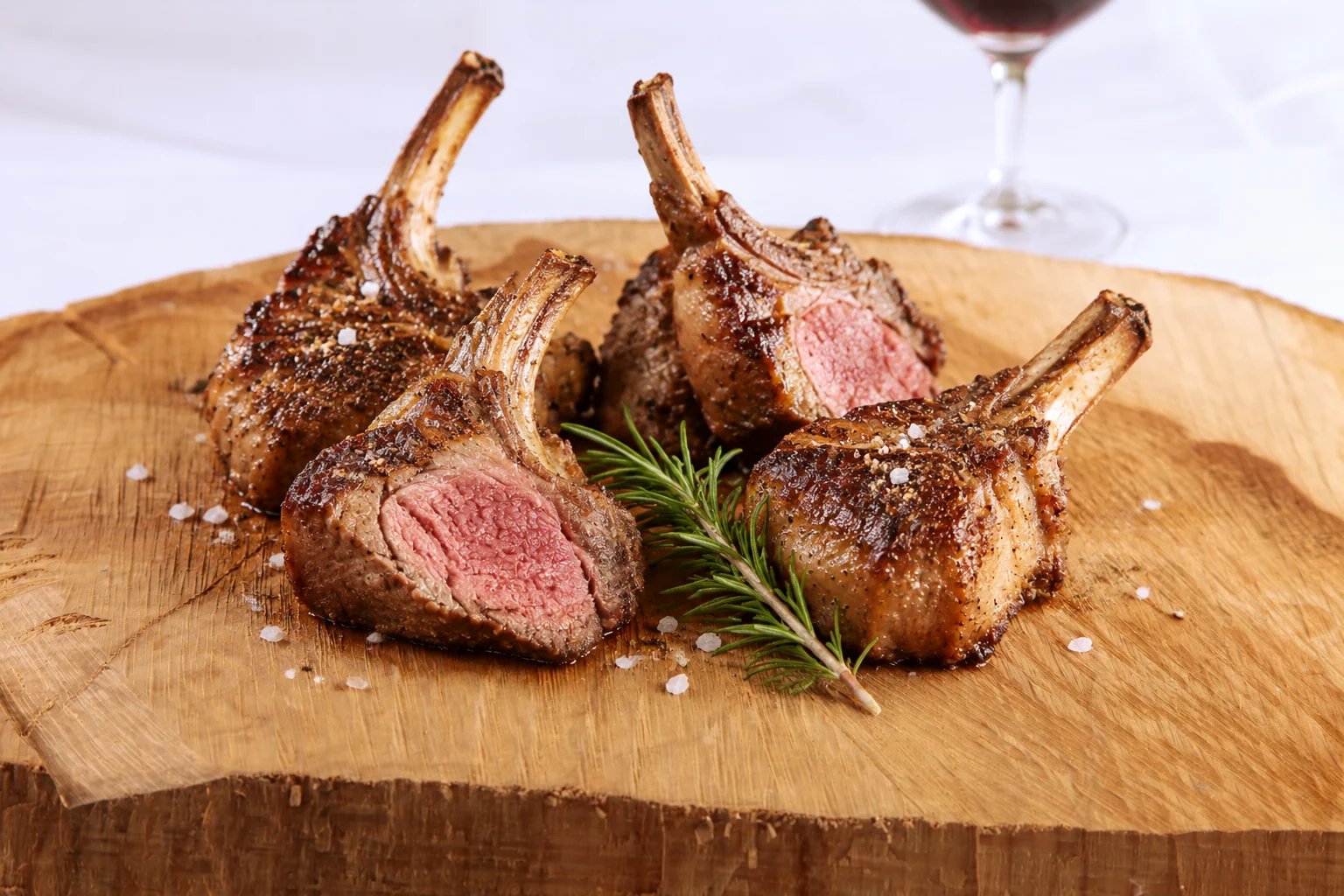
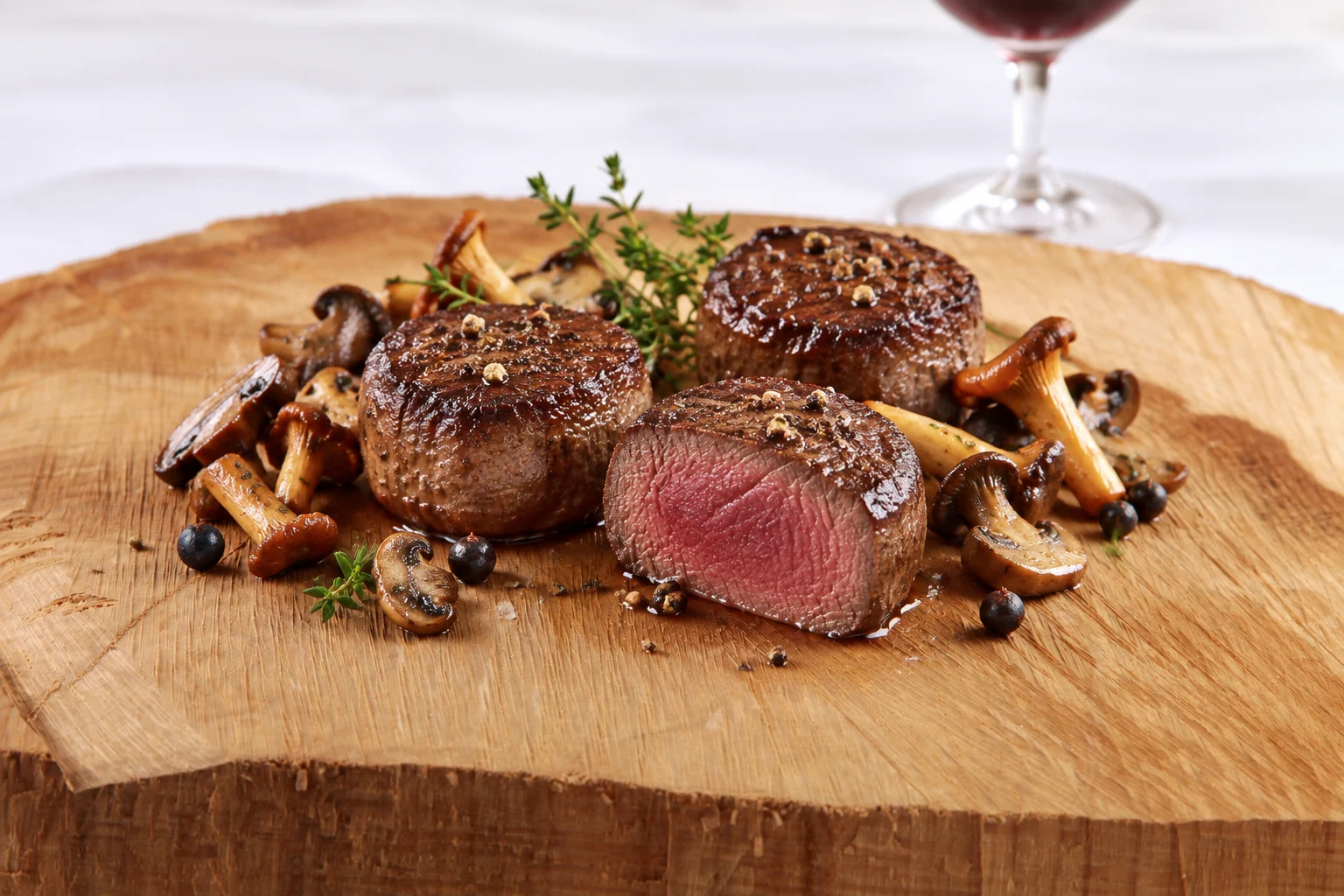
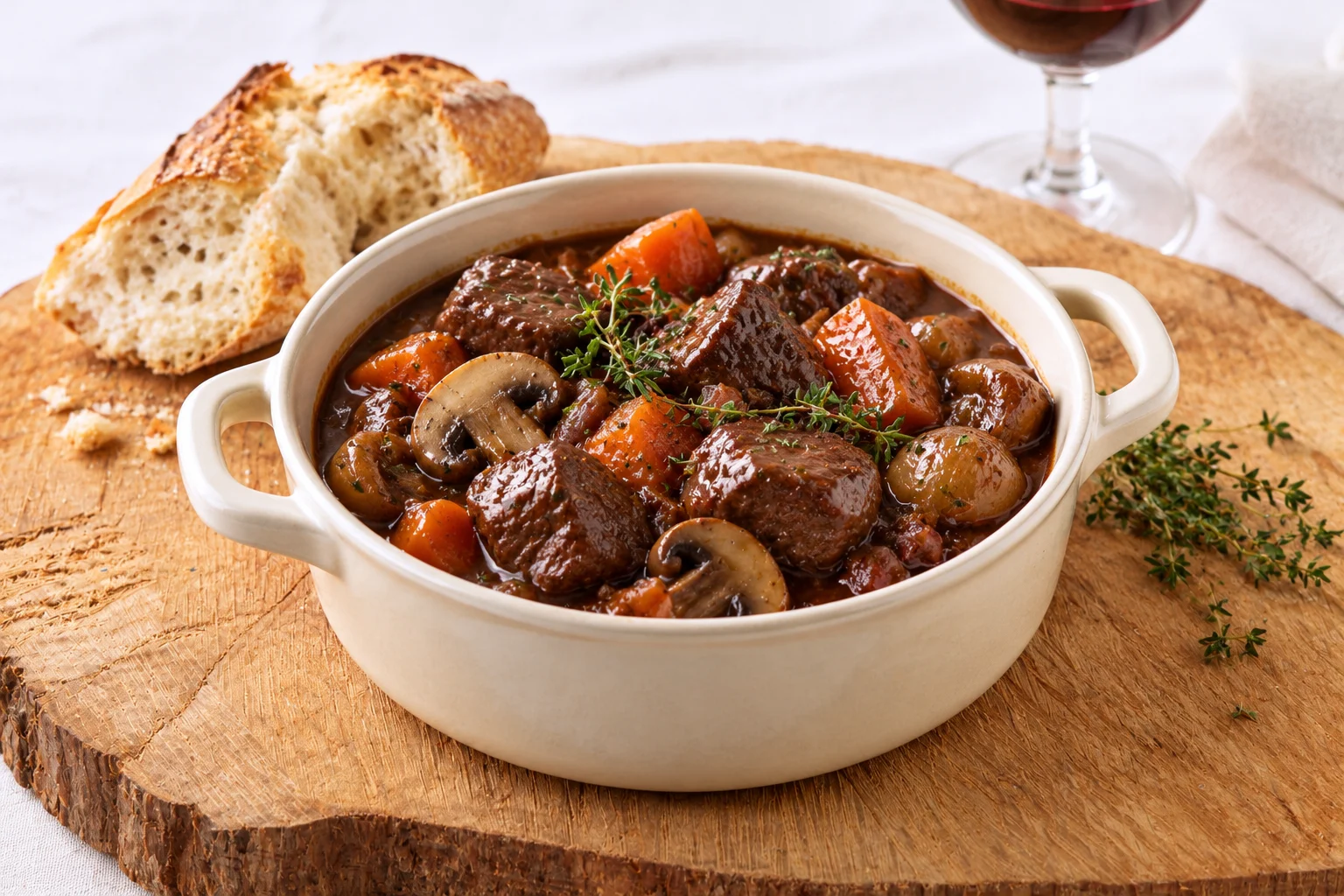
Deze 2019 Château Branaire-Ducru toont geconcentreerd donker fruit zoals zwarte bes en framboos, subtiele rozen- en cederaroma's, saline mineraliteit, duidelijke maar poederige tannines en frisse zuurgraad, wat zorgt voor structuur en leeftijdspotentieel. Dankzij die tannines en levendige zuren snijdt de wijn mooi door het vet van rund en lam en vult hij de kruidigheid van wild en gestoofde gerechten aan, waardoor smaken in het gerecht en het glas elkaar versterken. Kies voor gegrild of geroosterd vlees met een krokante kruidkorst, langzaam gegaarde stoofschotels in rode wijn of wild met jeneverbessen en rozemarijn om de aromatische complexiteit en de lange, ziltige afdronk van deze Saint-Julien optimaal tot hun recht te laten komen.
Choose a category to discover dishes that pair well with this wine.
Let Sommy find wines to pair with your meal.
Sign in to unlock fascinating facts about this wine and expand your knowledge.
Sign In