

2023 Weingut Von Winning Riesling Ungeheuer Forst Grosses Gewächs

How does this wine taste?
How full and heavy the wine feels in your mouth, like the difference between skimmed milk and cream. More alcohol, sugar and oak ageing make a wine fuller.
How much sugar you taste, from dry to sweet. Fruity is not the same as sweet: a dry wine can taste of ripe fruit.
How fresh and juicy the wine is: acidity makes your mouth water. High acidity tastes lively and refreshing, low acidity soft and round.
What we taste What you taste Click a taste for what it means
The bars follow how sommeliers taste (WSET): body, tannin, sweetness and acidity, each from low to high.
Body: medium-bodied. Fuller than most white wines from ; 12.5% alcohol.
Sweetness: dry. on the label.
Acidity: fairly high. from the warm climate of .
Aromas: stone fruit and orchard fruit, typical of
Made: as , dry, from a top vineyard of the VDP
Nothing noted for this wine yet. What do you smell, and how long does the taste linger?
Have you tasted this wine?
Save your rating and notes.
Save your rating and notes.
Have you tasted this wine?
Log in to save your tasting note.
Log in to save your tasting note.
Log inUngeheuer is a legendary vineyard that belongs to the village of Forst. For centuries, this plot has produced gigantic wines and Ungeheuer is more than rightly a Grand Cru (Grosses Gewächts) vineyard. At von Winning they have an important share in it. At the moment, this domain has both an entry-level Ungeheuer Kabinett trocken (under the name of Dr. Deinhard), as well as this von Winning Ungeheuer Riesling. Since 2012, the young vines have been used for the blend of the entry-level Riesling (without mention of vineyard), and the best selection goes to the Ungeheuer Grosses Gewächs, fully in accordance with the VDP regulations.
In the glass the wine has a pale straw yellow color. In the nose the wine is wonderfully fragrant, beautiful white fruit, apple, a hint of grapefruit, flowers, complex and seductive. In the mouth the wine has a beautiful elegance and finesse, broad and powerful. Beautiful acids and fine bitters, with citrus and grapefruit. Complex and powerful, dry white wine. This insane Riesling is only made in the top years and in only very small quantities.
This rare von Winning Ungeheuer Forst is a gastronomic high-flyer. See some great wine and food pairing suggestions:
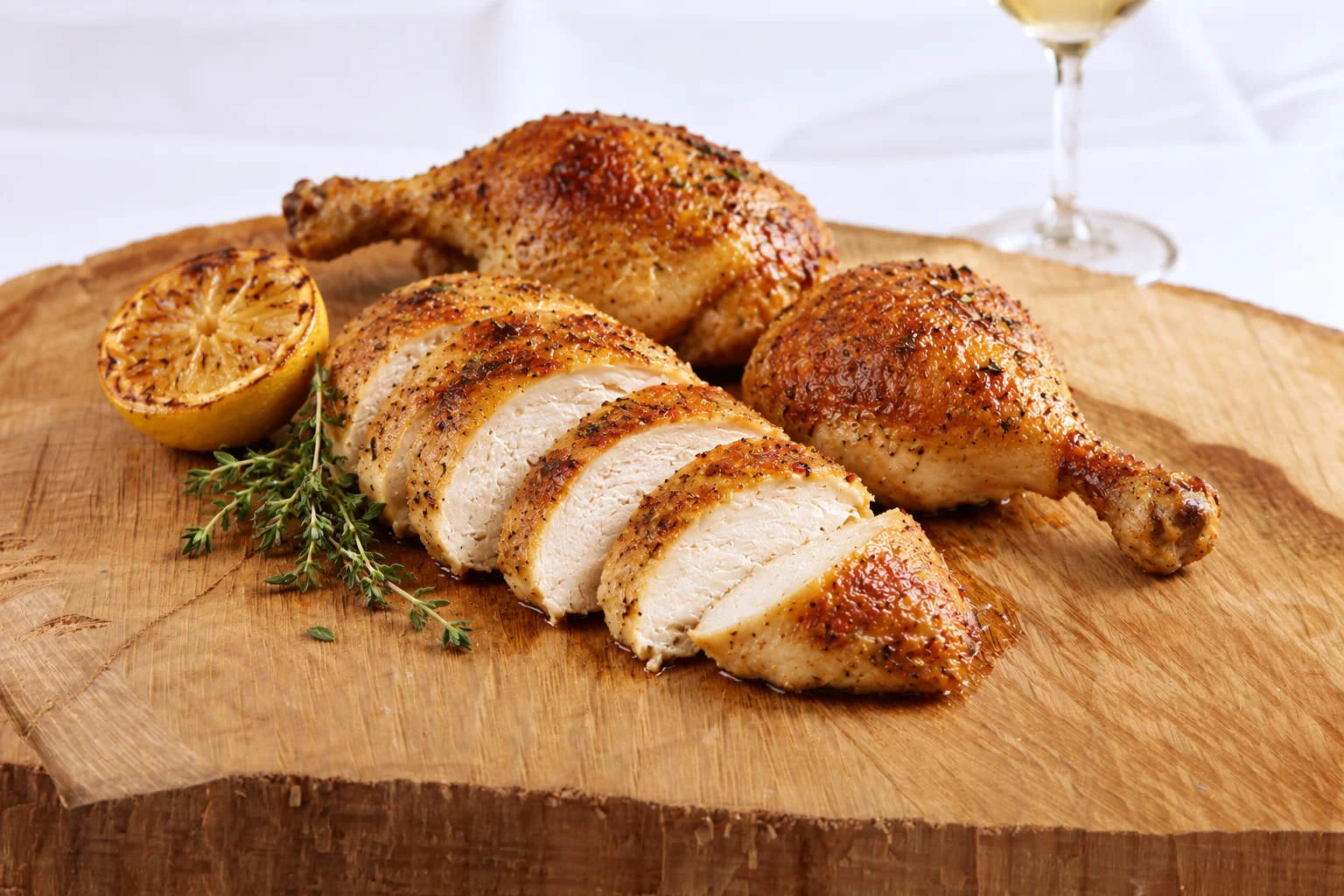
Chicken fillet with lemon and dill
The fresh acids and mineral character of the Riesling cut beautifully through the juicy chicken and enhance the fresh accent of lemon and dill.Salad with smoked salmon, cucumber and crème fraîche
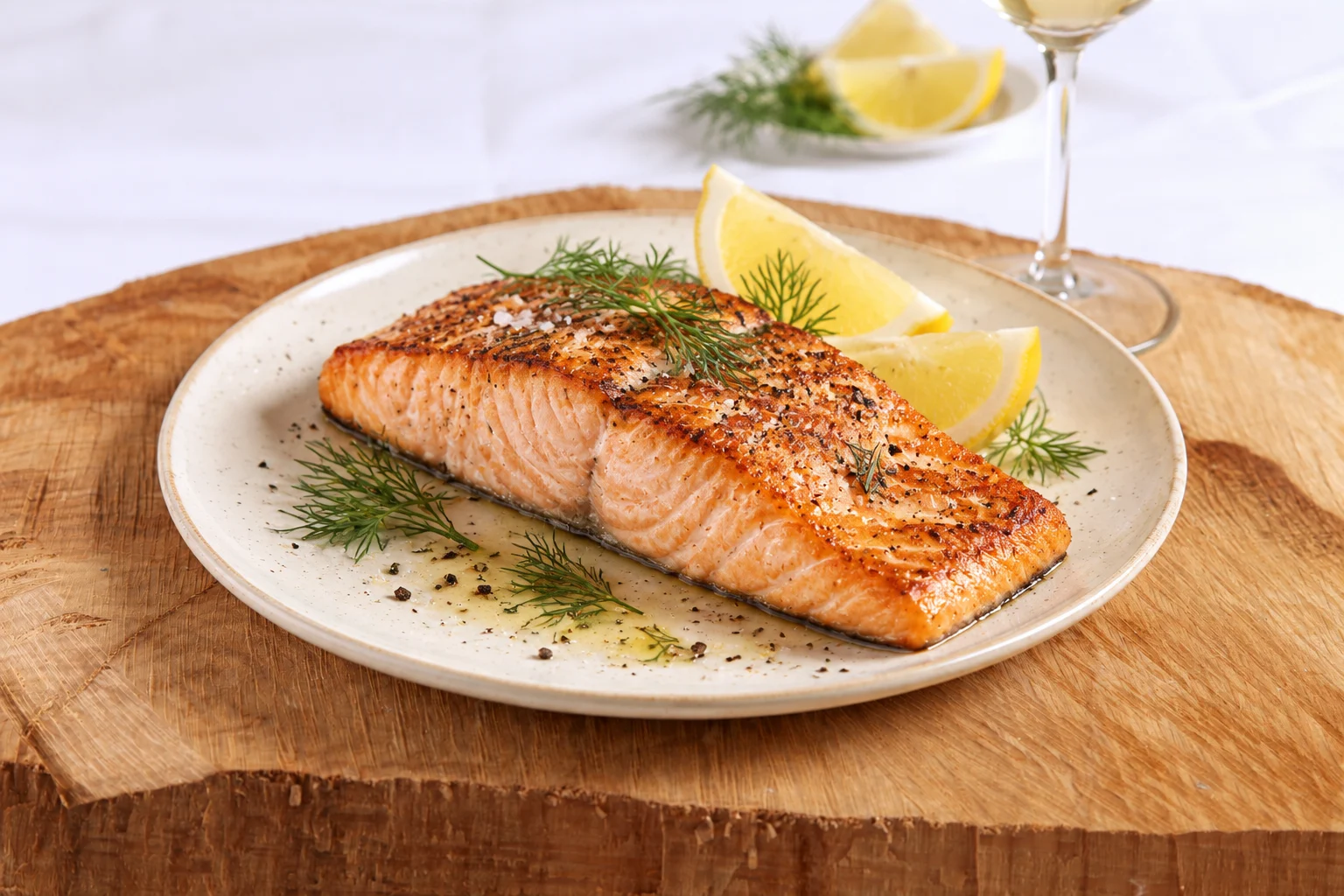
The salty and creamy elements of this dish complement the vibrant freshness and refined structure of the wine perfectly.Dutch mussels in white wine with celery and onion
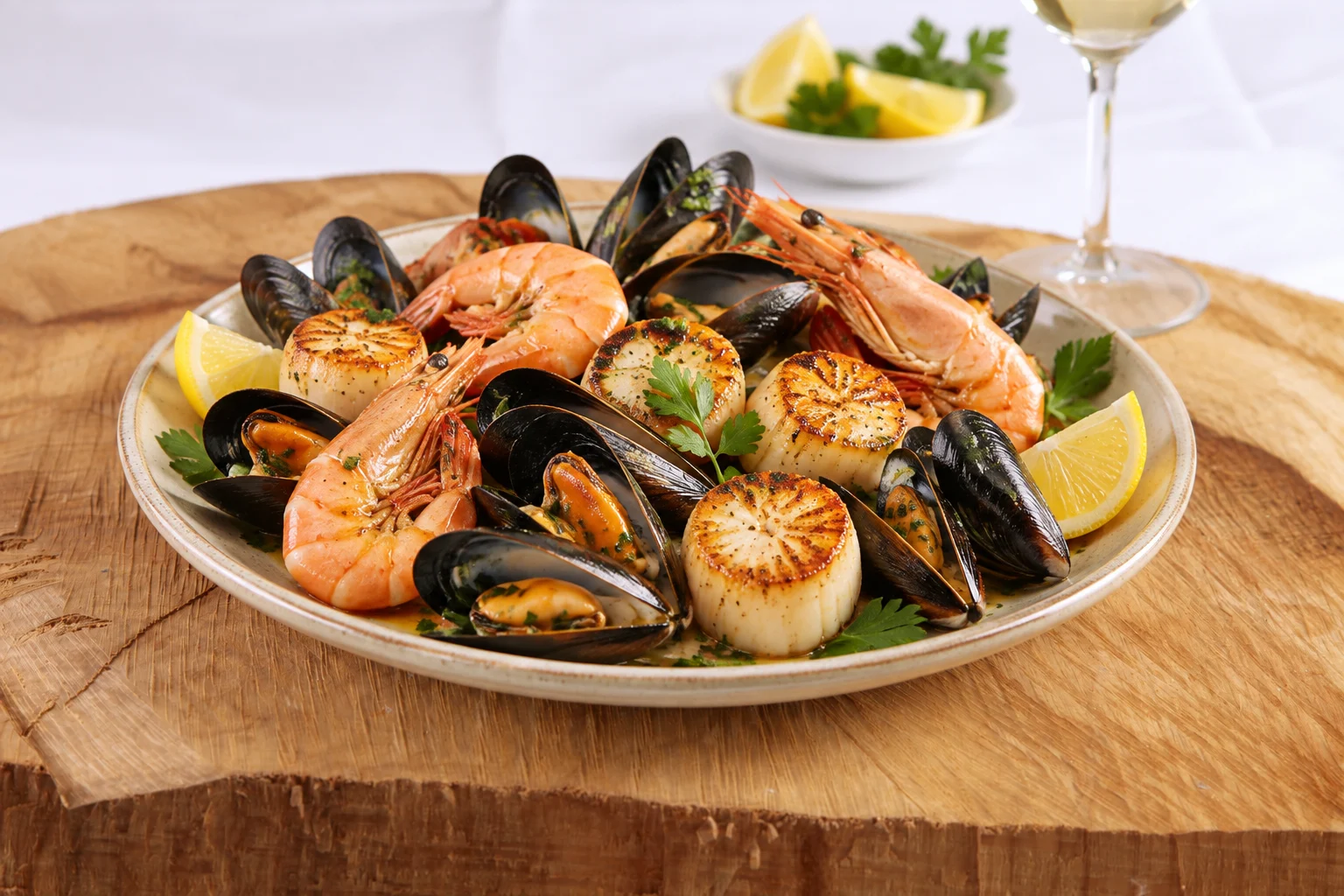
The fresh notes of the wine complement the salty flavours of the mussels, while the minerality provides a nice bridge to the cooking liquid.Risotto with green asparagus and lemon zest
The creamy texture of the risotto is refreshed by the acidity and citrus aromas of the Riesling, while the asparagus complements the spicy nuances.Grilled lobster with beurre blanc and tarragon (more advanced)
The rich texture of the lobster and the buttery sauce are beautifully balanced by the freshness and complexity of the wine, with the tarragon subtly emphasising the spiciness of the Riesling.Veal sweetbreads with a Riesling and morel sauce (more advanced)
The creamy, earthy flavours of the sweetbreads and mushrooms are beautifully carried by the tension and minerality of the wine, creating a refined balance.
Character
The wine
- 100%
Origin
Bottle
Wine features
Parker
The Wine Advocate
RP 93+
Reviewed by:
Stephan Reinhardt
Release Price:
NA
Drink Date:
2025 - 2040
The intensely yellow-colored 2022 Forster Ungeheuer Riesling GG VDP.Grosse Lage opens with a rich and intensely fruity as well as oaky bouquet with sur lie or brioche notes as well as fresh lemon aromas. Full-bodied, intense and fresh on the palate, this full-bodied, creamy-textured yet also vital and elegant Riesling is still reminiscent of von Winning's Sauvignon Blanc 500 in terms of style. In any case, it's a peculiar Ungeheuer in the Pfalz context due to the prominent use of oak. The astringency, however, is positive, and the wine will probably benefit from bottle age. 12.5% stated alcohol. Natural cork. Tasted in July 2024.
Published: Oct 31, 2024
Lorem ipsum dolor sit amet, consectetur adipiscing elit. Sed do eiusmod tempor incididunt ut labore et dolore magna aliqua...
James Suckling
Score
94
Avg Price (ex-tax)
$ 44
Von Winning Riesling Pfalz Ungeheuer GG 2023
Monday, Aug 26, 2024
Color
White
Country
Germany
Region
Pfalz
Vintage
2023
Very biscuity lees character with a whiff of vanilla, but the succulent medium-bodied palate has polish and elegance and the oak tannins are already very well integrated. Long, quite toasty finish with underplayed power that gently builds. Drink from release.
Lorem ipsum dolor sit amet, consectetur adipiscing elit. Sed do eiusmod tempor incididunt ut labore et dolore magna aliqua...
Vinous
(93-95)
Drinking Window
2028 - 2050
From: Nahe, Pfalz & Mittelrhein–Of Wheat, Chaff and Thrill (Sep 2024)
The 2023 Riesling Forster Ungeheuer Grosses Gewächs simultaneously offers the smokiness of an extinguished candle and utter creaminess, clothing ripe Mirabelle in gentle woodsmoke. The palate is concentrated and has full smokiness, but it’s bedded on juicy, fresh plum. Rounded and smooth, it’s still subdued for now but boasts a gorgeous streak of passion fruit freshness. (Bone-dry)
- By Anne Krebiehl MW on July 2024
Oskar Micheletti conducted the tasting this year. Hailing from Alto Adige, he was cellar master at Christmann and worked alongside Nicola Libelli at Bürklin-Wolf. However, he joined von Winning as export and sales manager, but will also work in the winemaking team – an interesting, dual role. About 2023, he says, “Challenging is the operative word. It was once again a warm year, and we had rain, but always in inconvenient moments, especially in the second half of August when grapes were not quite ripe yet, but already softening.” This caused some swelling and splitting, creating perfect entry points for rot. Stringent selection was the key to harvesting quality grapes. The “exhausting” harvest started in late August for Sekt base wines, young Riesling and Pinot vines, the last grapes were brought in on 12 October. The Rieslings are light-footed and elegant throughout, and the Pinot Noirs are still dominated by oak. All the barrel samples tasted were the finished blends.
Lorem ipsum dolor sit amet, consectetur adipiscing elit. Sed do eiusmod tempor incididunt ut labore et dolore magna aliqua...
Exclusive Content
Sign in to unlock professional wine reviews from world-renowned critics
Von Winning is a German wine producer based in the Pfalz. The Pfalz is one of Germany's 13 wine regions and is known for producing high-quality white wines, especially those made from Riesling.
History of Weingut Von Winning
Weingut Von Winning has changed name and owner several times over the years. It was founded under the name 'Deinhard', by Friedrich Deinhard (1812 – 1871) and his wife Auguste Jordan, after she inherited part of her father, Andreas Jordan's, domain in 1848. In Deidesheim this is still spoken of as the “Jordan'sche Teilung”, whereby the vineyards of the estate were divided among his three children, a division that has continued to this day. The winery under the name Deinhard was continued by their son Dr. Andreas Deinhard, and he was in turn succeeded by his daughter Emma, who led the company from 1907 with her husband, Captain Leopold von Winning. Under his leadership the winery experienced its heyday. It became a co-founder of the “Deutscher Weinbauverband” and the “Verband der Naturwein-Versteigerer”, an association that is now very highly regarded under the name VDP (Verband Deutscher Prädikatsweingüter). During this period the name of the domain was changed to “Hauptmann von Winning'sches Edelweingut”. In 1918 the wine company became the property of Karl Josef Hoch from Neustadt an der Weinstraße. The Von Winning family did not allow him to use the name “von Winning”, so it reverted to its old name: Dr. Deinhard. In November 2007, entrepreneur Achim Niederberger became the new owner. He appointed Stephan Attmann as the new director. Within five years he managed to bring the three wine companies that emerged from the “Jordan'sche Teilung” back under one roof. Not only did he become the owner of Dr. Deinhard, but also from the other two, Geheimer Rat Dr. von Bassermann-Jordan and Reichsrat von Buhl, once owned by Andreas Jordan. He thus became the largest owner of private vineyards in Germany, with a total of 150 hectares. The three companies will continue to operate completely independently of each other and develop independently.
Weingut Von Winning's production
The total annual production is between 250,000 and 300,000 bottles. Riesling is by far the most important grape of the domain, with a planted area of more than 80% of the total 38 hectares of vineyards. In addition, on the slopes of the domain we find Pinot Blanc, Pinot Gris, Chardonnay, Gewurztraminer and Muscatel. Pinot Noir and a red blend are also made. Sauvignon blanc has also been in the range since 2008, because this grape thrives on the lighter soils of the region, with a high content of sand and gravel. The extensive plantings of Riesling have everything to do with the special class of the terroir of the domain. No fewer than 10 hectares of the winery are classified as 'Großes Gewächs', the German version of the French concept of Grand Cru. The vineyards are worked entirely according to sustainable principles, everything focused on quality, so that perfectly ripe and aromatic grapes can be harvested. The young and motivated team is all about quality, of course helped by the investment power of Achim Niederberger. The pursuit of perfection is reflected in both the work in the vineyard and in the cellar.
Von Winning's ecosystem
In the vineyard, everything is done not to disturb the ecosystem of the vineyards, but to support it. The grapes root deeply, so that they perfectly express the special character of the terroir in the wines. And this means they are also able to thrive perfectly under difficult conditions, such as extreme drought or heavy rainfall. They also do not suffer from a lack of water due to the undergrowth in the vineyard, a beautiful display of flowers in the summer. That is the way to work sustainably and to ensure vineyards in which natural balance is central. In the cellar the principle of as little manipulation of the wine as possible is applied. For the top wines, minimal filtering, natural and spontaneous fermentation and the omission of means to clarify the wine are used. This ensures wines with an authentic character, in an elegant style, that stand out from the crowd. The working methods in the vineyard and cellar therefore guarantee that wines with a special character are made here.
Deze 2023 von Winning Ungeheuer Forst Grosses Gewächs heeft een bleke strogele kleur en opent met intense aroma’s van rijp wit fruit, mirabelle en grapefruit, omlijst door brioche-achtige sur lie tonen en subtiele eikenrook waardoor de smaak breed, romig en toch strak fris blijft met fijne bitters en een lange, ziltige afdronk. Daardoor is hij ideaal bij gevogelte, vette vis, schelp- en schaaldieren en rijkere vegetarische gerechten omdat de levendige zuren en minerale structuur het vet en de romigheid fris doorsnijden terwijl de zachte houttonen en de textuur de boterige sauzen en romige bereidingen omarmen. Kies bij kip of kalf voor korte, citrusgerichte bereidingen met dille of dragon, bij kreeft of boterige visgerechten voor een beurre blanc of licht gerookte bereiding, en bij aspergerisotto of mosselen voor een romige maar licht gezuurde afwerking zodat de wijnscherpte en de smaak van het gerecht elkaar versterken.
Choose a category to discover dishes that pair well with this wine.
Do you already have a dish in mind?
Let Sommy find wines to pair with your meal.
Discover Wine Trivia
Sign in to unlock fascinating facts about this wine and expand your knowledge.
Sign In