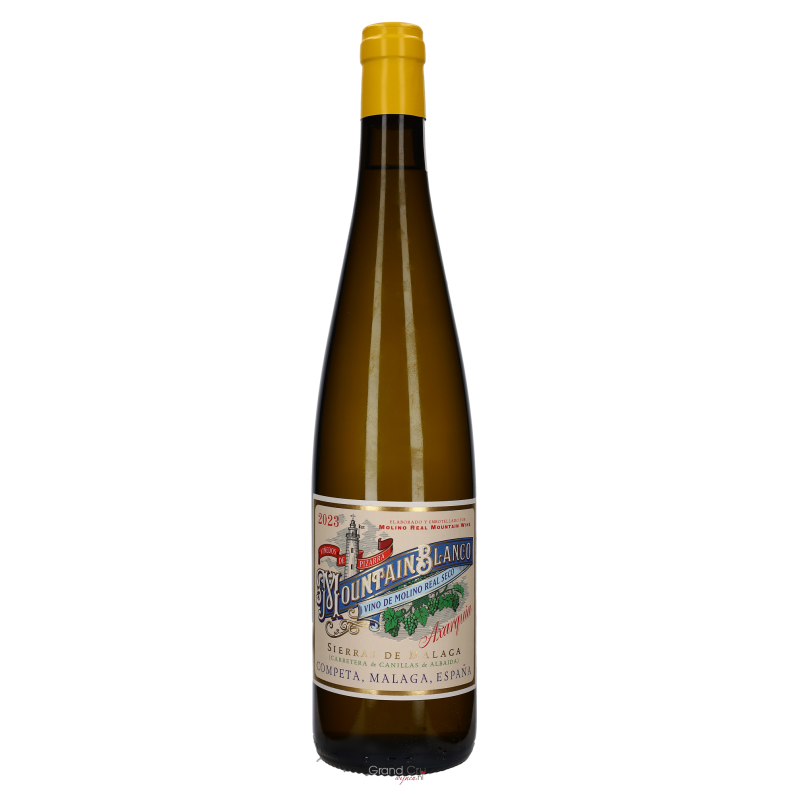
2023 Telmo Rodriguez Mountain Blanco
De specificaties zoals vermeld bij de wijn (o.a. wijnjaar) en in de titel zijn leidend en er kunnen geen rechten worden ontleend aan de afbeelding die wordt getoond. Lees meer in onze Frequenty asked questions
| Type of Wine | White |
|---|---|
| Country | Spain |
| Region | |
| Appellation | Sierras de Málaga |
| Winery | |
| Vintage | 2023 |
| Grape | |
| Content (Alc) | 0.75 ltr (13.5%) |
| Drink window | 2025 - 2030 |
Log in to request a custom quote.
In stock
6 items available
Description
Telmo Rodriguez wins numerous awards annually with this delicious dessert wine. This white Mountian Blanco Vino Molino Real Seco is a 100% Moscatel grape from the mountains of Malaga. Telmo is the undisputed specialist in this unique grape, which has a completely different character at higher altitudes than in lower altitudes. This delicious dry white wine has aromas of hay, nectarine, honey, and a light spice on the nose. The palate is round yet elegant, with lovely acidity that gives the wine tension. It has a long finish.
Telmo Rodriguez and Pablo Eguzkiza met while studying oenology at the University of Bordeaux. Telmo then worked for several years at companies including Cos d'Estournel, Petit Village, and Gérard Chave. Pablo Eguzkiza worked under Jean-Claude Berruet and was partly responsible for Petrus' wine. After various stints, they both returned to Spain and founded Compañia de Vinos Telmo Rodriguez, which focuses on producing quality wines in Spain. This company has since grown into one of the most renowned producers in all of Spain.
Telmo Rodriguez:
Winemaker Telmo Rodriguez is considered one of the young lions of the Spanish wine industry. He studied at the University of Bordeaux and later in the Rhône region with the renowned August Clape. He was the winemaker at La Granja Senora de Remelluri, his father's bodega in Rioja. He left there to become what some would call a "flying winemaker." However, Telmo prefers to call himself a "driving winemaker." He lives in Madrid and drives to the regions where he produces wine. In a short time, his wines have established themselves on the international stage. One example: in Tom Stevenson's 2008 Wine Report, Telmo was included among the top 10 Spanish producers.
Telmo's signature style is his choice of native grape varieties, which are also pruned using native methods. This means he works exclusively with bush vines, or vines that are not trained along wires but grow independently. The vines are also spaced further apart than with wire training. This has two advantages in warm Spain: each vine finds sufficient moisture, even in dry vintages, and the bunches hang in the shade of their own leaves, reducing their stewing. Telmo prefers to work with old vines, so the roots are deep enough to find moisture. This also benefits the quality of the grapes. Old vines yield lower, but they are of high quality and complexity.
Although not formally certified, Telmo works organically: he uses no artificial fertilizers or insecticides/pesticides.
In 2002, Telmo Rodriguez, the affable Spanish superstar, acquired several hectares of ancient terraced vineyards in the hills of Valdeorras in Galicia, in the far northwest of Spain. The grapes planted here are the white Godello and the red Mencia. These are local varieties that thrive in this relatively cool and humid climate and, when properly cared for, can produce exceptionally fascinating and fine wines. In the first few years, much effort was put into restoring the somewhat dilapidated vineyards to good condition. The entire harvest was sold to the local cooperative. The 2004 harvest marked the de facto launch of the Godello, and Telmo even waited two more years for the red Mencia. The wines take their name from the Xil River, which meanders through the vineyards here. Both wines have been remarkably successful. The relatively cool climate yields two exceptionally elegant, aromatic, and refined wines.
Specifications
| Packing information | Box |
|---|---|
| Type of Wine | White |
| Country | Spain |
| Region | Andalucía |
| Appellation | Sierras de Málaga |
| Winery | Telmo Rodriguez |
| Grape | Muscat |
| Biological certified | No |
| Natural wine | No |
| Vegan | No |
| Vintage | 2023 |
| Drinking as of | 2025 |
| Drinking till | 2030 |
| Alcohol % | 13.5 |
| Alcohol free/low | No |
| Content | 0.75 ltr |
| Oak aging | Yes |
| Sparkling | No |
| Dessert wine | No |
| Closure | Cork |
| Parker rating | 93 |
| Tasting Profiles | Aromatisch, Bloemig, Droog, Fruitig, Kruidig, Licht zoet, Rond, Wit fruit |
| Drink moments | Borrelen, Met vrienden, Voor alledag |
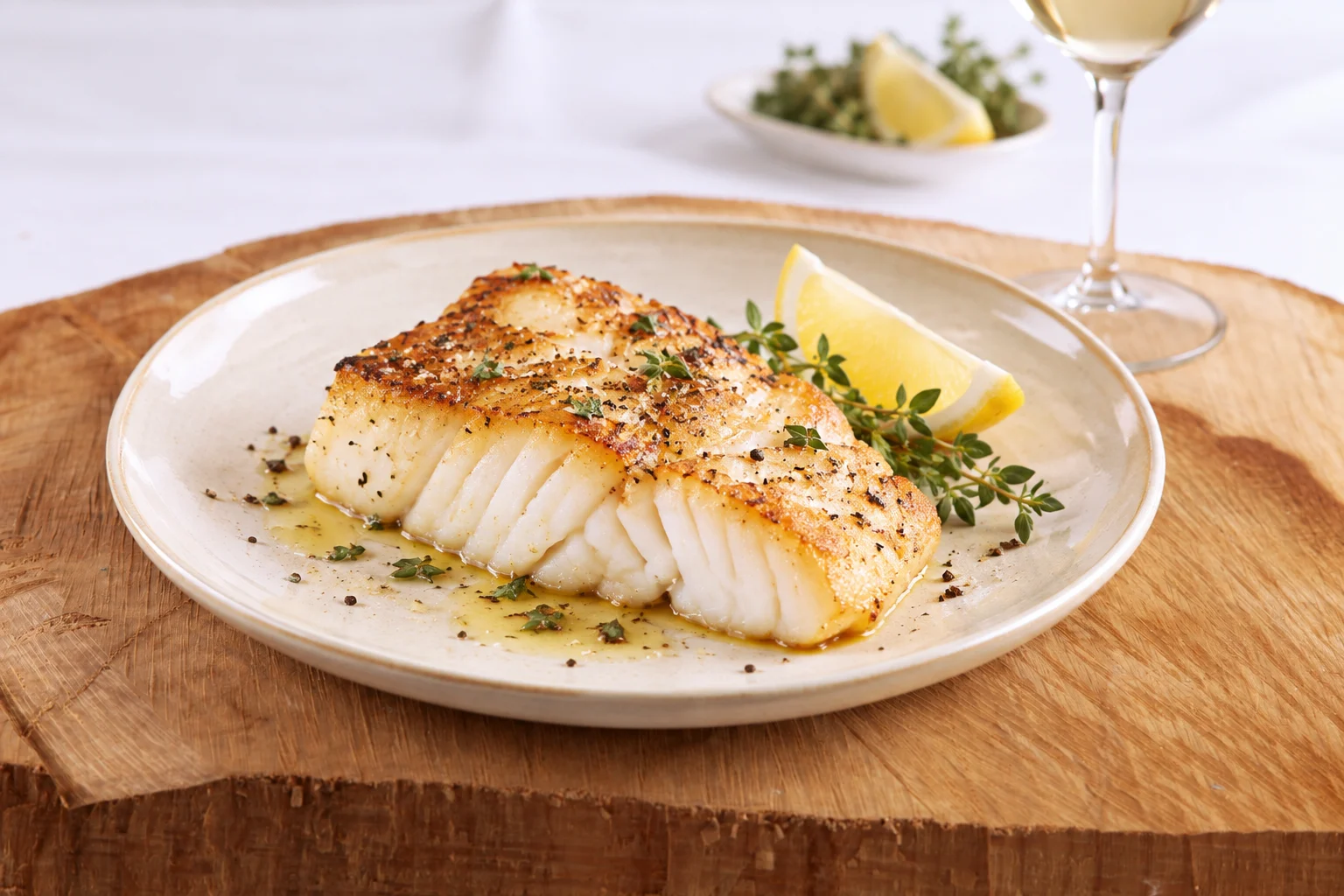
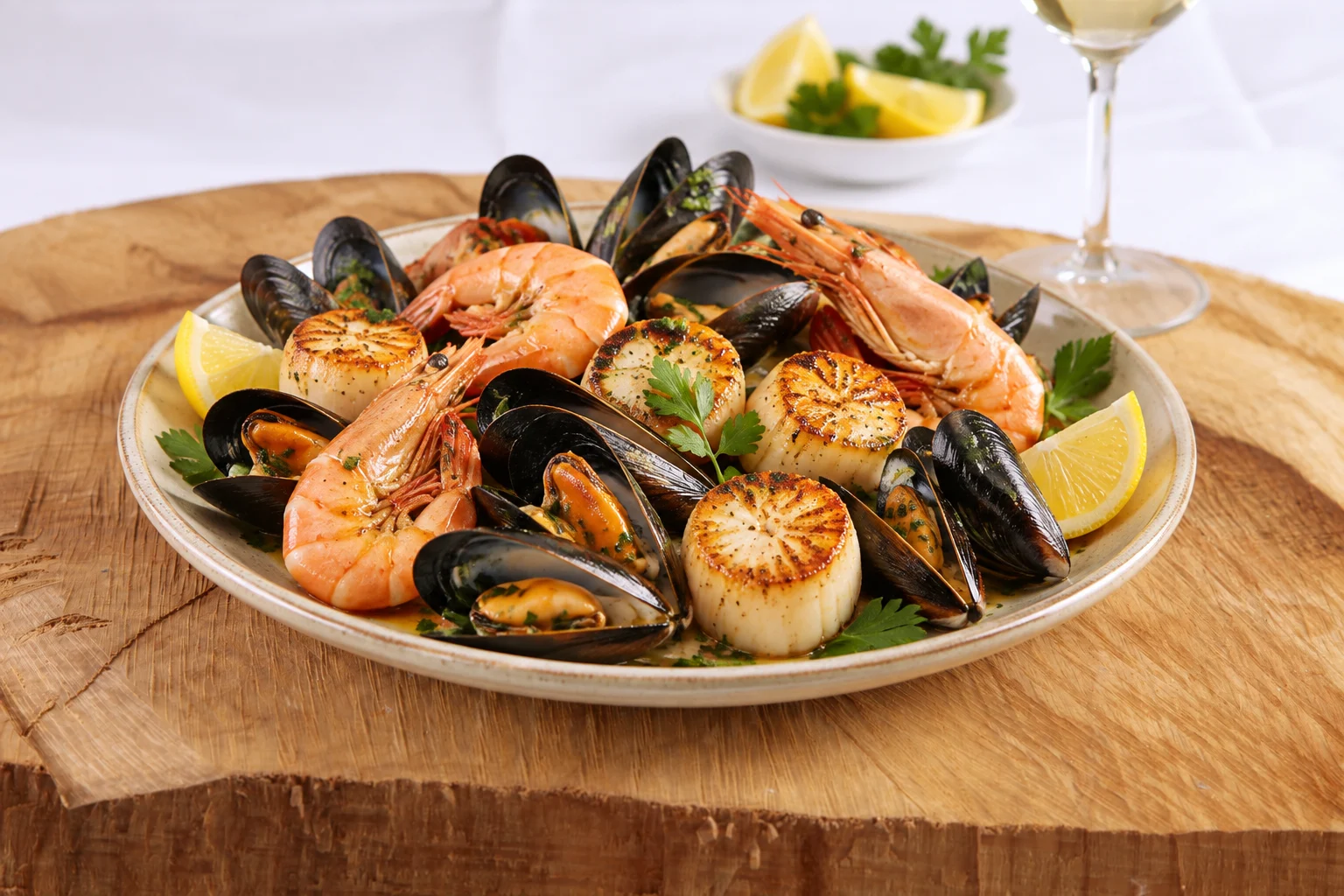
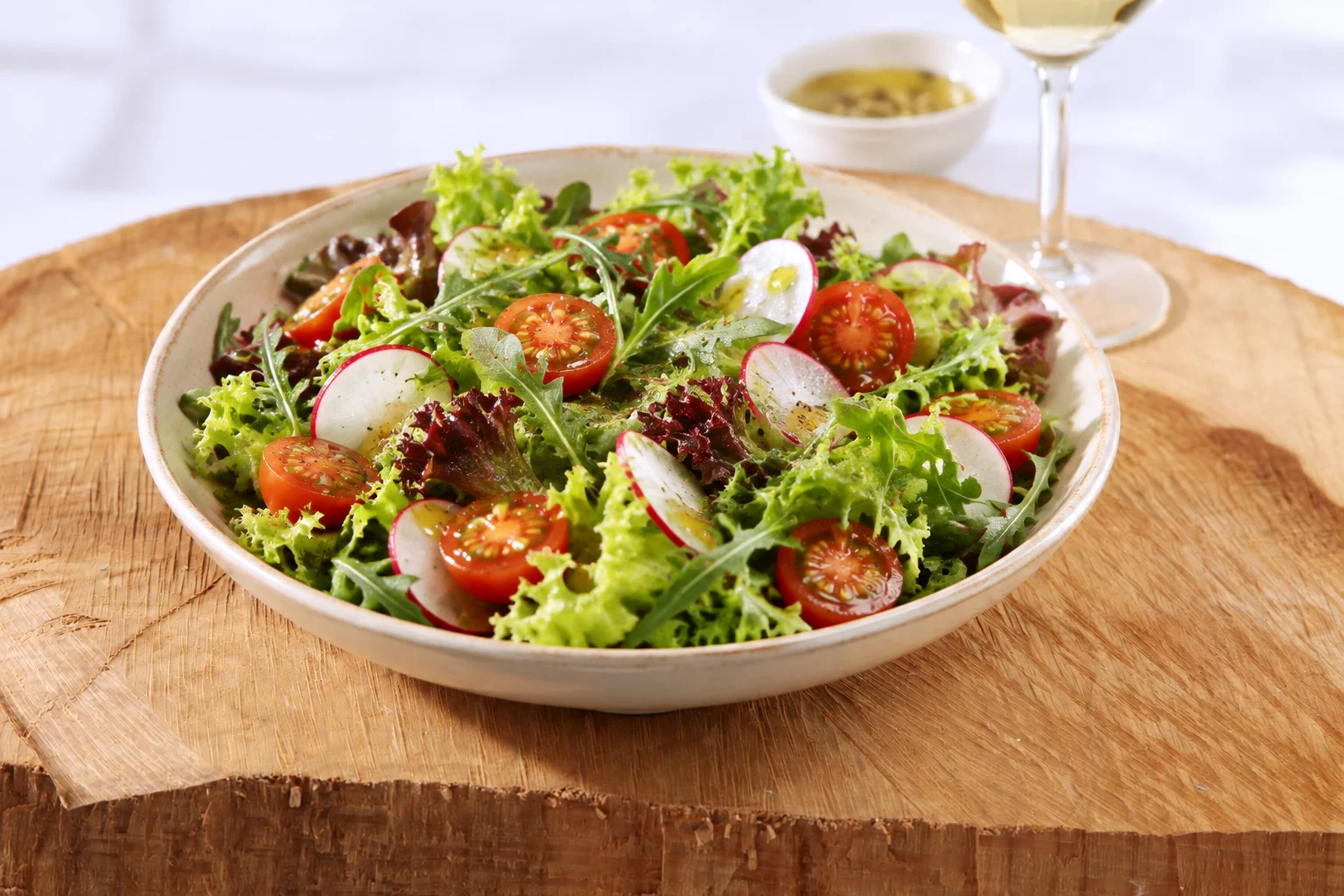
| Sommy Pairing Beschrijving | De 2023 Telmo Rodriguez Mountain Blanco is een elegante en droge witte wijn met levendige aroma’s van nectarine, honing en een subtiele kruidigheid, ondersteund door frisse zuren die zorgen voor een mooie spanning en een lange afdronk. Deze wijn past perfect bij lichte gerechten zoals witte vis en groenteschotels omdat de frisse en fruitige tonen de delicate smaken van de vis en groenten mooi aanvullen, terwijl de elegante structuur ook goed samengaat met lichte bereidingswijzen zoals stomen, pocheren of grillen. Voor een optimale beleving kunt u deze wijn serveren bij gerechten met een zachte saus of lichte kruiden, zodat de frisheid en complexiteit van de wijn mooi tot hun recht komen. |
Professional Reviews
Parker
The Wine Advocate
RP 93
Reviewed by:
Luis Gutiérrez
Release Price:
$43
Drink Date:
2025 - 2029
The dry white 2023 Mountain Blanco was cropped from a year of heat and drought (again!) with less than 400 liters of rain, like in 2022, which, on the other hand, meant very healthy grapes. The harvest started the 12th of August and finished the 7th of September, and yields were very low. The grapes were picked crunchy and pressed in a very powerful vertical press using esparto wheels to separate the grapes, like they do for the sweet wine, and fermented in stainless steel, where the wine matured until bottling. This wine feels less and less varietal by the vintage; great terroirs don't make varietal wines, even with a grape like Moscatel. It's floral (jasmine) and citrusy, elegant and discrete. Tasted after much older and sweeter wines, it even has note of lychee... It comes in at 13% alcohol, with a pH of 3.37 and 4.97 grams of acidity. The palate is silky and elegant, with a bitter twist in the finish. 5,404 bottles were filled in July 2024.
I drank a bottle of the 2018 the night before I tasted this, and the wine was stunning. It has to be one of the finest vintages. It was pale and young, and it had not moved; it could pass for a much younger wine. What I want to say is that this 2023 wine needs time, and it's better after five years in bottle. It's a much better wine than we all thought of the first few vintages.
Lorem ipsum dolor sit amet, consectetur adipiscing elit. Sed do eiusmod tempor incididunt ut labore et dolore magna aliqua...
Exclusive Content
Sign in to unlock professional wine reviews from world-renowned critics
Wijnhuis
Winemaker Telmo Rodriguez is labeled as one of the young lions of the Spanish wine industry. He studied at the University of Bordeaux and later in the Rhône with the famous August Clape. He was the winemaker of La Granja Senora De Remelluri, his father's bodega in Rioja. He left there to become what some would call a flying winemaker. However, Telmo prefers to call itself a 'driving winemaker'. he lives in Madrid and drives his car to the areas where he makes wine. In a short time his wines have found a place on the international playing field. One example: in Tom Stevenson's Wine Report 2008, Telmo is included among the top 10 producers from Spain. We once again spoke extensively with Telmo Rodriguez. That is always a pleasure. If you sit down with him you always learn something or he gives food for thought. What makes this 'conscience of the Spanish wine world' so special? When Telmo completed his studies in Bordeaux and then had internships with people like Chave (Hermitage), Clape (Cornas) and Dürrbach (Trévallon) he came back to Spain. There he saw other Spaniards who had studied in France bringing French grape varieties and customs to Spain. For example, there was more and more wire guidance, while the Spanish system had always been free-standing sticks. Telmo concluded that he wanted to focus on the old qualities of Spain such as freestanding sticks, indigenous grape varieties and field blends. In addition, he was the first in Spain to introduce modern labels and he opposes the rigid Spanish wine laws.
Free standing sticks
Spain used to be a country of bush vines: the sticks were so far apart per area and per vineyard that they could each get enough water. If you place your sticks far apart with wire articulation, the stick will grow far and become much too large. With wire articulation, you therefore need many more sticks per hectare. However, the problem is that there is not enough water for this and you therefore have to irrigate, in areas that often already suffer from a shortage of water. In addition, the grapes hang more in the shade with free-standing sticks, which gives less chance of 'burning' and leads to less stewed fruit and fresher acids. The only downside to free-standing canes is that more manual work is involved in vineyard management and harvesting. Telmo works almost exclusively with bush vines.
Native grape varieties
It was clear to Telmo that there are so many good indigenous varieties in Spain that importing 'the big five' (Chardonnay, Sauvignon Blanc, Merlot, Cabernet and Syrah) from France was not necessary at all. He was one of the first to produce good Rueda from Verdejo and Viura, he embraced Mencia and Godello in Valdeorras, Monastrell in Alicante, Moscatel in Malaga, Garnacha in Cebreros…. In the mid-1990s he was still considered crazy with this philosophy, but now everyone is following him.
Field blends
There used to be many vineyards in Spain with various grape varieties mixed together, also called 'field blends'. It is often argued against field blends that the varieties (that are picked together) are not all ripe at the same time. It speaks for the fact that diversity and disease resistance increase and that it promotes complexity. Telmo now has two vineyards with field blends in production. In Rioja he makes it Las Beatas (named after the vineyard, first vintage awarded with 97 points by Parker) and in Valdeorras Las Caborcas. Beautiful, original wines!
Spanish wine laws
Telmo was the first to remove the word Reserva from a Rioja in 1995. In his words: 'I ask my wines how long they want to stay in the wood'. One year grapes can easily handle a 12-month aging in wood, but not in another year. There was consternation about Las Beatas: the Consecho initially did not want to approve the wine made with a field blend as Rioja… while there was a time when all Rioja was made that way! Consecho did not push this to the extreme and ultimately fortunate for them, given the enormously high international appreciation.
Food
Spijs
De 2023 Telmo Rodriguez Mountain Blanco is een elegante en droge witte wijn met levendige aroma’s van nectarine, honing en een subtiele kruidigheid, ondersteund door frisse zuren die zorgen voor een mooie spanning en een lange afdronk. Deze wijn past perfect bij lichte gerechten zoals witte vis en groenteschotels omdat de frisse en fruitige tonen de delicate smaken van de vis en groenten mooi aanvullen, terwijl de elegante structuur ook goed samengaat met lichte bereidingswijzen zoals stomen, pocheren of grillen. Voor een optimale beleving kunt u deze wijn serveren bij gerechten met een zachte saus of lichte kruiden, zodat de frisheid en complexiteit van de wijn mooi tot hun recht komen.
Klik op een categorie om heerlijke recepten te ontdekken die perfect combineren met deze wijn.
Heeft u al een gerecht in gedachte?
Laat onze AI-sommelier u helpen met het vinden van de ideale wijn bij uw gerecht
Start de Sommy Wijnadvies ToolTelmo Rodriguez wins numerous awards annually with this delicious dessert wine. This white Mountian Blanco Vino Molino Real Seco is a 100% Moscatel grape from the mountains of Malaga. Telmo is the undisputed specialist in this unique grape, which has a completely different character at higher altitudes than in lower altitudes. This delicious dry white wine has aromas of hay, nectarine, honey, and a light spice on the nose. The palate is round yet elegant, with lovely acidity that gives the wine tension. It has a long finish.
Telmo Rodriguez and Pablo Eguzkiza met while studying oenology at the University of Bordeaux. Telmo then worked for several years at companies including Cos d'Estournel, Petit Village, and Gérard Chave. Pablo Eguzkiza worked under Jean-Claude Berruet and was partly responsible for Petrus' wine. After various stints, they both returned to Spain and founded Compañia de Vinos Telmo Rodriguez, which focuses on producing quality wines in Spain. This company has since grown into one of the most renowned producers in all of Spain.
Telmo Rodriguez:
Winemaker Telmo Rodriguez is considered one of the young lions of the Spanish wine industry. He studied at the University of Bordeaux and later in the Rhône region with the renowned August Clape. He was the winemaker at La Granja Senora de Remelluri, his father's bodega in Rioja. He left there to become what some would call a "flying winemaker." However, Telmo prefers to call himself a "driving winemaker." He lives in Madrid and drives to the regions where he produces wine. In a short time, his wines have established themselves on the international stage. One example: in Tom Stevenson's 2008 Wine Report, Telmo was included among the top 10 Spanish producers.
Telmo's signature style is his choice of native grape varieties, which are also pruned using native methods. This means he works exclusively with bush vines, or vines that are not trained along wires but grow independently. The vines are also spaced further apart than with wire training. This has two advantages in warm Spain: each vine finds sufficient moisture, even in dry vintages, and the bunches hang in the shade of their own leaves, reducing their stewing. Telmo prefers to work with old vines, so the roots are deep enough to find moisture. This also benefits the quality of the grapes. Old vines yield lower, but they are of high quality and complexity.
Although not formally certified, Telmo works organically: he uses no artificial fertilizers or insecticides/pesticides.
In 2002, Telmo Rodriguez, the affable Spanish superstar, acquired several hectares of ancient terraced vineyards in the hills of Valdeorras in Galicia, in the far northwest of Spain. The grapes planted here are the white Godello and the red Mencia. These are local varieties that thrive in this relatively cool and humid climate and, when properly cared for, can produce exceptionally fascinating and fine wines. In the first few years, much effort was put into restoring the somewhat dilapidated vineyards to good condition. The entire harvest was sold to the local cooperative. The 2004 harvest marked the de facto launch of the Godello, and Telmo even waited two more years for the red Mencia. The wines take their name from the Xil River, which meanders through the vineyards here. Both wines have been remarkably successful. The relatively cool climate yields two exceptionally elegant, aromatic, and refined wines.
| Packing information | Box |
|---|---|
| Type of Wine | White |
| Country | Spain |
| Region | Andalucía |
| Appellation | Sierras de Málaga |
| Winery | Telmo Rodriguez |
| Grape | Muscat |
| Biological certified | No |
| Natural wine | No |
| Vegan | No |
| Vintage | 2023 |
| Drinking as of | 2025 |
| Drinking till | 2030 |
| Alcohol % | 13.5 |
| Alcohol free/low | No |
| Content | 0.75 ltr |
| Oak aging | Yes |
| Sparkling | No |
| Dessert wine | No |
| Closure | Cork |
| Parker rating | 93 |
| Tasting Profiles | Aromatisch, Bloemig, Droog, Fruitig, Kruidig, Licht zoet, Rond, Wit fruit |
| Drink moments | Borrelen, Met vrienden, Voor alledag |
| Sommy Pairing Beschrijving | De 2023 Telmo Rodriguez Mountain Blanco is een elegante en droge witte wijn met levendige aroma’s van nectarine, honing en een subtiele kruidigheid, ondersteund door frisse zuren die zorgen voor een mooie spanning en een lange afdronk. Deze wijn past perfect bij lichte gerechten zoals witte vis en groenteschotels omdat de frisse en fruitige tonen de delicate smaken van de vis en groenten mooi aanvullen, terwijl de elegante structuur ook goed samengaat met lichte bereidingswijzen zoals stomen, pocheren of grillen. Voor een optimale beleving kunt u deze wijn serveren bij gerechten met een zachte saus of lichte kruiden, zodat de frisheid en complexiteit van de wijn mooi tot hun recht komen. |
Parker
The Wine Advocate
RP 93
Reviewed by:
Luis Gutiérrez
Release Price:
$43
Drink Date:
2025 - 2029
The dry white 2023 Mountain Blanco was cropped from a year of heat and drought (again!) with less than 400 liters of rain, like in 2022, which, on the other hand, meant very healthy grapes. The harvest started the 12th of August and finished the 7th of September, and yields were very low. The grapes were picked crunchy and pressed in a very powerful vertical press using esparto wheels to separate the grapes, like they do for the sweet wine, and fermented in stainless steel, where the wine matured until bottling. This wine feels less and less varietal by the vintage; great terroirs don't make varietal wines, even with a grape like Moscatel. It's floral (jasmine) and citrusy, elegant and discrete. Tasted after much older and sweeter wines, it even has note of lychee... It comes in at 13% alcohol, with a pH of 3.37 and 4.97 grams of acidity. The palate is silky and elegant, with a bitter twist in the finish. 5,404 bottles were filled in July 2024.
I drank a bottle of the 2018 the night before I tasted this, and the wine was stunning. It has to be one of the finest vintages. It was pale and young, and it had not moved; it could pass for a much younger wine. What I want to say is that this 2023 wine needs time, and it's better after five years in bottle. It's a much better wine than we all thought of the first few vintages.
Lorem ipsum dolor sit amet, consectetur adipiscing elit. Sed do eiusmod tempor incididunt ut labore et dolore magna aliqua...
Exclusive Content
Sign in to unlock professional wine reviews from world-renowned critics
Winemaker Telmo Rodriguez is labeled as one of the young lions of the Spanish wine industry. He studied at the University of Bordeaux and later in the Rhône with the famous August Clape. He was the winemaker of La Granja Senora De Remelluri, his father's bodega in Rioja. He left there to become what some would call a flying winemaker. However, Telmo prefers to call itself a 'driving winemaker'. he lives in Madrid and drives his car to the areas where he makes wine. In a short time his wines have found a place on the international playing field. One example: in Tom Stevenson's Wine Report 2008, Telmo is included among the top 10 producers from Spain. We once again spoke extensively with Telmo Rodriguez. That is always a pleasure. If you sit down with him you always learn something or he gives food for thought. What makes this 'conscience of the Spanish wine world' so special? When Telmo completed his studies in Bordeaux and then had internships with people like Chave (Hermitage), Clape (Cornas) and Dürrbach (Trévallon) he came back to Spain. There he saw other Spaniards who had studied in France bringing French grape varieties and customs to Spain. For example, there was more and more wire guidance, while the Spanish system had always been free-standing sticks. Telmo concluded that he wanted to focus on the old qualities of Spain such as freestanding sticks, indigenous grape varieties and field blends. In addition, he was the first in Spain to introduce modern labels and he opposes the rigid Spanish wine laws.
Free standing sticks
Spain used to be a country of bush vines: the sticks were so far apart per area and per vineyard that they could each get enough water. If you place your sticks far apart with wire articulation, the stick will grow far and become much too large. With wire articulation, you therefore need many more sticks per hectare. However, the problem is that there is not enough water for this and you therefore have to irrigate, in areas that often already suffer from a shortage of water. In addition, the grapes hang more in the shade with free-standing sticks, which gives less chance of 'burning' and leads to less stewed fruit and fresher acids. The only downside to free-standing canes is that more manual work is involved in vineyard management and harvesting. Telmo works almost exclusively with bush vines.
Native grape varieties
It was clear to Telmo that there are so many good indigenous varieties in Spain that importing 'the big five' (Chardonnay, Sauvignon Blanc, Merlot, Cabernet and Syrah) from France was not necessary at all. He was one of the first to produce good Rueda from Verdejo and Viura, he embraced Mencia and Godello in Valdeorras, Monastrell in Alicante, Moscatel in Malaga, Garnacha in Cebreros…. In the mid-1990s he was still considered crazy with this philosophy, but now everyone is following him.
Field blends
There used to be many vineyards in Spain with various grape varieties mixed together, also called 'field blends'. It is often argued against field blends that the varieties (that are picked together) are not all ripe at the same time. It speaks for the fact that diversity and disease resistance increase and that it promotes complexity. Telmo now has two vineyards with field blends in production. In Rioja he makes it Las Beatas (named after the vineyard, first vintage awarded with 97 points by Parker) and in Valdeorras Las Caborcas. Beautiful, original wines!
Spanish wine laws
Telmo was the first to remove the word Reserva from a Rioja in 1995. In his words: 'I ask my wines how long they want to stay in the wood'. One year grapes can easily handle a 12-month aging in wood, but not in another year. There was consternation about Las Beatas: the Consecho initially did not want to approve the wine made with a field blend as Rioja… while there was a time when all Rioja was made that way! Consecho did not push this to the extreme and ultimately fortunate for them, given the enormously high international appreciation.
Spijs
De 2023 Telmo Rodriguez Mountain Blanco is een elegante en droge witte wijn met levendige aroma’s van nectarine, honing en een subtiele kruidigheid, ondersteund door frisse zuren die zorgen voor een mooie spanning en een lange afdronk. Deze wijn past perfect bij lichte gerechten zoals witte vis en groenteschotels omdat de frisse en fruitige tonen de delicate smaken van de vis en groenten mooi aanvullen, terwijl de elegante structuur ook goed samengaat met lichte bereidingswijzen zoals stomen, pocheren of grillen. Voor een optimale beleving kunt u deze wijn serveren bij gerechten met een zachte saus of lichte kruiden, zodat de frisheid en complexiteit van de wijn mooi tot hun recht komen.
Klik op een categorie om heerlijke recepten te ontdekken die perfect combineren met deze wijn.
Heeft u al een gerecht in gedachte?
Laat onze AI-sommelier u helpen met het vinden van de ideale wijn bij uw gerecht
Start de Sommy Wijnadvies ToolDiscover Wine Trivia
Sign in to unlock fascinating facts about this wine and expand your knowledge.
Sign InDescription
Telmo Rodriguez wins numerous awards annually with this delicious dessert wine. This white Mountian Blanco Vino Molino Real Seco is a 100% Moscatel grape from the mountains of Malaga. Telmo is the undisputed specialist in this unique grape, which has a completely different character at higher altitudes than in lower altitudes. This delicious dry white wine has aromas of hay, nectarine, honey, and a light spice on the nose. The palate is round yet elegant, with lovely acidity that gives the wine tension. It has a long finish.
Telmo Rodriguez and Pablo Eguzkiza met while studying oenology at the University of Bordeaux. Telmo then worked for several years at companies including Cos d'Estournel, Petit Village, and Gérard Chave. Pablo Eguzkiza worked under Jean-Claude Berruet and was partly responsible for Petrus' wine. After various stints, they both returned to Spain and founded Compañia de Vinos Telmo Rodriguez, which focuses on producing quality wines in Spain. This company has since grown into one of the most renowned producers in all of Spain.
Telmo Rodriguez:
Winemaker Telmo Rodriguez is considered one of the young lions of the Spanish wine industry. He studied at the University of Bordeaux and later in the Rhône region with the renowned August Clape. He was the winemaker at La Granja Senora de Remelluri, his father's bodega in Rioja. He left there to become what some would call a "flying winemaker." However, Telmo prefers to call himself a "driving winemaker." He lives in Madrid and drives to the regions where he produces wine. In a short time, his wines have established themselves on the international stage. One example: in Tom Stevenson's 2008 Wine Report, Telmo was included among the top 10 Spanish producers.
Telmo's signature style is his choice of native grape varieties, which are also pruned using native methods. This means he works exclusively with bush vines, or vines that are not trained along wires but grow independently. The vines are also spaced further apart than with wire training. This has two advantages in warm Spain: each vine finds sufficient moisture, even in dry vintages, and the bunches hang in the shade of their own leaves, reducing their stewing. Telmo prefers to work with old vines, so the roots are deep enough to find moisture. This also benefits the quality of the grapes. Old vines yield lower, but they are of high quality and complexity.
Although not formally certified, Telmo works organically: he uses no artificial fertilizers or insecticides/pesticides.
In 2002, Telmo Rodriguez, the affable Spanish superstar, acquired several hectares of ancient terraced vineyards in the hills of Valdeorras in Galicia, in the far northwest of Spain. The grapes planted here are the white Godello and the red Mencia. These are local varieties that thrive in this relatively cool and humid climate and, when properly cared for, can produce exceptionally fascinating and fine wines. In the first few years, much effort was put into restoring the somewhat dilapidated vineyards to good condition. The entire harvest was sold to the local cooperative. The 2004 harvest marked the de facto launch of the Godello, and Telmo even waited two more years for the red Mencia. The wines take their name from the Xil River, which meanders through the vineyards here. Both wines have been remarkably successful. The relatively cool climate yields two exceptionally elegant, aromatic, and refined wines.
Specifications
| Packing information | Box |
|---|---|
| Type of Wine | White |
| Country | Spain |
| Region | Andalucía |
| Appellation | Sierras de Málaga |
| Winery | Telmo Rodriguez |
| Grape | Muscat |
| Biological certified | No |
| Natural wine | No |
| Vegan | No |
| Vintage | 2023 |
| Drinking as of | 2025 |
| Drinking till | 2030 |
| Alcohol % | 13.5 |
| Alcohol free/low | No |
| Content | 0.75 ltr |
| Oak aging | Yes |
| Sparkling | No |
| Dessert wine | No |
| Closure | Cork |
| Parker rating | 93 |
| Tasting Profiles | Aromatisch, Bloemig, Droog, Fruitig, Kruidig, Licht zoet, Rond, Wit fruit |
| Drink moments | Borrelen, Met vrienden, Voor alledag |
| Sommy Pairing Beschrijving | De 2023 Telmo Rodriguez Mountain Blanco is een elegante en droge witte wijn met levendige aroma’s van nectarine, honing en een subtiele kruidigheid, ondersteund door frisse zuren die zorgen voor een mooie spanning en een lange afdronk. Deze wijn past perfect bij lichte gerechten zoals witte vis en groenteschotels omdat de frisse en fruitige tonen de delicate smaken van de vis en groenten mooi aanvullen, terwijl de elegante structuur ook goed samengaat met lichte bereidingswijzen zoals stomen, pocheren of grillen. Voor een optimale beleving kunt u deze wijn serveren bij gerechten met een zachte saus of lichte kruiden, zodat de frisheid en complexiteit van de wijn mooi tot hun recht komen. |
Professional Reviews
Parker
The Wine Advocate
RP 93
Reviewed by:
Luis Gutiérrez
Release Price:
$43
Drink Date:
2025 - 2029
The dry white 2023 Mountain Blanco was cropped from a year of heat and drought (again!) with less than 400 liters of rain, like in 2022, which, on the other hand, meant very healthy grapes. The harvest started the 12th of August and finished the 7th of September, and yields were very low. The grapes were picked crunchy and pressed in a very powerful vertical press using esparto wheels to separate the grapes, like they do for the sweet wine, and fermented in stainless steel, where the wine matured until bottling. This wine feels less and less varietal by the vintage; great terroirs don't make varietal wines, even with a grape like Moscatel. It's floral (jasmine) and citrusy, elegant and discrete. Tasted after much older and sweeter wines, it even has note of lychee... It comes in at 13% alcohol, with a pH of 3.37 and 4.97 grams of acidity. The palate is silky and elegant, with a bitter twist in the finish. 5,404 bottles were filled in July 2024.
I drank a bottle of the 2018 the night before I tasted this, and the wine was stunning. It has to be one of the finest vintages. It was pale and young, and it had not moved; it could pass for a much younger wine. What I want to say is that this 2023 wine needs time, and it's better after five years in bottle. It's a much better wine than we all thought of the first few vintages.
Lorem ipsum dolor sit amet, consectetur adipiscing elit. Sed do eiusmod tempor incididunt ut labore et dolore magna aliqua...
Exclusive Content
Sign in to unlock professional wine reviews from world-renowned critics
Wijnhuis
Winemaker Telmo Rodriguez is labeled as one of the young lions of the Spanish wine industry. He studied at the University of Bordeaux and later in the Rhône with the famous August Clape. He was the winemaker of La Granja Senora De Remelluri, his father's bodega in Rioja. He left there to become what some would call a flying winemaker. However, Telmo prefers to call itself a 'driving winemaker'. he lives in Madrid and drives his car to the areas where he makes wine. In a short time his wines have found a place on the international playing field. One example: in Tom Stevenson's Wine Report 2008, Telmo is included among the top 10 producers from Spain. We once again spoke extensively with Telmo Rodriguez. That is always a pleasure. If you sit down with him you always learn something or he gives food for thought. What makes this 'conscience of the Spanish wine world' so special? When Telmo completed his studies in Bordeaux and then had internships with people like Chave (Hermitage), Clape (Cornas) and Dürrbach (Trévallon) he came back to Spain. There he saw other Spaniards who had studied in France bringing French grape varieties and customs to Spain. For example, there was more and more wire guidance, while the Spanish system had always been free-standing sticks. Telmo concluded that he wanted to focus on the old qualities of Spain such as freestanding sticks, indigenous grape varieties and field blends. In addition, he was the first in Spain to introduce modern labels and he opposes the rigid Spanish wine laws.
Free standing sticks
Spain used to be a country of bush vines: the sticks were so far apart per area and per vineyard that they could each get enough water. If you place your sticks far apart with wire articulation, the stick will grow far and become much too large. With wire articulation, you therefore need many more sticks per hectare. However, the problem is that there is not enough water for this and you therefore have to irrigate, in areas that often already suffer from a shortage of water. In addition, the grapes hang more in the shade with free-standing sticks, which gives less chance of 'burning' and leads to less stewed fruit and fresher acids. The only downside to free-standing canes is that more manual work is involved in vineyard management and harvesting. Telmo works almost exclusively with bush vines.
Native grape varieties
It was clear to Telmo that there are so many good indigenous varieties in Spain that importing 'the big five' (Chardonnay, Sauvignon Blanc, Merlot, Cabernet and Syrah) from France was not necessary at all. He was one of the first to produce good Rueda from Verdejo and Viura, he embraced Mencia and Godello in Valdeorras, Monastrell in Alicante, Moscatel in Malaga, Garnacha in Cebreros…. In the mid-1990s he was still considered crazy with this philosophy, but now everyone is following him.
Field blends
There used to be many vineyards in Spain with various grape varieties mixed together, also called 'field blends'. It is often argued against field blends that the varieties (that are picked together) are not all ripe at the same time. It speaks for the fact that diversity and disease resistance increase and that it promotes complexity. Telmo now has two vineyards with field blends in production. In Rioja he makes it Las Beatas (named after the vineyard, first vintage awarded with 97 points by Parker) and in Valdeorras Las Caborcas. Beautiful, original wines!
Spanish wine laws
Telmo was the first to remove the word Reserva from a Rioja in 1995. In his words: 'I ask my wines how long they want to stay in the wood'. One year grapes can easily handle a 12-month aging in wood, but not in another year. There was consternation about Las Beatas: the Consecho initially did not want to approve the wine made with a field blend as Rioja… while there was a time when all Rioja was made that way! Consecho did not push this to the extreme and ultimately fortunate for them, given the enormously high international appreciation.
Food
Spijs
De 2023 Telmo Rodriguez Mountain Blanco is een elegante en droge witte wijn met levendige aroma’s van nectarine, honing en een subtiele kruidigheid, ondersteund door frisse zuren die zorgen voor een mooie spanning en een lange afdronk. Deze wijn past perfect bij lichte gerechten zoals witte vis en groenteschotels omdat de frisse en fruitige tonen de delicate smaken van de vis en groenten mooi aanvullen, terwijl de elegante structuur ook goed samengaat met lichte bereidingswijzen zoals stomen, pocheren of grillen. Voor een optimale beleving kunt u deze wijn serveren bij gerechten met een zachte saus of lichte kruiden, zodat de frisheid en complexiteit van de wijn mooi tot hun recht komen.
Klik op een categorie om heerlijke recepten te ontdekken die perfect combineren met deze wijn.
Heeft u al een gerecht in gedachte?
Laat onze AI-sommelier u helpen met het vinden van de ideale wijn bij uw gerecht
Start de Sommy Wijnadvies ToolTrivia
Discover Wine Trivia
Sign in to unlock fascinating facts about this wine and expand your knowledge.
Sign In