

2021 Hubert Lamy Saint-Aubin 1er Cru Clos de la Chatenière
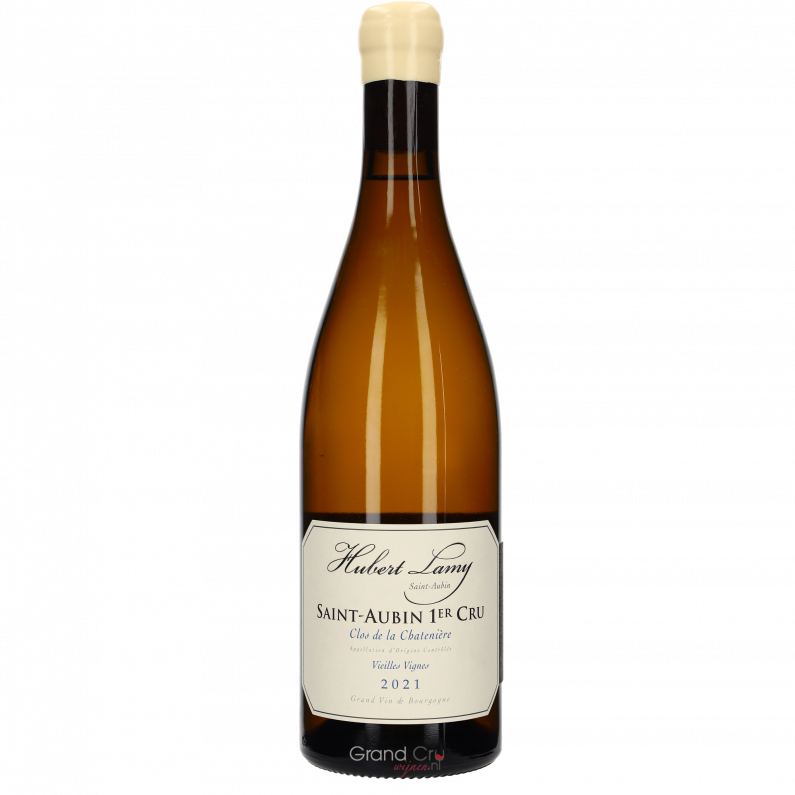
| Type of Wine | White |
|---|---|
| Country | France |
| Region | |
| Appellation | |
| Winery | Hubert Lamy |
| Vintage | 2021 |
| Grape | |
| Content (Alc) | 0.75 ltr (13%) |
| Drink window | 2027 - 2045 |
Log in to request a custom quote.
Low Stock
Only 1 left
Description
The Lamy family has been working in the Saint-Aubin vineyards in Burgundy since 1640. In 1973, after working with his father for many years, Hubert Lamy founded Domaine Hubert Lamy. At that time, the estate consisted of just 8 hectares, located primarily in regional appellations. Today, the estate extends over 18.5 hectares, 80% of which are Chardonnay and 20% Pinot Noir, spread across the Saint-Aubin, Puligny-Montrachet, Chassagne-Montrachet, and Santenay appellations. To combat diseases and pests, they use "lutte raisonnée" or integrated pest management: products that respect nature and are used only when necessary. For the past 10 years, no chemical fertilizers have been used in the vineyards, only organic compost.
The Chardonnay grapes for Clos de la Chaténiere come from a southeast-facing 1er cru vineyard between the villages of Gamay and Chassagne-Montrachet. The vineyard's soil consists primarily of calcareous clay, with a high proportion of stones. The vines were planted in 1964, and the vineyard covers 1.25 hectares. Harvesting is entirely manual. The grapes are transported in small bins to prevent damage.
The white Chardonnay grapes are pressed very gently. The final pressing juice, as well as the juice from the young grapes, is vinified separately, ensuring that only the very best is used for the AOC wines. After 12 to 18 hours, the cloudy solids are separated from the must (this results in a fresher and more lively wine), and the wines are fermented in 228-liter barrels. Fermentation is very long, approximately 90 days. The barrels are originally from Vosges, Troncais, or Allier, 20% of which are new. Bottling takes place in September, after clarification and very gentle filtration.
The Saint-Aubin 1er Cru Clos de la Chatenière has a clean and precise bouquet with white peach, orange, and subtle anise aromas. The palate is very well-balanced, with depth and fruit intensity, featuring notes of white peach interspersed with bitter lemon, leading to a harmonious and fairly long, creamy finish. A magnificent wine with excellent aging potential. Parker writes: "...it rewards bottle age."
Specifications
| Packing information | Box |
|---|---|
| Type of Wine | White |
| Country | France |
| Region | Bourgogne |
| Appellation | Saint-Aubin |
| Winery | Hubert Lamy |
| Grape | Chardonnay |
| Biological certified | No |
| Natural wine | No |
| Vegan | No |
| Vintage | 2021 |
| Drinking as of | 2027 |
| Drinking till | 2045 |
| Alcohol % | 13 |
| Alcohol free/low | No |
| Content | 0.75 ltr |
| Oak aging | Yes |
| Sparkling | No |
| Dessert wine | No |
| Closure | Cork |
| Parker rating | 93 |
| Tasting Profiles | Complex, Droog, Fruitig, Houtgerijpt, Krachtig, Mineraal, Rond, Vol, Wit fruit |
| Drink moments | Cadeau!, Lekker luxe, Met vrienden, Open haard, Romantisch |
Professional Reviews
Parker
The Wine Advocate
RP 93
Reviewed by:
William Kelley
Release Price:
NA
Drink Date:
2027 - 2045
The 2021 Saint-Aubin 1er Cru Clos de la Chatenière unwinds in the glass with aromas of peach and pear mingled with iodine, wheat toast and gunflint and framed by a deft touch of youthful reduction. Medium to full-bodied, layered and chalky, with a deep core of fruit and tangy acids that carry through the finish, it will reward bottle age.
Oliver Lamy managed to remain remarkably sanguine during the devastating 2021 frosts, which hit Saint-Aubin especially hard, even if late pruning managed to to reduce some of the damage. Since the shock weakened the vines, even if it also radically diminished potential yields, the answer was more work in the vineyards to fight against disease and to mitigate stress—hedging canopies by hand or interweaving their shoots without cutting and, of course, regular phytosanitary treatments. Come harvest, Lamy wasn't all that confident, yet he risked keeping lots of lees in white, and stems in red—and it worked. Of course, these chiseled, electric and concentrated wines are built for the long haul. They clearly surpass their counterparts in 2016, another heavily frosted vintage. They're not made to impress tasters who privilege aroma over texture or winemaking artifice over site expression. But, they are more than worthy of a vigneron whose tireless efforts over the last 25 years are now consistently delivering some of contemporary Burgundy's greatest wines. Whether it's cutting-edge viticulture, including plantings at over 20,000 vines per hectare and unhedged canopies, extended maturation on the lees, which now amounts to 24 months in total, 23 of those in largely neutral wood, obsessive attention to closures and bottling practices or a host of other small details that, cumulatively, make the difference between the best and the rest, Lamy has spared nothing to get to where he is today. While his ultra-rare Haute Densité bottlings are now almost impossible to source, readers will still find it easy to secure his more modest cuvées. Forget them in the cellar for a decade and reap the rewards!
Published: Jan 18, 2024
Lorem ipsum dolor sit amet, consectetur adipiscing elit. Sed do eiusmod tempor incididunt ut labore et dolore magna aliqua...
Exclusive Content
Sign in to unlock professional wine reviews from world-renowned critics
Food
Binnenkort beschikbaar
Voor deze wijn worden binnenkort automatisch passende gerechten toegevoegd. In de tussentijd kunt u onze wijnadvies tool gebruiken.
Ontdek onze Wijnadvies ToolThe Lamy family has been working in the Saint-Aubin vineyards in Burgundy since 1640. In 1973, after working with his father for many years, Hubert Lamy founded Domaine Hubert Lamy. At that time, the estate consisted of just 8 hectares, located primarily in regional appellations. Today, the estate extends over 18.5 hectares, 80% of which are Chardonnay and 20% Pinot Noir, spread across the Saint-Aubin, Puligny-Montrachet, Chassagne-Montrachet, and Santenay appellations. To combat diseases and pests, they use "lutte raisonnée" or integrated pest management: products that respect nature and are used only when necessary. For the past 10 years, no chemical fertilizers have been used in the vineyards, only organic compost.
The Chardonnay grapes for Clos de la Chaténiere come from a southeast-facing 1er cru vineyard between the villages of Gamay and Chassagne-Montrachet. The vineyard's soil consists primarily of calcareous clay, with a high proportion of stones. The vines were planted in 1964, and the vineyard covers 1.25 hectares. Harvesting is entirely manual. The grapes are transported in small bins to prevent damage.
The white Chardonnay grapes are pressed very gently. The final pressing juice, as well as the juice from the young grapes, is vinified separately, ensuring that only the very best is used for the AOC wines. After 12 to 18 hours, the cloudy solids are separated from the must (this results in a fresher and more lively wine), and the wines are fermented in 228-liter barrels. Fermentation is very long, approximately 90 days. The barrels are originally from Vosges, Troncais, or Allier, 20% of which are new. Bottling takes place in September, after clarification and very gentle filtration.
The Saint-Aubin 1er Cru Clos de la Chatenière has a clean and precise bouquet with white peach, orange, and subtle anise aromas. The palate is very well-balanced, with depth and fruit intensity, featuring notes of white peach interspersed with bitter lemon, leading to a harmonious and fairly long, creamy finish. A magnificent wine with excellent aging potential. Parker writes: "...it rewards bottle age."
| Packing information | Box |
|---|---|
| Type of Wine | White |
| Country | France |
| Region | Bourgogne |
| Appellation | Saint-Aubin |
| Winery | Hubert Lamy |
| Grape | Chardonnay |
| Biological certified | No |
| Natural wine | No |
| Vegan | No |
| Vintage | 2021 |
| Drinking as of | 2027 |
| Drinking till | 2045 |
| Alcohol % | 13 |
| Alcohol free/low | No |
| Content | 0.75 ltr |
| Oak aging | Yes |
| Sparkling | No |
| Dessert wine | No |
| Closure | Cork |
| Parker rating | 93 |
| Tasting Profiles | Complex, Droog, Fruitig, Houtgerijpt, Krachtig, Mineraal, Rond, Vol, Wit fruit |
| Drink moments | Cadeau!, Lekker luxe, Met vrienden, Open haard, Romantisch |
Parker
The Wine Advocate
RP 93
Reviewed by:
William Kelley
Release Price:
NA
Drink Date:
2027 - 2045
The 2021 Saint-Aubin 1er Cru Clos de la Chatenière unwinds in the glass with aromas of peach and pear mingled with iodine, wheat toast and gunflint and framed by a deft touch of youthful reduction. Medium to full-bodied, layered and chalky, with a deep core of fruit and tangy acids that carry through the finish, it will reward bottle age.
Oliver Lamy managed to remain remarkably sanguine during the devastating 2021 frosts, which hit Saint-Aubin especially hard, even if late pruning managed to to reduce some of the damage. Since the shock weakened the vines, even if it also radically diminished potential yields, the answer was more work in the vineyards to fight against disease and to mitigate stress—hedging canopies by hand or interweaving their shoots without cutting and, of course, regular phytosanitary treatments. Come harvest, Lamy wasn't all that confident, yet he risked keeping lots of lees in white, and stems in red—and it worked. Of course, these chiseled, electric and concentrated wines are built for the long haul. They clearly surpass their counterparts in 2016, another heavily frosted vintage. They're not made to impress tasters who privilege aroma over texture or winemaking artifice over site expression. But, they are more than worthy of a vigneron whose tireless efforts over the last 25 years are now consistently delivering some of contemporary Burgundy's greatest wines. Whether it's cutting-edge viticulture, including plantings at over 20,000 vines per hectare and unhedged canopies, extended maturation on the lees, which now amounts to 24 months in total, 23 of those in largely neutral wood, obsessive attention to closures and bottling practices or a host of other small details that, cumulatively, make the difference between the best and the rest, Lamy has spared nothing to get to where he is today. While his ultra-rare Haute Densité bottlings are now almost impossible to source, readers will still find it easy to secure his more modest cuvées. Forget them in the cellar for a decade and reap the rewards!
Published: Jan 18, 2024
Lorem ipsum dolor sit amet, consectetur adipiscing elit. Sed do eiusmod tempor incididunt ut labore et dolore magna aliqua...
Exclusive Content
Sign in to unlock professional wine reviews from world-renowned critics
Binnenkort beschikbaar
Voor deze wijn worden binnenkort automatisch passende gerechten toegevoegd. In de tussentijd kunt u onze wijnadvies tool gebruiken.
Ontdek onze Wijnadvies ToolDiscover Wine Trivia
Sign in to unlock fascinating facts about this wine and expand your knowledge.
Sign InDescription
The Lamy family has been working in the Saint-Aubin vineyards in Burgundy since 1640. In 1973, after working with his father for many years, Hubert Lamy founded Domaine Hubert Lamy. At that time, the estate consisted of just 8 hectares, located primarily in regional appellations. Today, the estate extends over 18.5 hectares, 80% of which are Chardonnay and 20% Pinot Noir, spread across the Saint-Aubin, Puligny-Montrachet, Chassagne-Montrachet, and Santenay appellations. To combat diseases and pests, they use "lutte raisonnée" or integrated pest management: products that respect nature and are used only when necessary. For the past 10 years, no chemical fertilizers have been used in the vineyards, only organic compost.
The Chardonnay grapes for Clos de la Chaténiere come from a southeast-facing 1er cru vineyard between the villages of Gamay and Chassagne-Montrachet. The vineyard's soil consists primarily of calcareous clay, with a high proportion of stones. The vines were planted in 1964, and the vineyard covers 1.25 hectares. Harvesting is entirely manual. The grapes are transported in small bins to prevent damage.
The white Chardonnay grapes are pressed very gently. The final pressing juice, as well as the juice from the young grapes, is vinified separately, ensuring that only the very best is used for the AOC wines. After 12 to 18 hours, the cloudy solids are separated from the must (this results in a fresher and more lively wine), and the wines are fermented in 228-liter barrels. Fermentation is very long, approximately 90 days. The barrels are originally from Vosges, Troncais, or Allier, 20% of which are new. Bottling takes place in September, after clarification and very gentle filtration.
The Saint-Aubin 1er Cru Clos de la Chatenière has a clean and precise bouquet with white peach, orange, and subtle anise aromas. The palate is very well-balanced, with depth and fruit intensity, featuring notes of white peach interspersed with bitter lemon, leading to a harmonious and fairly long, creamy finish. A magnificent wine with excellent aging potential. Parker writes: "...it rewards bottle age."
Specifications
| Packing information | Box |
|---|---|
| Type of Wine | White |
| Country | France |
| Region | Bourgogne |
| Appellation | Saint-Aubin |
| Winery | Hubert Lamy |
| Grape | Chardonnay |
| Biological certified | No |
| Natural wine | No |
| Vegan | No |
| Vintage | 2021 |
| Drinking as of | 2027 |
| Drinking till | 2045 |
| Alcohol % | 13 |
| Alcohol free/low | No |
| Content | 0.75 ltr |
| Oak aging | Yes |
| Sparkling | No |
| Dessert wine | No |
| Closure | Cork |
| Parker rating | 93 |
| Tasting Profiles | Complex, Droog, Fruitig, Houtgerijpt, Krachtig, Mineraal, Rond, Vol, Wit fruit |
| Drink moments | Cadeau!, Lekker luxe, Met vrienden, Open haard, Romantisch |
Professional Reviews
Parker
The Wine Advocate
RP 93
Reviewed by:
William Kelley
Release Price:
NA
Drink Date:
2027 - 2045
The 2021 Saint-Aubin 1er Cru Clos de la Chatenière unwinds in the glass with aromas of peach and pear mingled with iodine, wheat toast and gunflint and framed by a deft touch of youthful reduction. Medium to full-bodied, layered and chalky, with a deep core of fruit and tangy acids that carry through the finish, it will reward bottle age.
Oliver Lamy managed to remain remarkably sanguine during the devastating 2021 frosts, which hit Saint-Aubin especially hard, even if late pruning managed to to reduce some of the damage. Since the shock weakened the vines, even if it also radically diminished potential yields, the answer was more work in the vineyards to fight against disease and to mitigate stress—hedging canopies by hand or interweaving their shoots without cutting and, of course, regular phytosanitary treatments. Come harvest, Lamy wasn't all that confident, yet he risked keeping lots of lees in white, and stems in red—and it worked. Of course, these chiseled, electric and concentrated wines are built for the long haul. They clearly surpass their counterparts in 2016, another heavily frosted vintage. They're not made to impress tasters who privilege aroma over texture or winemaking artifice over site expression. But, they are more than worthy of a vigneron whose tireless efforts over the last 25 years are now consistently delivering some of contemporary Burgundy's greatest wines. Whether it's cutting-edge viticulture, including plantings at over 20,000 vines per hectare and unhedged canopies, extended maturation on the lees, which now amounts to 24 months in total, 23 of those in largely neutral wood, obsessive attention to closures and bottling practices or a host of other small details that, cumulatively, make the difference between the best and the rest, Lamy has spared nothing to get to where he is today. While his ultra-rare Haute Densité bottlings are now almost impossible to source, readers will still find it easy to secure his more modest cuvées. Forget them in the cellar for a decade and reap the rewards!
Published: Jan 18, 2024
Lorem ipsum dolor sit amet, consectetur adipiscing elit. Sed do eiusmod tempor incididunt ut labore et dolore magna aliqua...
Exclusive Content
Sign in to unlock professional wine reviews from world-renowned critics
Food
Binnenkort beschikbaar
Voor deze wijn worden binnenkort automatisch passende gerechten toegevoegd. In de tussentijd kunt u onze wijnadvies tool gebruiken.
Ontdek onze Wijnadvies ToolTrivia
Discover Wine Trivia
Sign in to unlock fascinating facts about this wine and expand your knowledge.
Sign In