2019 Deutzerhof Caspar C. Spätburgunder Ahrweiler Alte Reben
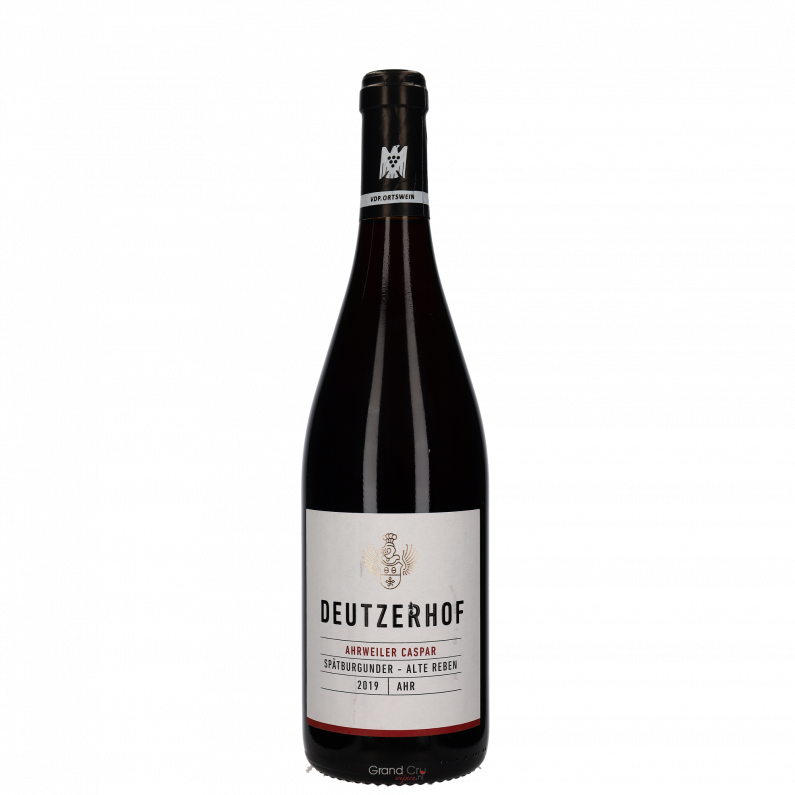
De specificaties zoals vermeld bij de wijn (o.a. wijnjaar) en in de titel zijn leidend en er kunnen geen rechten worden ontleend aan de afbeelding die wordt getoond. Lees meer in onze Frequenty asked questions
| Type of Wine | |
|---|---|
| Country | Germany |
| Region | |
| Winery | |
| Vintage | 2019 |
| Grape | |
| Content (Alc) | 0.75 ltr (13.5%) |
| Drink window | 2023 - 2030 |
Log in to request a custom quote.
In stock
6 items available
Description
The magnificent Deutzerhof winery is located far from the hustle and bustle of the Ahr Rotwein Straße, nestled amidst the Mönchberg vineyards on the outskirts of Mayschoss an der Ahr. Deutzerhof was first mentioned in 1574 as a winery in Mayschoss. In 1980, Wolfgang Hehle moved to its current location near the Mönchberg vineyards.
The Ahr Valley in northern Rhineland-Palatinate is one of the most recognized and emerging (red) wine regions in Germany. Approximately 85% of the vineyard area is used for the cultivation of premium red wines. The grape variety mix at Deutzerhof reflects this. 72% of Deutzerhof's vineyards consist of Pinot Noir, 13% Frühburgunder, 1% Dornfelder, and 1% Portugier. The white varieties Riesling and Chardonnay account for 10% and 2%, respectively. Of the red grape varieties, the majority are Pinot Noir, also known as Spätburgunder, and Deutzerhof is the undisputed expert in this king of grapes.
Caspar C. comes largely from the Ahrweiler Daubhaus. Only old vines, at least 30 to 40 years old, are used for Caspar C. At Deutzerhof, they advocate natural and traditional vinification, meaning fermentation occurs spontaneously. After fermentation, the cuvée is placed in oak barrels. Nine months later, an exceptional wine is created! Various plots of the vineyard are aged in barriques, and only in July, after malolactic fermentation is complete, are the barrels individually tested and determined which ones meet the requirements of Caspar C.
The Deutzerhof Spätburgunder CASPAR C. has a beautiful, bright ruby-red color in the glass. It has a nose of cherries, nuts, red currants, and a light oaky note. A characteristic, full-bodied, structured wine with an intensely fruity flavor and harmonious acidity. It also has a wonderfully earthy, mineral character. The Caspar C. is an ideal accompaniment to dishes, whether with strong, dark sauces or fried foods. This wine also makes a worthy accompaniment to casseroles, pasta dishes, and risottos.
Specifications
| Packing information | Box |
|---|---|
| Type of Wine | Red |
| Country | Germany |
| Region | Ahr |
| Winery | Deutzerhof |
| Grape | Pinot Noir |
| Biological certified | No |
| Natural wine | No |
| Vegan | No |
| Vintage | 2019 |
| Drinking as of | 2023 |
| Drinking till | 2030 |
| Alcohol % | 13.5 |
| Alcohol free/low | No |
| Content | 0.75 ltr |
| Oak aging | Yes |
| Sparkling | No |
| Dessert wine | No |
| Closure | Cork |
| Tasting Profiles | Droog, Fruitig, Houtgerijpt, Mineraal, Rood fruit, Soepel, Vol |
| Drink moments | Cadeau!, Lekker luxe, Met vrienden, Open haard, Romantisch, Summer party, Terras |
Wijnhuis
Deutzerhof is located in the German Ahrtal, just over an hour's drive from Venlo. The beautiful mountains with terraces on which the vines are planted form a fantastic backdrop. The slate soil of the Ahr Mountains gives the wines their special character.
The wine company that we now call Deutzerhof was founded in 1574 by Caspar Cossmann. In 1868, his successors joined the very first wine cooperative in the world. In 1952, Alfred Cossmann decided to leave the cooperative and to grow grapes independently again and to market his wines. At that time he owned 2.5 hectares in and around Mayschoss.
In 1977 his only daughter Hella married the baker's son Wolfgang Hehle. Wolfgang had no winemaking experience and was apprenticed to his father-in-law. In 1982 Wolfgang graduated as a wine master and in 1980 the new and current wine company was built. Because there were no successors from the Crossmann family, it was decided to continue the company under the name Deutzerhof.
Wolfgang decided to focus on quality wines. His efforts were rewarded in 1992 with the 'Deutschen Rotweinpreis' from wine magazine Vinum for his 'Caspar C'. In 1994 Deutzerhof was included in the list of VDP wine companies, making it one of the best 100 German wine companies. From that moment on, Germany discovered its wines and top ratings followed, including 4 grapes in the German Gault&Millau guide, 4 stars from Eichelmann, 3.5 stars from Vinum and 93 points from Falstaff.
The company is now led by Hans-Jorg Luchau and Christoph Hoffmann. The current bottle production is 35,000 to 40,000 bottles per year. Part is exported, most goes to the German market.
Deutzerhof has stood for quality and characterful wines for years and is well worth a visit. The philosophy of Deutzerhof is that wine is made in a natural and traditional way. This also applies to plantings in and around the vineyards, where herbs and grasses grow between the vines.
The starting point for the harvest is that the grapes have a good balance between sugar and acids. Picking is done manually and in phases. Vinification is done naturally with spontaneous fermentation and the use of new and old oak barrels for maturation provides the individual terroir taste of Deutzerhof. The result is characterful, unique and high-quality wines of the classic type, which are so characteristic of Deutzerhof.
Food
Binnenkort beschikbaar
Voor deze wijn worden binnenkort automatisch passende gerechten toegevoegd. In de tussentijd kunt u onze wijnadvies tool gebruiken.
Ontdek onze Wijnadvies ToolThe magnificent Deutzerhof winery is located far from the hustle and bustle of the Ahr Rotwein Straße, nestled amidst the Mönchberg vineyards on the outskirts of Mayschoss an der Ahr. Deutzerhof was first mentioned in 1574 as a winery in Mayschoss. In 1980, Wolfgang Hehle moved to its current location near the Mönchberg vineyards.
The Ahr Valley in northern Rhineland-Palatinate is one of the most recognized and emerging (red) wine regions in Germany. Approximately 85% of the vineyard area is used for the cultivation of premium red wines. The grape variety mix at Deutzerhof reflects this. 72% of Deutzerhof's vineyards consist of Pinot Noir, 13% Frühburgunder, 1% Dornfelder, and 1% Portugier. The white varieties Riesling and Chardonnay account for 10% and 2%, respectively. Of the red grape varieties, the majority are Pinot Noir, also known as Spätburgunder, and Deutzerhof is the undisputed expert in this king of grapes.
Caspar C. comes largely from the Ahrweiler Daubhaus. Only old vines, at least 30 to 40 years old, are used for Caspar C. At Deutzerhof, they advocate natural and traditional vinification, meaning fermentation occurs spontaneously. After fermentation, the cuvée is placed in oak barrels. Nine months later, an exceptional wine is created! Various plots of the vineyard are aged in barriques, and only in July, after malolactic fermentation is complete, are the barrels individually tested and determined which ones meet the requirements of Caspar C.
The Deutzerhof Spätburgunder CASPAR C. has a beautiful, bright ruby-red color in the glass. It has a nose of cherries, nuts, red currants, and a light oaky note. A characteristic, full-bodied, structured wine with an intensely fruity flavor and harmonious acidity. It also has a wonderfully earthy, mineral character. The Caspar C. is an ideal accompaniment to dishes, whether with strong, dark sauces or fried foods. This wine also makes a worthy accompaniment to casseroles, pasta dishes, and risottos.
| Packing information | Box |
|---|---|
| Type of Wine | Red |
| Country | Germany |
| Region | Ahr |
| Winery | Deutzerhof |
| Grape | Pinot Noir |
| Biological certified | No |
| Natural wine | No |
| Vegan | No |
| Vintage | 2019 |
| Drinking as of | 2023 |
| Drinking till | 2030 |
| Alcohol % | 13.5 |
| Alcohol free/low | No |
| Content | 0.75 ltr |
| Oak aging | Yes |
| Sparkling | No |
| Dessert wine | No |
| Closure | Cork |
| Tasting Profiles | Droog, Fruitig, Houtgerijpt, Mineraal, Rood fruit, Soepel, Vol |
| Drink moments | Cadeau!, Lekker luxe, Met vrienden, Open haard, Romantisch, Summer party, Terras |
Deutzerhof is located in the German Ahrtal, just over an hour's drive from Venlo. The beautiful mountains with terraces on which the vines are planted form a fantastic backdrop. The slate soil of the Ahr Mountains gives the wines their special character.
The wine company that we now call Deutzerhof was founded in 1574 by Caspar Cossmann. In 1868, his successors joined the very first wine cooperative in the world. In 1952, Alfred Cossmann decided to leave the cooperative and to grow grapes independently again and to market his wines. At that time he owned 2.5 hectares in and around Mayschoss.
In 1977 his only daughter Hella married the baker's son Wolfgang Hehle. Wolfgang had no winemaking experience and was apprenticed to his father-in-law. In 1982 Wolfgang graduated as a wine master and in 1980 the new and current wine company was built. Because there were no successors from the Crossmann family, it was decided to continue the company under the name Deutzerhof.
Wolfgang decided to focus on quality wines. His efforts were rewarded in 1992 with the 'Deutschen Rotweinpreis' from wine magazine Vinum for his 'Caspar C'. In 1994 Deutzerhof was included in the list of VDP wine companies, making it one of the best 100 German wine companies. From that moment on, Germany discovered its wines and top ratings followed, including 4 grapes in the German Gault&Millau guide, 4 stars from Eichelmann, 3.5 stars from Vinum and 93 points from Falstaff.
The company is now led by Hans-Jorg Luchau and Christoph Hoffmann. The current bottle production is 35,000 to 40,000 bottles per year. Part is exported, most goes to the German market.
Deutzerhof has stood for quality and characterful wines for years and is well worth a visit. The philosophy of Deutzerhof is that wine is made in a natural and traditional way. This also applies to plantings in and around the vineyards, where herbs and grasses grow between the vines.
The starting point for the harvest is that the grapes have a good balance between sugar and acids. Picking is done manually and in phases. Vinification is done naturally with spontaneous fermentation and the use of new and old oak barrels for maturation provides the individual terroir taste of Deutzerhof. The result is characterful, unique and high-quality wines of the classic type, which are so characteristic of Deutzerhof.
Binnenkort beschikbaar
Voor deze wijn worden binnenkort automatisch passende gerechten toegevoegd. In de tussentijd kunt u onze wijnadvies tool gebruiken.
Ontdek onze Wijnadvies ToolDiscover Wine Trivia
Sign in to unlock fascinating facts about this wine and expand your knowledge.
Sign InDescription
The magnificent Deutzerhof winery is located far from the hustle and bustle of the Ahr Rotwein Straße, nestled amidst the Mönchberg vineyards on the outskirts of Mayschoss an der Ahr. Deutzerhof was first mentioned in 1574 as a winery in Mayschoss. In 1980, Wolfgang Hehle moved to its current location near the Mönchberg vineyards.
The Ahr Valley in northern Rhineland-Palatinate is one of the most recognized and emerging (red) wine regions in Germany. Approximately 85% of the vineyard area is used for the cultivation of premium red wines. The grape variety mix at Deutzerhof reflects this. 72% of Deutzerhof's vineyards consist of Pinot Noir, 13% Frühburgunder, 1% Dornfelder, and 1% Portugier. The white varieties Riesling and Chardonnay account for 10% and 2%, respectively. Of the red grape varieties, the majority are Pinot Noir, also known as Spätburgunder, and Deutzerhof is the undisputed expert in this king of grapes.
Caspar C. comes largely from the Ahrweiler Daubhaus. Only old vines, at least 30 to 40 years old, are used for Caspar C. At Deutzerhof, they advocate natural and traditional vinification, meaning fermentation occurs spontaneously. After fermentation, the cuvée is placed in oak barrels. Nine months later, an exceptional wine is created! Various plots of the vineyard are aged in barriques, and only in July, after malolactic fermentation is complete, are the barrels individually tested and determined which ones meet the requirements of Caspar C.
The Deutzerhof Spätburgunder CASPAR C. has a beautiful, bright ruby-red color in the glass. It has a nose of cherries, nuts, red currants, and a light oaky note. A characteristic, full-bodied, structured wine with an intensely fruity flavor and harmonious acidity. It also has a wonderfully earthy, mineral character. The Caspar C. is an ideal accompaniment to dishes, whether with strong, dark sauces or fried foods. This wine also makes a worthy accompaniment to casseroles, pasta dishes, and risottos.
Specifications
| Packing information | Box |
|---|---|
| Type of Wine | Red |
| Country | Germany |
| Region | Ahr |
| Winery | Deutzerhof |
| Grape | Pinot Noir |
| Biological certified | No |
| Natural wine | No |
| Vegan | No |
| Vintage | 2019 |
| Drinking as of | 2023 |
| Drinking till | 2030 |
| Alcohol % | 13.5 |
| Alcohol free/low | No |
| Content | 0.75 ltr |
| Oak aging | Yes |
| Sparkling | No |
| Dessert wine | No |
| Closure | Cork |
| Tasting Profiles | Droog, Fruitig, Houtgerijpt, Mineraal, Rood fruit, Soepel, Vol |
| Drink moments | Cadeau!, Lekker luxe, Met vrienden, Open haard, Romantisch, Summer party, Terras |
Wijnhuis
Deutzerhof is located in the German Ahrtal, just over an hour's drive from Venlo. The beautiful mountains with terraces on which the vines are planted form a fantastic backdrop. The slate soil of the Ahr Mountains gives the wines their special character.
The wine company that we now call Deutzerhof was founded in 1574 by Caspar Cossmann. In 1868, his successors joined the very first wine cooperative in the world. In 1952, Alfred Cossmann decided to leave the cooperative and to grow grapes independently again and to market his wines. At that time he owned 2.5 hectares in and around Mayschoss.
In 1977 his only daughter Hella married the baker's son Wolfgang Hehle. Wolfgang had no winemaking experience and was apprenticed to his father-in-law. In 1982 Wolfgang graduated as a wine master and in 1980 the new and current wine company was built. Because there were no successors from the Crossmann family, it was decided to continue the company under the name Deutzerhof.
Wolfgang decided to focus on quality wines. His efforts were rewarded in 1992 with the 'Deutschen Rotweinpreis' from wine magazine Vinum for his 'Caspar C'. In 1994 Deutzerhof was included in the list of VDP wine companies, making it one of the best 100 German wine companies. From that moment on, Germany discovered its wines and top ratings followed, including 4 grapes in the German Gault&Millau guide, 4 stars from Eichelmann, 3.5 stars from Vinum and 93 points from Falstaff.
The company is now led by Hans-Jorg Luchau and Christoph Hoffmann. The current bottle production is 35,000 to 40,000 bottles per year. Part is exported, most goes to the German market.
Deutzerhof has stood for quality and characterful wines for years and is well worth a visit. The philosophy of Deutzerhof is that wine is made in a natural and traditional way. This also applies to plantings in and around the vineyards, where herbs and grasses grow between the vines.
The starting point for the harvest is that the grapes have a good balance between sugar and acids. Picking is done manually and in phases. Vinification is done naturally with spontaneous fermentation and the use of new and old oak barrels for maturation provides the individual terroir taste of Deutzerhof. The result is characterful, unique and high-quality wines of the classic type, which are so characteristic of Deutzerhof.
Food
Binnenkort beschikbaar
Voor deze wijn worden binnenkort automatisch passende gerechten toegevoegd. In de tussentijd kunt u onze wijnadvies tool gebruiken.
Ontdek onze Wijnadvies ToolTrivia
Discover Wine Trivia
Sign in to unlock fascinating facts about this wine and expand your knowledge.
Sign In