

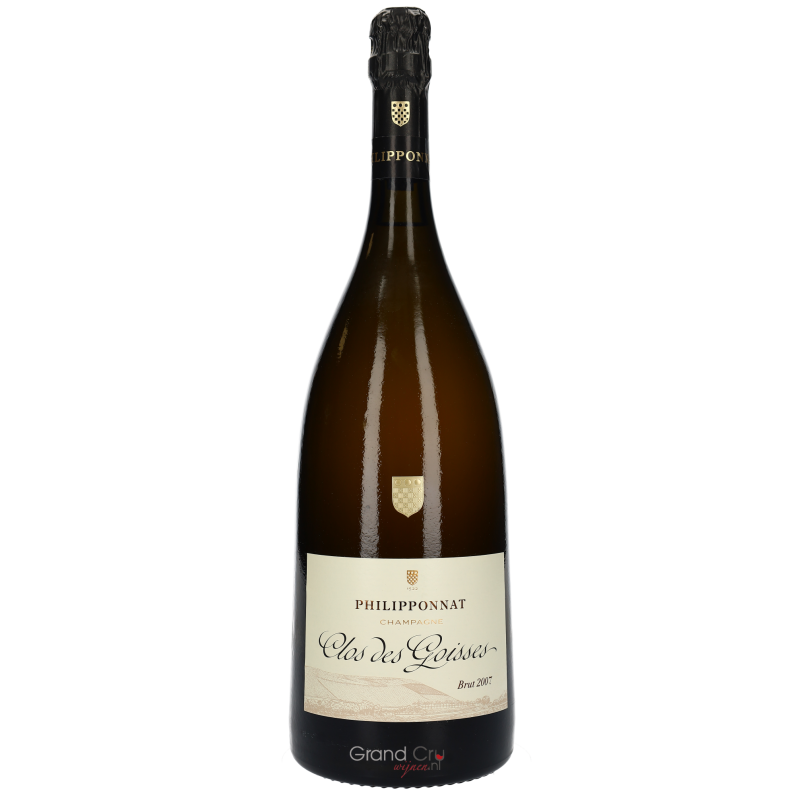
2007 Champagne Philipponnat Brut Clos des Goisses Magnum
| Type of Wine | White |
|---|---|
| Country | France |
| Region | |
| Winery | |
| Vintage | 2007 |
| Grape | |
| Content (Alc) | Magnum (1.5 ltr) (12.5%) |
| Drink window | 2024 - 2040 |
Ordering in bulk? Log in to request a quote
Low Stock
Only 1 left
Notities
Foto
Proefnotities
Heb je deze wijn geproefd?
Bewaar je beoordeling en aantekeningen.
Bewaar je beoordeling en aantekeningen.
Heb je deze wijn geproefd?
Log in om je proefnotitie op te slaan.
Log in om je proefnotitie op te slaan.
Log inHoe wil je je wijn beoordelen?
Max 5 MB. JPG, PNG, WebP.
Hoe smaakt het?
Klik op wat het beste past. Alles is optioneel.
Welke geuren en smaken herken je?
Klik op alles wat je herkent. Dit is optioneel.
Uiterlijk
Neus
Aroma's (neus)
Smaak
Smaken (mond)
Afdronk
Wijngegevens
Automatisch ingevuld vanuit productgegevens.
Persoonlijke gegevens
Philipponnat and the historic Clos des Goisses vineyard
Champagne Philipponnat is one of the oldest estates in the region and has been led by Charles Philipponnat since 2000. The style is classic, precise, and always focused on terroir. The estate's most famous wine is Clos des Goisses, a walled vineyard that has been produced as a separate cuvée since 1935. This steep slope produces one of the ripest and most powerful champagnes in the region. Under the Winery tab, you'll find extensive background information about this unique estate.
The location and character of Clos des Goisses
Clos des Goisses is located in Mareuil-sur-Aÿ and is one of the warmest and most calcareous terroirs in Champagne. The slope averages 35 percent, reaching 45 percent at its steepest point. This ensures ideal sun exposure and a constant flow of warm air along the vines. The thin topsoil sits directly on pure limestone. The roots penetrate deep into the subsoil, drawing minerality and tension from it.
The vineyard encompasses 5.83 hectares divided into fourteen plots, planted with approximately 70 percent Pinot Noir and 30 percent Chardonnay. The old vines, some planted in the 1950s and 1960s, yield concentrated fruit with aromatic purity. It is one of Champagne's most recognizable terroirs and is known for wines with power, high acidity, and remarkable longevity.
The grapes, blend and vinification of the 2007 Clos des Goisses Magnum
The 2007 vintage is composed of 52 percent Pinot Noir and 48 percent Chardonnay. Each parcel is vinified separately. At Clos des Goisses, a significant portion of the base wines is traditionally fermented in used oak barrels, often between 50 and 100 percent, depending on the vintage. This creates structure, texture, and depth without heavy oak notes. Malolactic fermentation is always blocked to preserve the natural acidity.
The final blend is determined only after thorough tastings, with only about half of the total harvest being selected for Clos des Goisses. The rest goes into other cuvées. The 2007 was disgorged in October 2023 and received a dosage of 4.5 grams per liter. This very low sugar content suits the vineyard's character and keeps the wine tight, pure, and precise.
Because this is a magnum, the wine benefits from a slower maturation process. Wines mature more slowly and evenly in magnums, better preserving their aromatic clarity. Furthermore, a magnum is more festive and often slightly more refined in flavor due to the ideal balance of wine and oxygen.
The 2007 vintage and the style of this cuvée
The 2007 vintage was influenced by a growing season in which botrytis added extra aromatic nuances to some plots. The fruit was harvested early to preserve natural acidity. Clos des Goisses benefited from its warm and steep location, yielding grapes with a higher potential alcohol than elsewhere in Mareuil-sur-Aÿ. This resulted in a full-bodied, powerful Champagne with an energetic core of acidity.
The wine opens with aromas of blossom, golden apple, pastry, warm spices, and a hint of eucalyptus. On the palate, it is full-bodied, intense, and taut, with a firm structure and a long finish in which citrus notes emerge clearly. The wine received 94 points and has a drinking window of 2024 to 2040.
Color, aroma and taste of the 2007 Champagne Philipponnat Clos des Goisses Magnum
In the glass, the wine displays a golden yellow color with fine bubbles. The nose is expressive with notes of honey blossom, ripe apple, warm pastry, cinnamon, spicy warmth, and subtle eucalyptus. The light exotic nuance comes from the botrytis-tinged portion of the vintage.
The palate is full, precision-driven, and fresh. The high acidity, characteristic of this cuvée, adds tension and length. Ripe fruit is supported by a chalky texture typical of the extremely calcareous soil. The finish is long, citrus-driven, and elegant. This magnum already shows complexity but will continue to refine in the coming years.
Would you like to order Philipponnat wines online?
If available, you'll find the official fact sheet and additional information about this fine wine in the "Attachments" tab. We'll automatically send you these when you order this wine. The wine is stored in our climate-controlled Wine Warehouse, and if you pick it up, you'll often receive a nice discount. You'll see your discount immediately when you select "Pick up" at the checkout page. We're located in Dordrecht, just off the A16 motorway with ample parking. Click here for our address. You can read full wine reviews from publications like Parker, Suckling, Vinous, and Wine Spectator.
Need advice on finding the perfect wine to pair with your dish? Click here for our exclusive Sommelier. Free for Grand Cru customers.
Wine and food pairings for the 2007 Clos des Goisses Magnum
Lobster with saffron and lemon butter
The rich structure of the dish complements beautifully with the powerful body and citrus accent in the aftertaste.
Veal rack with light creamy sauce and tarragon
The tender meat and fresh herbs enhance the tension and aromatic depth of the wine.
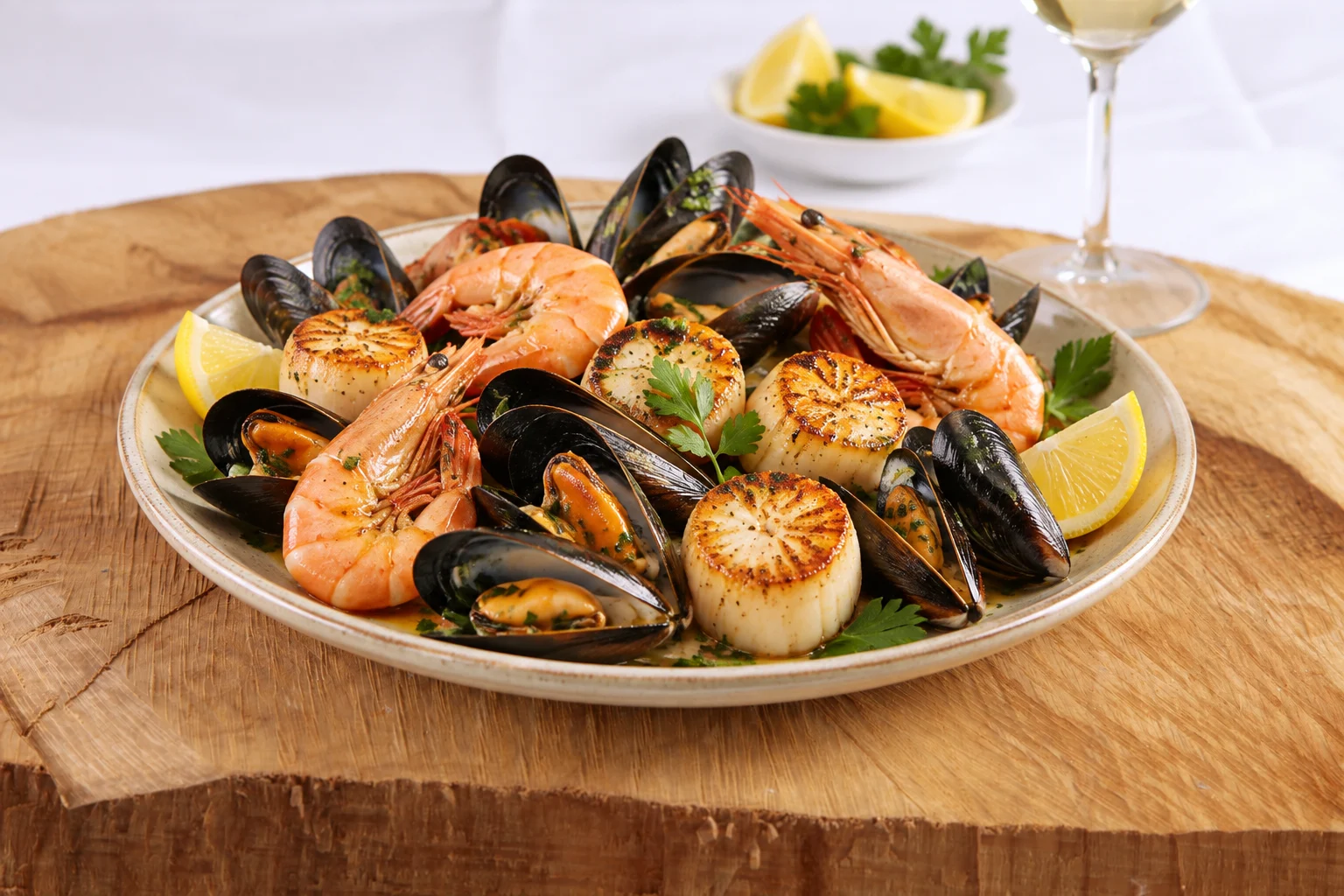
Saint Jacques with beurre blanc and green apple
The freshness of the apple and the creamy sauce go well with the high acidity and ripe fruit notes.
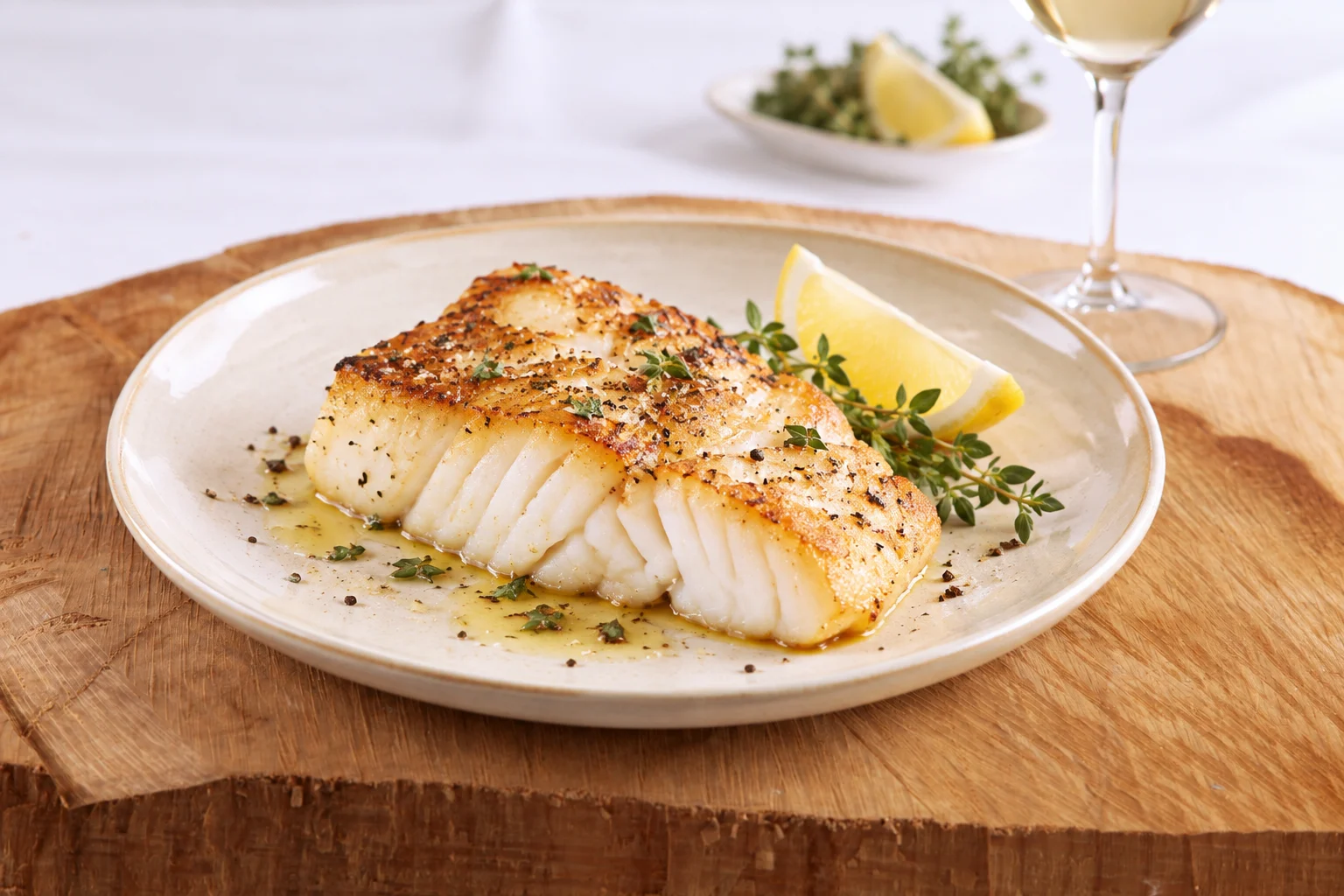
Baked turbot with citrus thyme
The refined structure of the fish matches the chalky precision of this Champagne.
Roasted cauliflower with hazelnut and light spices
The earthy nutty notes combine beautifully with the warm spiciness of the fragrance.
Duck breast with orange and mild spices
The combination of savoury, freshness and subtle sweetness finds a beautiful balance with the intensity of the wine.
| Type of Wine | White |
|---|---|
| Country | France |
| Region | Champagne |
| Icons | Icon France |
| Winery | Philipponnat |
| Grape | Pinot Noir |
| Biological certified | No |
| Natural wine | No |
| Vegan | No |
| Vintage | 2007 |
| Drinking as of | 2024 |
| Drinking till | 2040 |
| Alcohol % | 12.5 |
| Alcohol free/low | No |
| Content | Magnum (1.5 ltr) |
| Oak aging | Yes |
| Sparkling | Yes |
| Dessert wine | No |
| Closure | Cork |
| Parker rating | 94 |
| Tasting Profiles | Aards, Aromatisch, Bloemig, Complex, Droog, Fris, Fruitig, Krachtig, Kruidig, Mineraal, Rijk, Rond, Rood fruit, Steenfruit, Strak, Wit fruit |
| Drink moments | Barbecue, Borrelen, Cadeau!, Iets te vieren, Indruk maken, Lekker luxe, Met vrienden, Open haard, Romantisch, Summer party, Terras, Voor alledag |
| Sommy Pairing Beschrijving | Deze 2007 Philipponnat Clos des Goisses Magnum toont een goudgele kleur met rijp geel fruit, honingbloesem, warme specerijen en een krijtachtige mineraliteit, ondersteund door hoge, energieke zuren en een lange, citrusgedreven finale. Dankzij die combinatie van krachtige body, strakke frisheid en subtiele kruidigheid sluit de wijn prachtig aan bij witte vis, schelpdieren en feestelijke gerechten: de zuren snijden door romige sauzen heen, de mineraliteit weerspiegelt in gebakken of gegrilde vis en de rijkere aroma's omhelzen kreeft, Sint-Jacques en eend. Bereidingen die extra goed werken zijn kort gebakken of gegrilde bereidingen met een frisse citrussaus, romige beurre blanc of lichte kruiden zoals dragon en tijm, en ook zacht geroosterde of licht gekarameliseerde groenten met hazelnoot tonen versterken de kruidige en notige accenten van deze cuvée. |
Parker
The Wine Advocate
RP 94
Reviewed by:
Kristaps Karklins
Release Price:
NA
Drink Date:
2024 - 2040
Disgorged in October 2023 with a dosage of 4.5 grams per liter, Philipponnat’s 2007 Clos des Goisses—comprising 52% Pinot Noir and 48% Chardonnay—is a commendable effort, though if one were inclined to split hairs, it slightly pales in comparison when tasted alongside the more harmonious 2008 and 2009 vintages. The nose opens with aromas of honeysuckle, golden apple, pastry and warm spices, with a subtle hint of eucalyptus leaf and a faint exotic nuance, suggestive of the botrytis-influenced growing season. On the palate, it is full-bodied and incisive, revealing a generous core of fruit supported by bracing acidity. The wine concludes with a long, citrus-inflected finish.
Charles Philipponnat assumed leadership of this historic house in Mareuil-sur-Aÿ in 2000. The estate’s flagship wine remains the Clos des Goisses, first produced in 1935. This steep, south-facing vineyard is among Champagne’s warmest and ripest terroirs, with potential alcohol levels typically 1.5% higher than surrounding areas. It is simultaneously one of the region’s most calcareous sites, distinguished by a thin layer of topsoil over pure chalk, which, in combination with Philipponnat’s methods, gives rise to one of Champagne’s most age-worthy and enduring wines.
Philipponnat cultivates 29 hectares of vineyards, the majority of which are estate-owned. Viticulture here follows organic principles; however, like many producers in the region, to ensure sufficient yields, the house employs certain treatments against mildew and disease that, while ecologically considered, are not certified organic under French regulations. An additional 52 hectares of fruit are sourced via long-term contracts with partner growers, over half of whom now engage in thoughtful farming practices. In addition, juice equivalent to approximately two more hectares is typically obtained through purchase or exchanged for their tailles—the press fractions—which account for roughly 20% of total volume and are never included in any Philipponnat cuvée.
Vinification today is carried out using a combination of stainless steel tanks and used oak barrels—primarily 228-liter barriques sourced from Burgundy. The intention favors preserving freshness in their wines, with a significant proportion vinified in stainless steel; and yet, vintage wines often see increasing percentages of oak. Clos des Goisses, in particular, is typically vinified in at least 50% oak; in some vintages, such as 2015 and 2016, only oak-vinified components were used. Malolactic fermentation is always blocked in Clos des Goisses and other single-vineyard wines, which accounts to some of its pronounced acidity. For other cuvées, the decision is vintage-dependent—malolactic is practiced in cooler years to soften acidity but generally avoided in warmer ones.
The Clos des Goisses cuvée originates from a 5.83-hectare walled vineyard on the slopes of Mareuil-sur-Aÿ. For anyone visiting Champagne, a trip to this site is highly recommended—it is among the region’s most visually striking vineyards. At its steepest, the central section reaches a dramatic 45% gradient, while the average slope is an impressive 35%. Toward the eastern end, where Chardonnay is planted, the incline becomes gentler. The soils are exceedingly poor, with chalk just beneath the surface, allowing vine roots to penetrate directly into the crevices of the bedrock. In the vineyard’s upper sector, the chalk substrate is even visible on the surface where erosion has stripped away the topsoil. Due to the terrain, viticultural work is performed manually using small tools, in much the same manner as it would have been a century ago.
The Clos des Goisses vineyard is planted to approximately 70% Pinot Noir and 30% Chardonnay, with an average vine age exceeding 35 years. However, the upper terrace was planted in the 1950s, and the central portion dates back to 1964. The upper sector also provides fruit for the estate’s rosé Champagnes—it is here that the rosé de saignée component for Clos des Goisses Juste Rosé is produced, as well as the red wine used in Philipponnat’s other rosé bottlings.
With 14 parcels comprising Clos des Goisses, each is vinified separately, allowing for uncompromising selection based on aromatic purity, acid structure and textural nuance. Following tasting evaluations, only about half of the fruit is typically selected for inclusion in the final Clos des Goisses blend; the remainder is directed to other cuvées in the Philipponnat portfolio. Due to the site’s elevated maturity—potential alcohol levels often exceed 11% at harvest—grapes are usually picked two to three days earlier than elsewhere in the village, eliminating any need for chaptalization. In warmer years, which are now increasingly frequent, potential alcohol levels can reach unprecedented heights; while fruit in 1985 reached some 9.3% potential alcohol, it attained 11.7% in 2015, resulting in a finished Champagne with 13.1% alcohol.
Dosage is minimal and consistent: all vintage-dated cuvées receive precisely 4.25 grams per liter. This figure is never adjusted, allowing the wine to express the character of each vintage without interference, Charles Philipponnat notes.
These are full-bodied, intense and textural wines, yet they never forgo the signature brisk acidity and chalky backbone that define their origin.
Published: Jul 31, 2025
Lorem ipsum dolor sit amet, consectetur adipiscing elit. Sed do eiusmod tempor incididunt ut labore et dolore magna aliqua...
Exclusive Content
Sign in to unlock professional wine reviews from world-renowned critics
The history of the Philipponnat family in Champagne goes back to no less than 1697. In the centuries that followed, the family was active in making Champagne for many years. The traditional Champagne House Philipponnat was finally founded in 1910 by Auguste and Pierre Philipponnat. They managed to get hold of beautiful historic cellars, which originated in the 18th century. The house is located in Mareuil-sur-Ay, five kilometers east of Epernay, in the heart of the Champagne region.
The cool cellars are the perfect place for the Champagnes to mature on the yeast cells, giving the wine complexity and fine bubbles. Philipponnat wines undergo a bottle aging of at least two years, but usually even three years. In the case of the Millésimé, this period is even longer. The wine of the Clos des Goisses is even stored in the cellar for years, so that it can keep its fresh and complex character for years.
Philipponnat has a total of 17 hectares of vineyards, all with Grand Cru status. In addition, grapes are purchased from first-class producers in the area. We only work with suppliers who guarantee perfect quality grapes and with whom Philipponnat maintains a long-term relationship. The production is 500,000 bottles per year. The wines mainly use pinot – noir – grapes, which give the wines breadth and complexity.
Deze 2007 Philipponnat Clos des Goisses Magnum toont een goudgele kleur met rijp geel fruit, honingbloesem, warme specerijen en een krijtachtige mineraliteit, ondersteund door hoge, energieke zuren en een lange, citrusgedreven finale. Dankzij die combinatie van krachtige body, strakke frisheid en subtiele kruidigheid sluit de wijn prachtig aan bij witte vis, schelpdieren en feestelijke gerechten: de zuren snijden door romige sauzen heen, de mineraliteit weerspiegelt in gebakken of gegrilde vis en de rijkere aroma's omhelzen kreeft, Sint-Jacques en eend. Bereidingen die extra goed werken zijn kort gebakken of gegrilde bereidingen met een frisse citrussaus, romige beurre blanc of lichte kruiden zoals dragon en tijm, en ook zacht geroosterde of licht gekarameliseerde groenten met hazelnoot tonen versterken de kruidige en notige accenten van deze cuvée.
Choose a category to discover dishes that pair well with this wine.
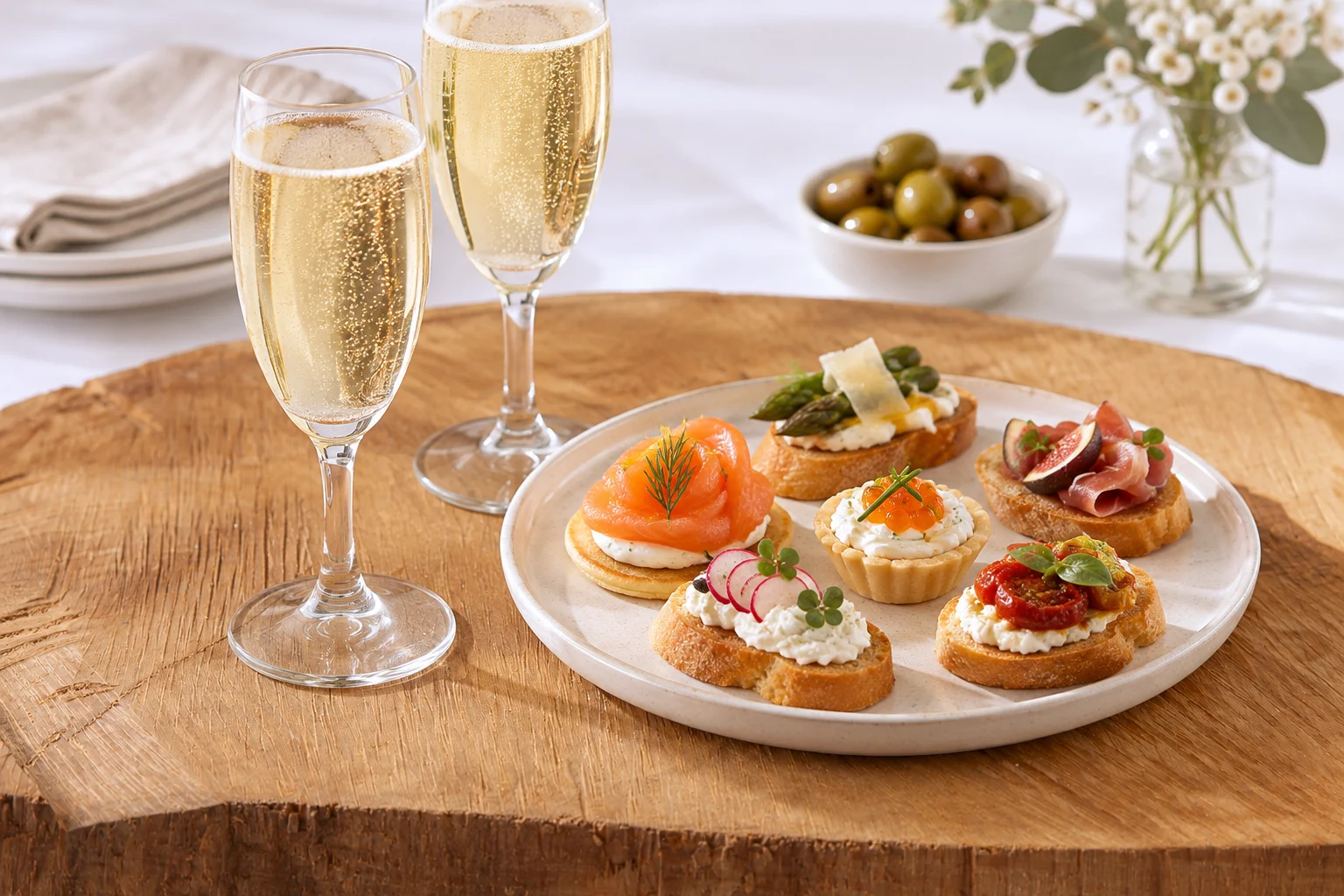
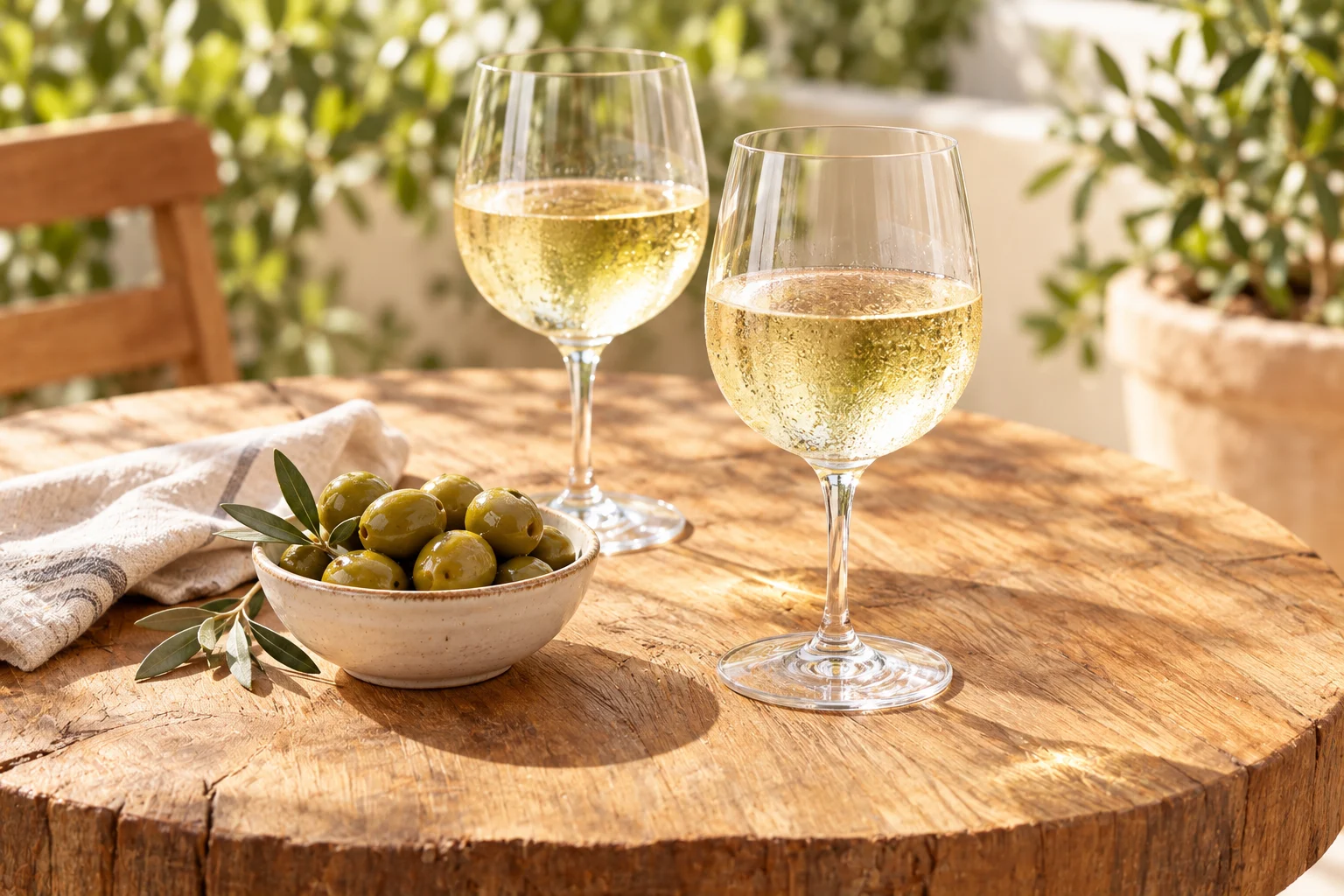
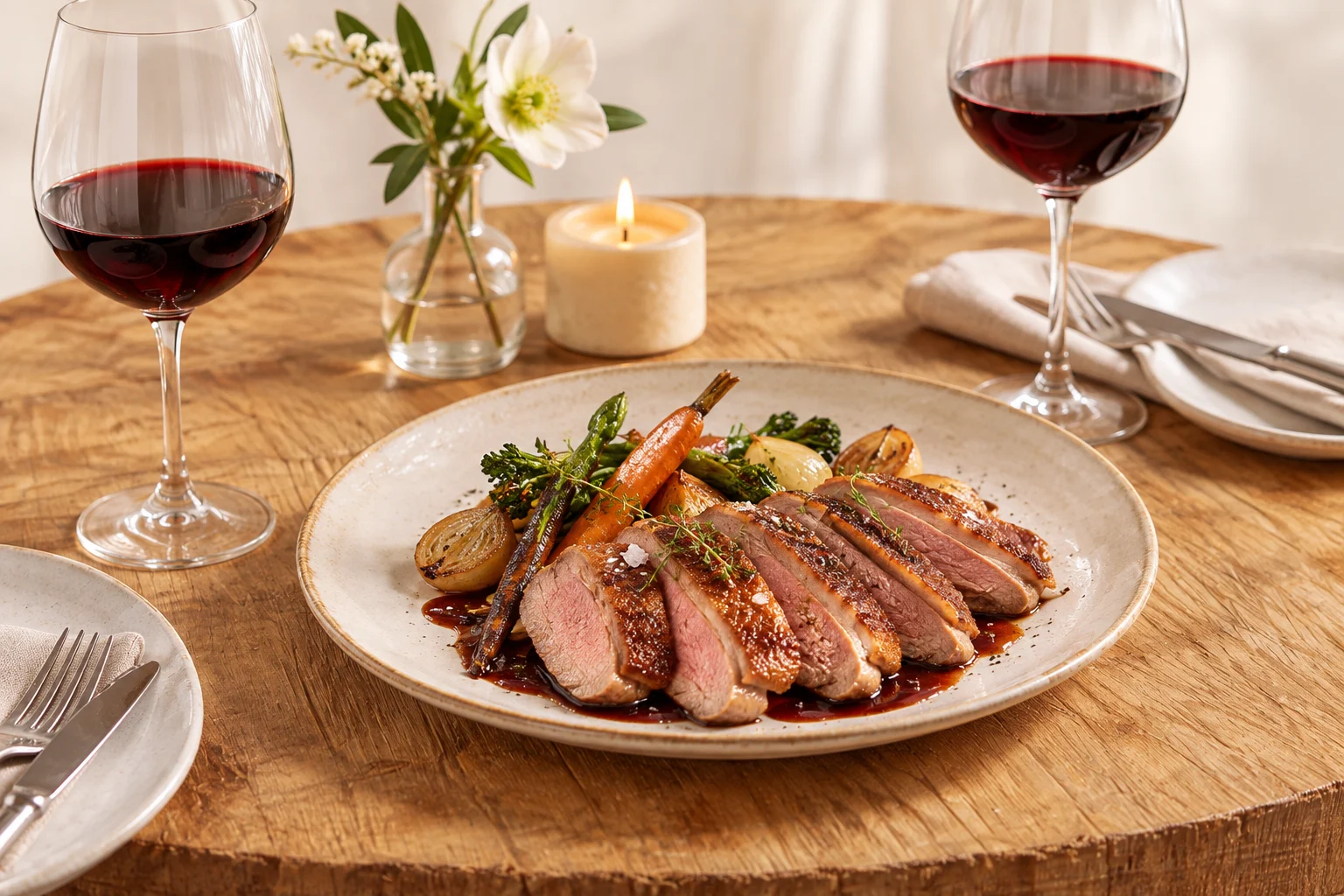
Do you already have a dish in mind?
Let Sommy find wines to pair with your meal.
Discover Wine Trivia
Sign in to unlock fascinating facts about this wine and expand your knowledge.
Sign In

+ 3 more attachments