

2023 Château Grand-Puy-Lacoste Pauillac Grand Cru Classé
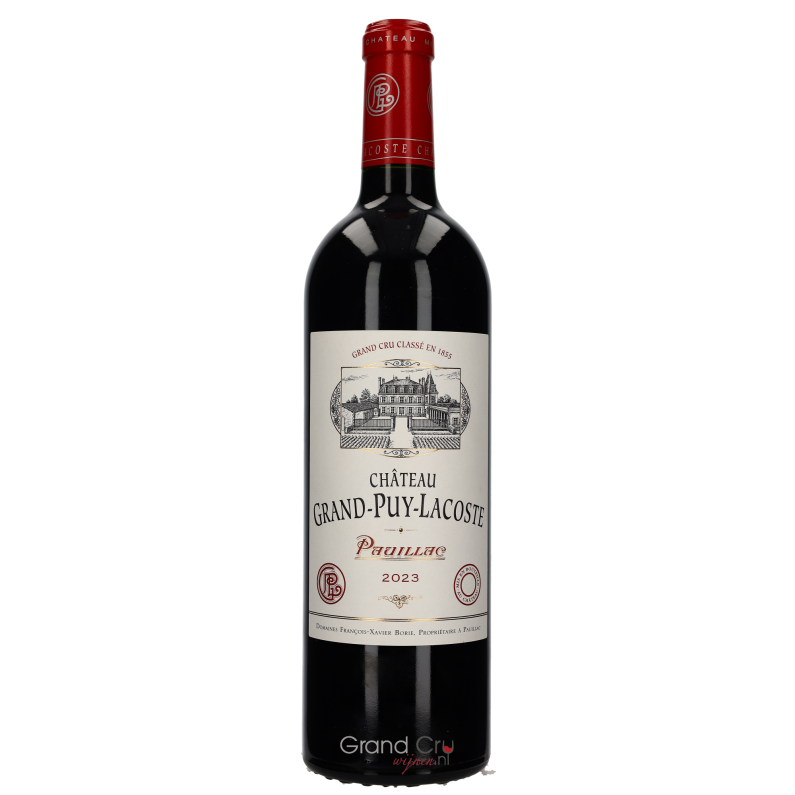
| Type of Wine | |
|---|---|
| Country | France |
| Region | |
| Appellation | Pauillac |
| Winery | |
| Vintage | 2023 |
| Grape | , |
| Content (Alc) | Standard (0.75 ltr) (13.5%) |
| Drink window | 2028 - 2048 |
Ordering in bulk? Log in to request a quote
In stock
6 items available
Notities
Foto
Proefnotities
Heb je deze wijn geproefd?
Bewaar je beoordeling en aantekeningen.
Bewaar je beoordeling en aantekeningen.
Heb je deze wijn geproefd?
Log in om je proefnotitie op te slaan.
Log in om je proefnotitie op te slaan.
Log inHoe wil je je wijn beoordelen?
Max 5 MB. JPG, PNG, WebP.
Hoe smaakt het?
Klik op wat het beste past. Alles is optioneel.
Welke geuren en smaken herken je?
Klik op alles wat je herkent. Dit is optioneel.
Uiterlijk
Neus
Aroma's (neus)
Smaak
Smaken (mond)
Afdronk
Wijngegevens
Automatisch ingevuld vanuit productgegevens.
Persoonlijke gegevens
Winery
Château Grand-Puy-Lacoste is one of the established names in Pauillac and is known for its consistent style and long aging potential. The estate has been in the hands of the Borie family since 1978, who have elevated the château through targeted investments and a clear vision. The focus is on precision in the vineyard and a classic approach in the cellar. This results in wines that remain true to their origins. You can find more information about this winery in the Winery tab.
Origin and terroir
This wine comes from Pauillac, one of the most prestigious appellations in the Médoc, located on the left bank of the Gironde. The vineyards of Grand-Puy-Lacoste are situated on a slightly elevated plateau with deep gravel soils. This stony structure ensures excellent drainage and helps the grapes ripen optimally. Beneath the gravel layer lies limestone, which contributes to freshness and balance. The proximity of the river acts as a temperature regulator, limiting extreme fluctuations and allowing the grapes to ripen gradually.
Grapes and vineyard management
The blend is dominated by Cabernet Sauvignon, complemented by Merlot. The average age of the vines is around 38 years, ensuring concentration and complexity. Careful work is carried out in the vineyard with respect for the ecosystem. Yields are deliberately kept low to enhance quality. Selection takes place both in the vineyard and in the cellar, ensuring that only the best grapes are used. Manual harvesting is standard, followed by rigorous sorting.
Vinification and aging
After the harvest, the grapes are destemmed and fermented in temperature-controlled stainless steel tanks. Vinification focuses on extraction without excessive harshness, with regular remontage to extract color and structure. The wine then undergoes malolactic fermentation. This is followed by aging in French oak barrels, a significant proportion of which are new. The sur lie aging contributes to additional complexity and a refined texture. The aging period typically lasts 16 to 18 months, depending on the vintage.
Color, smell and taste
In the glass, the wine displays a deep ruby red color with purple accents. On the nose, blackcurrants, cassis, and plums come to the fore, complemented by notes of cedarwood, graphite, and a subtle spiciness. As the wine opens up, nuances of tobacco and a light earthy touch emerge. On the palate, the structure is firm yet refined, with ripe tannins and fresh acidity. The finish is long and layered, with a beautiful balance between fruit and wood influences.
Style and character
This Pauillac displays a classic style in which power and elegance come together. The wine is structured and has distinct tannins, yet remains accessible due to the ripeness of the fruit. There is a clear focus on balance and precision, without over-extraction. This type of wine develops well in the bottle and gains complexity after a few years of aging. The character is recognizably Médoc, with an emphasis on cassis, structure, and a light mineral undertone.
Volume
The year 2023 in Bordeaux was characterized by a relatively warm growing season with sufficient rainfall in the spring. This ensured a good start to the vegetation. The summer brought warm days and cool nights, which helped preserve freshness in the grapes. The harvest took place under favorable conditions, allowing the grapes to be picked at optimal ripeness. The result is a wine with ripe fruit, good acidity, and a balanced structure, typical of a successful year in Pauillac.
Pick up in Dordrecht?
If available, you will find the official factsheet and additional information about this fine wine in the 'Attachments' tab. We will automatically send these to you upon ordering this wine. The wine is stored in our climate-controlled Wine Warehouse, and if you come to collect the wine, you will often receive a nice discount. You will see your discount immediately when you select 'Pick up' on the checkout page. We are located in Dordrecht, situated almost next to the A16 with ample parking. Click here for our address.
Location and terroir
Pauillac is located in the north of the Haut-Médoc and benefits from a unique combination of soil and climate. The vineyards are situated on gently rolling hills with a subsoil of gravel and pebbles. These soils warm up quickly and drain water well, which is ideal for Cabernet Sauvignon. Beneath these layers often lies limestone or clay, which provides extra structure and freshness to the wine. The nearby Gironde acts as a natural buffer against extreme weather conditions.
History
Pauillac's reputation was built in the 18th and 19th centuries, when the demand for Bordeaux wines grew strongly. The 1855 classification confirmed the region's status, with several châteaux being included as Premier and Cinquième Grand Cru Classé. This classification still plays an important role in how wines from Pauillac are judged and appreciated.
Grape varieties
Cabernet Sauvignon is the dominant grape in Pauillac and often makes up the largest part of the blend. This grape thrives exceptionally well on the gravelly soils and produces wines with structure, tannins, and aging potential. Merlot is used to add softness and roundness, while small amounts of Cabernet Franc and Petit Verdot can provide extra complexity. The exact composition varies by producer, but Cabernet Sauvignon remains the backbone.
Style and character of the wines
Wines from Pauillac are known for their power, depth, and clear structure. Young wines can be firm and closed, with pronounced tannins and concentrated fruit. With aging, they develop more complex aromas such as cedarwood, tobacco, and graphite. The balance between power and finesse is characteristic. Good Pauillac combines intensity with elegance and has a long finish.
Classification and appellation requirements
Pauillac falls under the Bordeaux AOC regulations, with specific requirements for grape varieties, yields, and alcohol percentages. The best-known classification is that of 1855, which includes several châteaux from Pauillac. Within this structure, there are various levels, from Premier Grand Cru Classé to Cinquième Grand Cru Classé. This classification is historically determined and remains relevant to the market.
Order Pauillac wine online?
The wines from Pauillac are stored in a climate-controlled Wine Warehouse. You often receive a discount when picking up your order, which is immediately visible when you select 'Pick up' during checkout.
| Type of Wine | Red |
|---|---|
| Country | France |
| Region | Bordeaux |
| Appellation | Pauillac |
| Winery | Chateau Grand-Puy-Lacoste |
| Grape | Cabernet Sauvignon, Merlot |
| Biological certified | No |
| Natural wine | No |
| Vegan | No |
| Vintage | 2023 |
| Drinking as of | 2028 |
| Drinking till | 2048 |
| Alcohol % | 13.5 |
| Alcohol free/low | No |
| Content | Standard (0.75 ltr) |
| Oak aging | Yes |
| Sparkling | No |
| Dessert wine | No |
| Closure | Cork |
| Parker rating | 95 |
| James Suckling rating | 95 |
| Vinous rating | 98 |
| Tasting Profiles | Complex, Donker fruit, Houtgerijpt, Krachtig, Kruidig, Mineraal, Rijk, Rood fruit, Tannines, Vol |
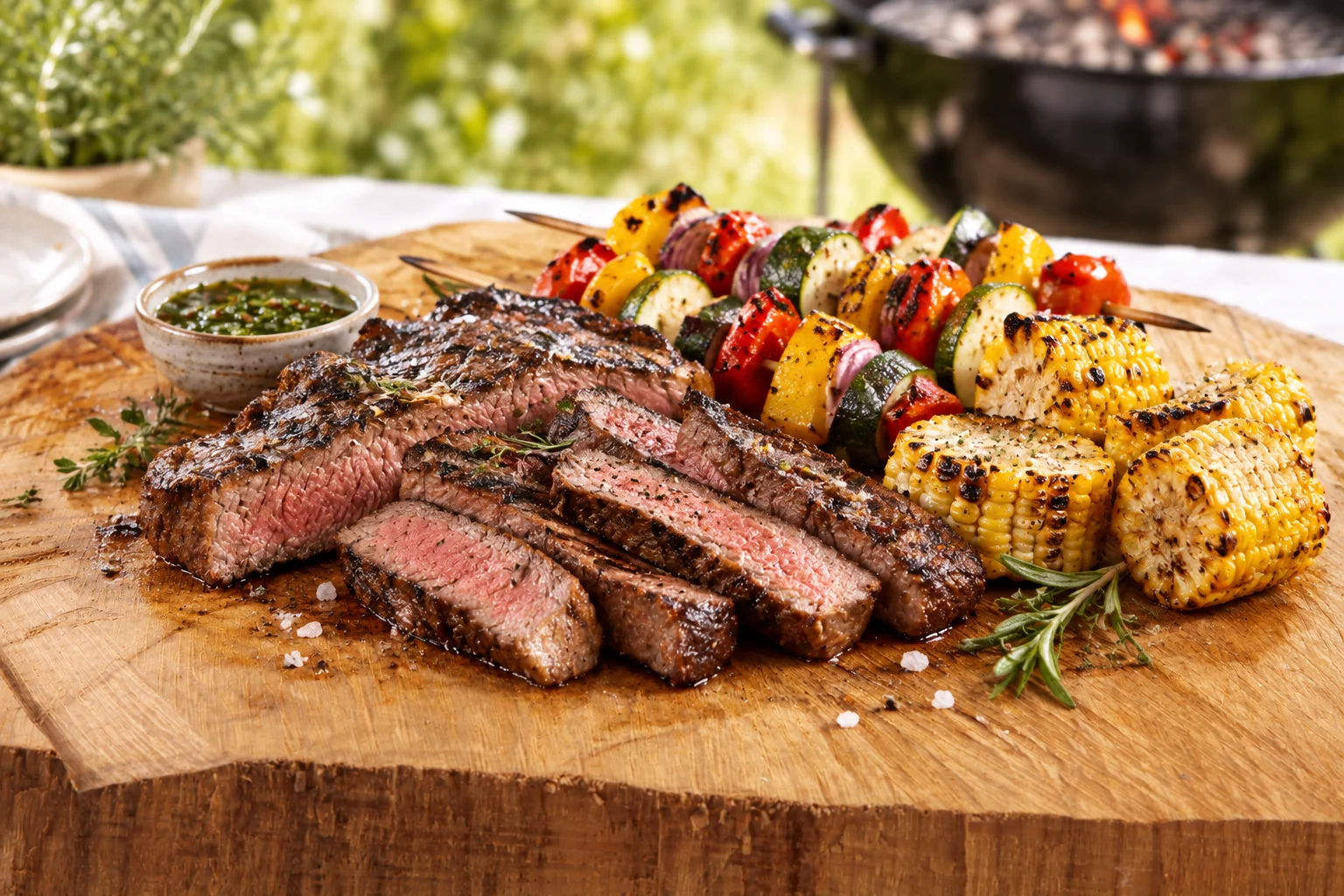
| Drink moments | Barbecue, Borrelen, Iets te vieren, Indruk maken, Met vrienden, Open haard, Romantisch, Terras |
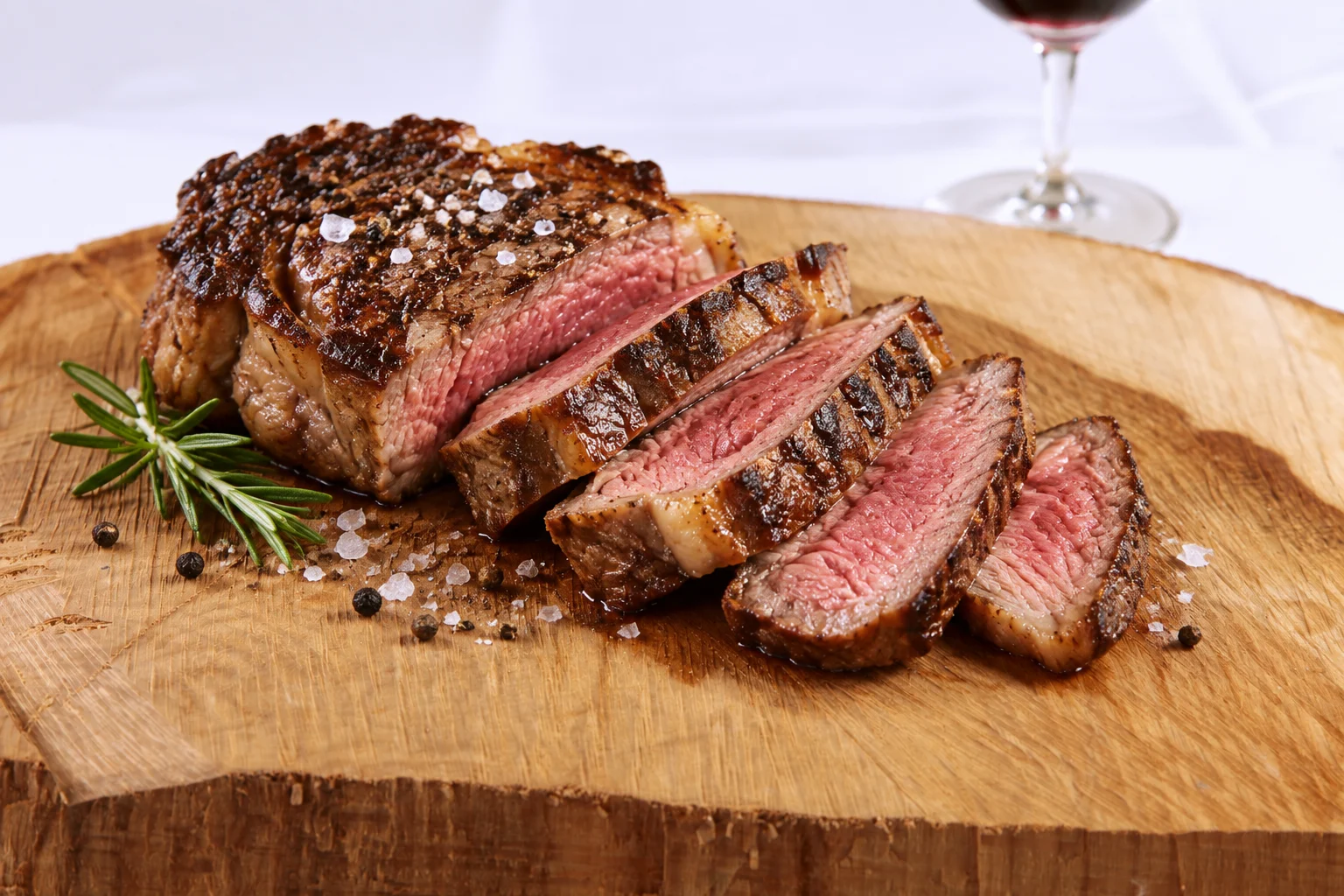
| Sommy Pairing Beschrijving | De 2022 Château Grand-Puy-Lacoste Pauillac Grand Cru Classé presenteert zich met een volle body, een stevige kern van fijne tannines en een frisse, gespierde afdronk, terwijl zwarte bessen en chocolade subtiel de literatuur van het terroir tekenen. Deze wijn, met 79% Cabernet Sauvignon en 21% Merlot, biedt elegante structuur en rijpe, donkerfruitige nuances die perfect aansluiten bij rundvlees en geuren van barbecue, zeker als het grillwerk en de vetten in balans worden gehouden. Extra waardevol zijn bereidingen zoals kort gegrilde ribeye met een kruidige rub, of langzaam gegaarde beef short ribs, waarbij een beetje perzikkoude marinade of cotes de boeuf op lage temperatuur de tannines laat versmelten en de wijn volledig tot zijn recht laat komen. |
Parker
The Wine Advocate RP 95
Reviewed by:
Yohan Castaing
Release Price:
NA
Drink Date:
2028 - 2048
A blend of 77% Cabernet Sauvignon and 23% Merlot, the 2023 Grand-Puy-Lacoste has turned out very well, evoking aromas of cassis, dark berries, cigar wrapper and rose petals, lifted by a delicate minty nuance. Medium- to full-bodied, enveloping and seamless, it is shaped by powdery, velvety tannins and a layered mid-palate that opens onto a long, vibrant and saline finish. A classic at this address, it nonetheless stands out as a particularly fine effort and an excellent value.
Published: Apr 09, 2026
Lorem ipsum dolor sit amet, consectetur adipiscing elit. Sed do eiusmod tempor incididunt ut labore et dolore magna aliqua...
James Suckling
Score
95
Château Grand-Puy-Lacoste Pauillac 2023
Wednesday, Dec 03, 2025
Vintage 2023
Cabernet sauvignon comes through beautifully. Lovely aromas of crushed raspberries, currants and pencil shavings follow through to a medium body with integrated tannins, pure fruit on the center palate and a creamy texture. Very drinkable now. Drink or hold.
James Suckling
Senior Editor
Lorem ipsum dolor sit amet, consectetur adipiscing elit. Sed do eiusmod tempor incididunt ut labore et dolore magna aliqua...
Vinous
(96-98)
Drinking Window
2030 - 2065
From: You’re Unbelievable: Bordeaux 2022 (May 2023)
The 2022 Grand Puy Lacoste was picked from 7 to 23 September and contains more Merlot due to the high quality of the fruit, matured in 75% new oak. There is 14.2% alcohol. Therefore, this lends this GPL a little more precocity and sensuality compared to other vintages, not cut from the same "classical" cloth as, say, the 2019 or 2020. Underlying this velvety veneer are enticing traits of freshly-rolled tobacco and undergrowth. The palate is medium-bodied with finely-sculpted tannins. Silky smooth in texture, so much so that it belies that backbone underneath. There is a peacock's tail of mineral-rich, quite peppery black fruit on the finish, completing a Pauillac endowed with huge potential.
- By Neal Martin on April 2023
Lorem ipsum dolor sit amet, consectetur adipiscing elit. Sed do eiusmod tempor incididunt ut labore et dolore magna aliqua...
Exclusive Content
Sign in to unlock professional wine reviews from world-renowned critics
The Grand-Puy-Lacoste family history archives date back to the 16th century. The first recorded owner was M. de Guiraud, a member of the Bordeaux parliament. The estate usually passed down female lines of inheritance and was the dowry in successive marriages. One of M. de Guiraud's daughters married M. de Jehan, another MP. Their son, Bertrand de Jehan, had a daughter who inherited the estate and married M. d'Issac. Traditionally, an owner's name was appended to a place name (such as Grand-Puy), but the hereditary daughters took their husbands' names upon marriage, which explains the numerous name changes by which Grand-Puy is known. When d'Issac's daughter married a Bordeaux lawyer named Saint Guirons, the property became "Grand-Puy Saint-Guirons", it was their daughter, Marie-Jeanne de Saint Guirons, who married François Lacoste. With this marriage in the 19th century, the property took on the name of Lacoste. Still, the name Saint-Guirons remained a reminder of the bond between the two families and of the estate's heritage, so for a time the wines were labeled 'Saint Guirons-Lacoste'. François Lacoste and Marie-Jeanne de Saint Guirons had three children, and after the death of the couple, their son Pierre-Frédéric Lacoste inherited the property in 1844. Pierre-Frédéric Lacoste was an enterprising man who was very devoted to his estate. Like François-Xavier Borie the next century, Lacoste focused on quality and improving the wine's reputation. In 1855 he rebuilt the château, and that same year Grand-Puy-Lacoste's status was officially recognized by its inclusion in the official list of Bordeaux's Great Classified Growths.
The history of Grand-Puy-Lacoste is fascinating in many ways. It is a family saga dating back to the 16th century. The name Grand-Puy, already mentioned in documents from the Middle Ages, comes from the old term "puy" which means "little knoll, small height". The vineyard lives up to its name and is located on outcrops with a terroir similar to that of the first vegetation of the Médoc. From the 16th century, the property remained linked to a single family from generation to generation, in a direct line through marriage until 1920, before being linked to another family in 1978: the Borie.
The castle has been owned by the Borie family since 1978. Jean-Eugène Borie's eldest son, François-Xavier, gradually renovated the property in vineyard, cellars and château. The Borie family has a long history of winemaking at the highest level with properties such as Château Haut Batailley and Château Ducru-Beaucaillou, respectively 5th and 2nd Grand Cru Classé. François-Xavier is now assisted by his daughter Emeline, who is responsible for the château's PR. With the purchase of Grand Puy Lacoste, the Borie family has awakened a "sleeping beauty". Now the domain has great prestige and is at the top of the classification in Pauillac.
Grand-Puy-Lacoste is located in the Pauillac terroir, one of the six common appellations of the Médoc along the left bank of the Gironde. The Pauillac appellation is limited to the municipal district of 2,274 hectares. It boasts 18 properties classified in 1855 (about 85% of the appellation's total production). The commune is separated from Saint-Estèphe in the north by the marshy area of Breuil and from Saint-Julien in the south by the hollow formed by the stream Juillac. The Grand-Puy plateau is located to the west of the village, above the hamlet of Bages. This offshoot of the grounds (called a "puy" in the old local dialect)
De 2022 Château Grand-Puy-Lacoste Pauillac Grand Cru Classé presenteert zich met een volle body, een stevige kern van fijne tannines en een frisse, gespierde afdronk, terwijl zwarte bessen en chocolade subtiel de literatuur van het terroir tekenen. Deze wijn, met 79% Cabernet Sauvignon en 21% Merlot, biedt elegante structuur en rijpe, donkerfruitige nuances die perfect aansluiten bij rundvlees en geuren van barbecue, zeker als het grillwerk en de vetten in balans worden gehouden. Extra waardevol zijn bereidingen zoals kort gegrilde ribeye met een kruidige rub, of langzaam gegaarde beef short ribs, waarbij een beetje perzikkoude marinade of cotes de boeuf op lage temperatuur de tannines laat versmelten en de wijn volledig tot zijn recht laat komen.
Choose a category to discover dishes that pair well with this wine.
Do you already have a dish in mind?
Let Sommy find wines to pair with your meal.
Discover Wine Trivia
Sign in to unlock fascinating facts about this wine and expand your knowledge.
Sign In