

2023 Château Grand-Puy-Lacoste Lacoste Borie Pauillac
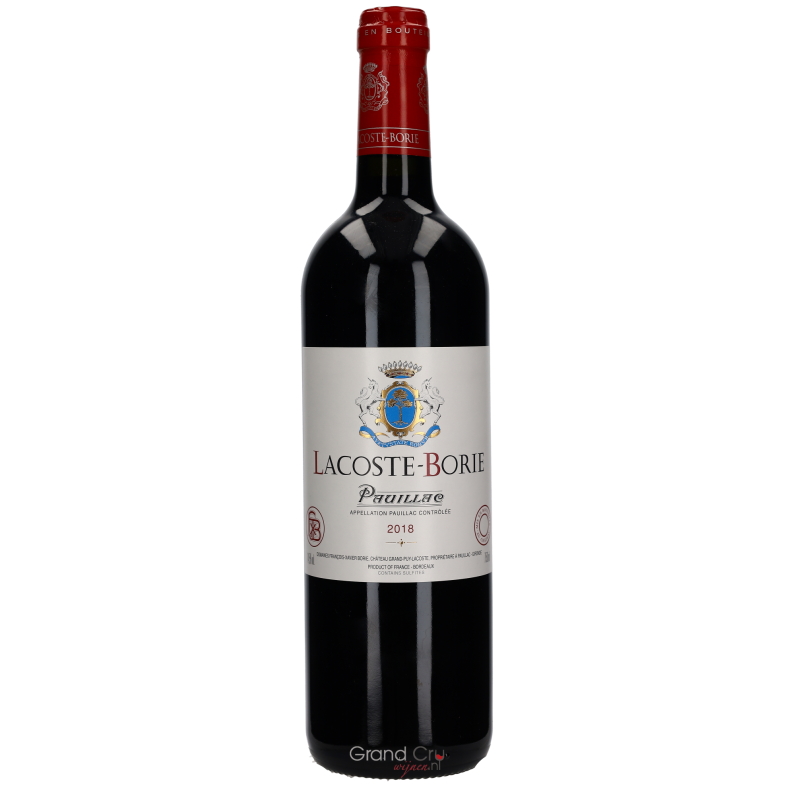
De specificaties zoals vermeld bij de wijn (o.a. wijnjaar) en in de titel zijn leidend en er kunnen geen rechten worden ontleend aan de afbeelding die wordt getoond. Lees meer in onze Frequenty asked questions
| Type of Wine | |
|---|---|
| Country | France |
| Region | |
| Appellation | Pauillac |
| Winery | |
| Vintage | 2023 |
| Grape | , , |
| Content (Alc) | Standard (0.75 ltr) (13.5%) |
| Drink window | 2027 - 2038 |
Ordering in bulk? Log in to request a quote
In stock
6 items available
Notities
Foto
Proefnotities
Heb je deze wijn geproefd?
Bewaar je beoordeling en aantekeningen.
Bewaar je beoordeling en aantekeningen.
Heb je deze wijn geproefd?
Log in om je proefnotitie op te slaan.
Log in om je proefnotitie op te slaan.
Log inHoe wil je je wijn beoordelen?
Max 5 MB. JPG, PNG, WebP.
Hoe smaakt het?
Klik op wat het beste past. Alles is optioneel.
Welke geuren en smaken herken je?
Klik op alles wat je herkent. Dit is optioneel.
Uiterlijk
Neus
Aroma's (neus)
Smaak
Smaken (mond)
Afdronk
Wijngegevens
Automatisch ingevuld vanuit productgegevens.
Persoonlijke gegevens
Lacoste-Borie Pauillac 2023
Lacoste-Borie is the second wine of Château Grand-Puy-Lacoste, a renowned fifth Grand Cru Classé from Pauillac. The wine benefits from the same vineyards and expertise, but is made with a focus on accessibility and drinking pleasure.
The 2023 is a classic blend of 56% Cabernet Sauvignon, 33% Merlot, and 11% Cabernet Franc. This composition provides structure, freshness, and aromatic complexity, while the style is slightly softer and more open than the Grand Vin.
Flavor profile of Lacoste-Borie 2023
On the nose, the wine opens with red and black berries such as strawberry, cassis, and wild berries. These are followed by floral notes and a light spiciness. Subtle citrus nuances also provide extra freshness.
On the palate, the wine is medium-bodied and supple. The texture is velvety, with fine tannins that provide structure without becoming harsh. The acidity keeps the wine lively and gives it length. The finish is elegant and slightly spicy, with an open and refined character.
Harvest, vinification and aging
The 2023 vintage in Bordeaux produced wines with a good balance between ripe fruit and fresh acidity. In Pauillac, this translates into wines that are accessible, yet have sufficient structure for further development.
The vinification focuses on preserving the fruit and finesse. Through careful selection of plots and grapes, a wine is created that reflects the style of Pauillac, yet is more accessible than the Grand Vin. Aging in wood provides additional structure and a subtle spiciness, without overpowering the fruit expression.
Reviews and drink window
The Wine Advocate rates the 2023 Lacoste-Borie 91 points. Yohan Castaing describes the wine as gourmand and lively, with aromas of strawberry, blackcurrant, wild berries, and flowers. The texture is velvety and delicate, with a long and perfumed finish.
Additionally, the wine scores 92 points and is described as medium-bodied with bright fruit, fine tannins, and a fresh, open structure. The recommendation is to drink the wine from 2026, with a drinking window until approximately 2036.
Food and wine pairings with Pauillac
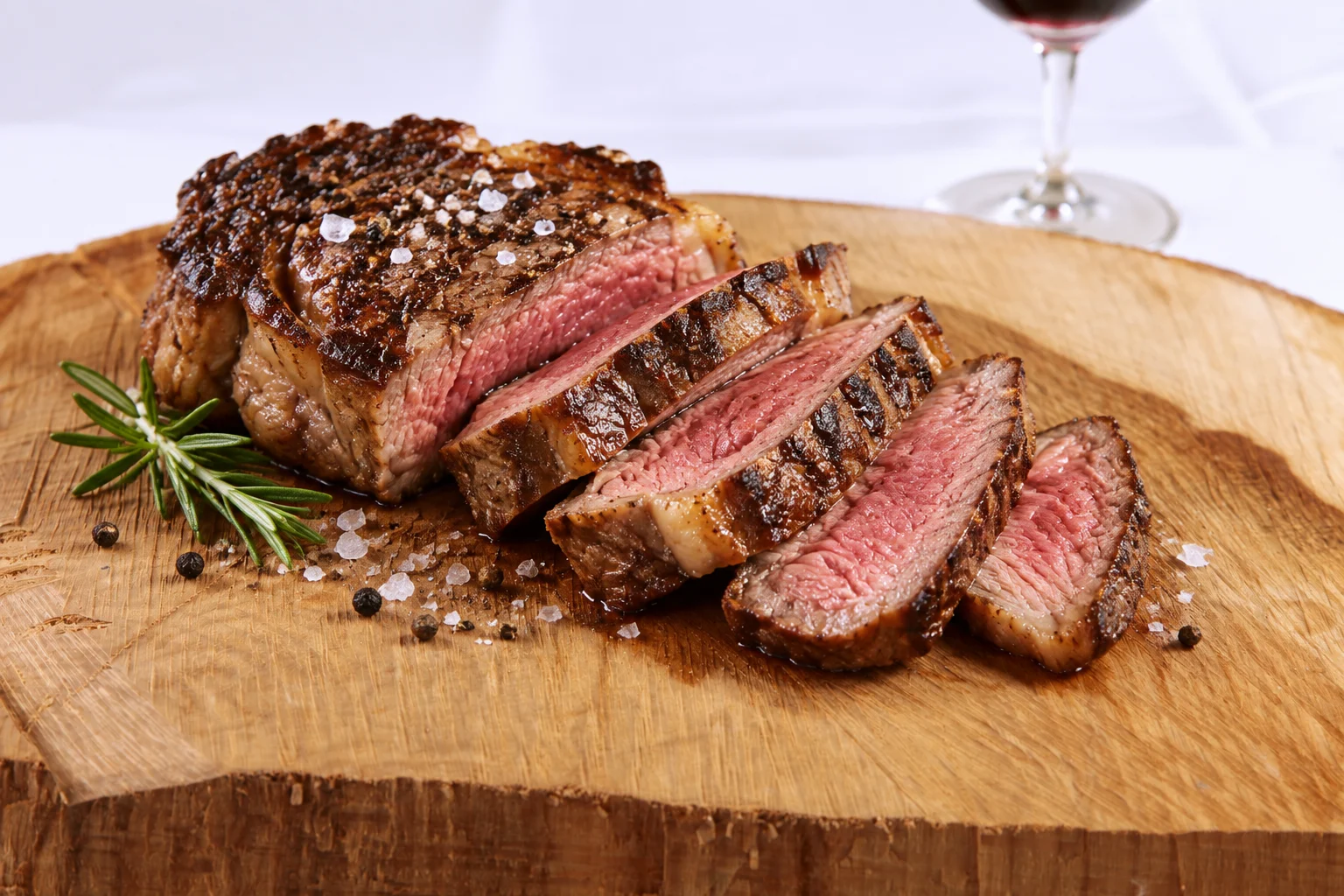
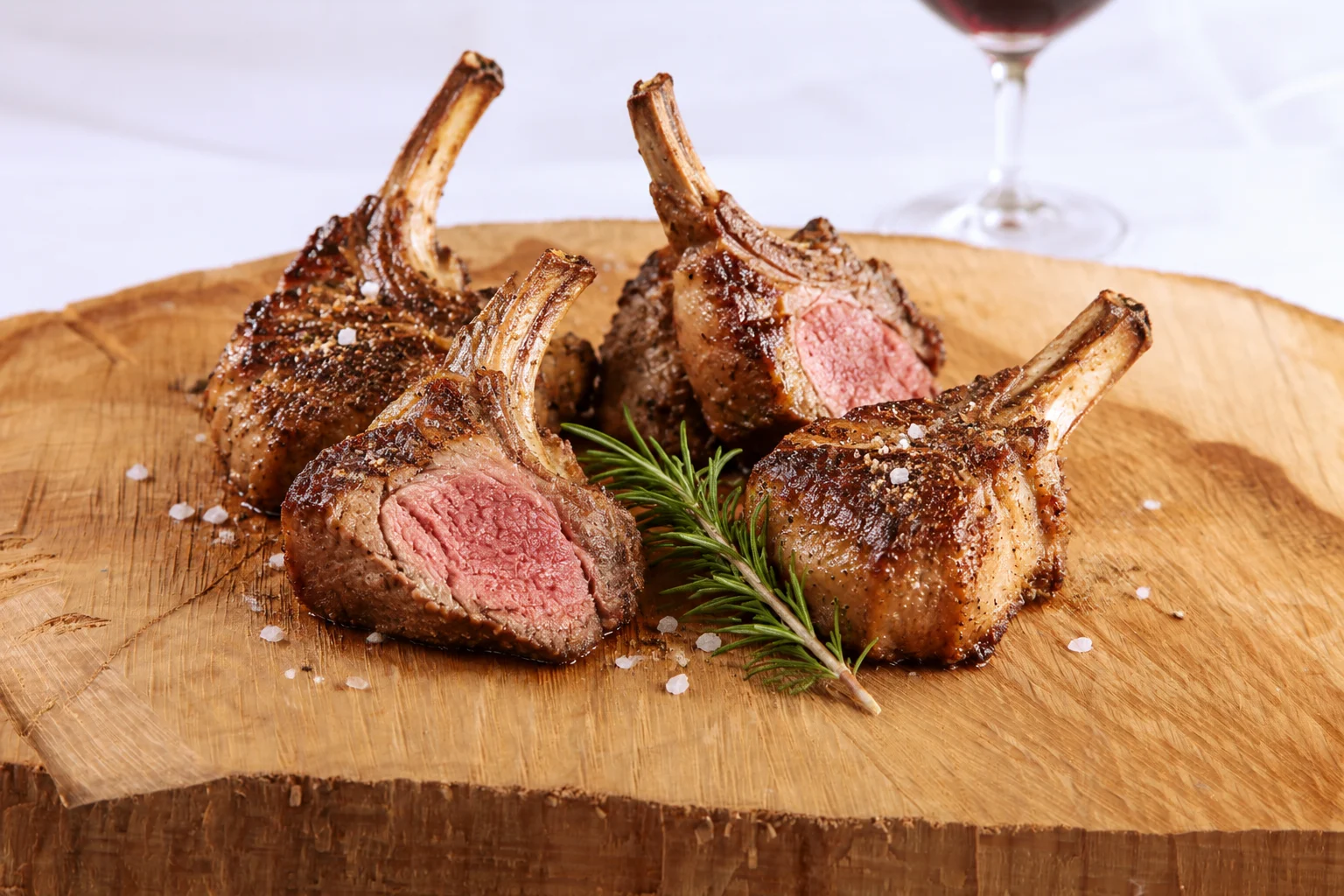
This wine pairs well with classic meat dishes such as sirloin, rack of lamb, or duck. Grilled meats and dishes with a light spiciness also complement the structure and fruitiness beautifully.
Due to its accessibility, it also works well with lighter preparations such as veal or poultry. Serve at around 16 to 18 degrees and, if desired, allow the wine to breathe briefly for optimal expression.
Order Lacoste-Borie 2023 online?
Lacoste-Borie Pauillac 2023 is an excellent choice for lovers of classic Bordeaux with an accessible style. Order this wine easily online at Grandcruwijnen. Pick-up in Dordrecht is possible, and our sommeliers are happy to assist you with advice on drinking occasions and food and wine pairings.
| Type of Wine | Red |
|---|---|
| Country | France |
| Region | Bordeaux |
| Appellation | Pauillac |
| Winery | Chateau Grand-Puy-Lacoste |
| Grape | Cabernet Franc, Cabernet Sauvignon, Merlot |
| Biological certified | No |
| Natural wine | No |
| Vegan | No |
| Vintage | 2023 |
| Drinking as of | 2027 |
| Drinking till | 2038 |
| Alcohol % | 13.5 |
| Alcohol free/low | No |
| Content | Standard (0.75 ltr) |
| Oak aging | Yes |
| Sparkling | No |
| Dessert wine | No |
| Closure | Cork |
| Parker rating | 91 |
| Tasting Profiles | Aards, Complex, Donker fruit, Houtgerijpt, Krachtig, Rijk, Rood fruit, Tannines, Vol |
| Drink moments | Barbecue, Borrelen, Iets te vieren, Indruk maken, Lekker luxe, Met vrienden, Open haard, Romantisch, Summer party, Terras |
| Sommy Pairing Beschrijving | De 2023 Lacoste-Borie opent met rijp zwart fruit zoals cassis en zwarte kers, aangevuld met subtiele tonen van tabak en vanille, stevige maar soepele tannines en een lange, elegante afdronk. Deze structuur en fruitigheid maken hem ideaal bij rundvlees en lamsgerechten omdat de tannines vet en eiwit netjes snijden, en ook bij gerijpte kazen omdat de complexe smaken elkaar aanvullen; denk aan gegrilde entrecote of steak au poivre, langzaam gegaard lamsbout of mediterrane lamskoteletten met rozemarijn, en stevige kazen zoals oude cheddar of Comté, perfect om op het terras bij geroosterd vlees of een vuurkorf van te genieten. |
Parker
The Wine Advocate
RP 91
Reviewed by:
Yohan Castaing
Drink Date:
2026 - 2036
Gourmand and vibrant, the 2023 Lacoste-Borie wafts from the glass with aromas of strawberries, cassis, wild berries and flowers. Medium-bodied, it is enveloping and charming, with a velvety, delicate texture, concluding with a long, perfumed finish. The blend comprises 56% Cabernet Sauvignon, 33% Merlot and 11% Cabernet Franc.
Published: Apr 09, 2026
Lorem ipsum dolor sit amet, consectetur adipiscing elit. Sed do eiusmod tempor incididunt ut labore et dolore magna aliqua...
Exclusive Content
Sign in to unlock professional wine reviews from world-renowned critics
The Grand-Puy-Lacoste family history archives date back to the 16th century. The first recorded owner was M. de Guiraud, a member of the Bordeaux parliament. The estate usually passed down female lines of inheritance and was the dowry in successive marriages. One of M. de Guiraud's daughters married M. de Jehan, another MP. Their son, Bertrand de Jehan, had a daughter who inherited the estate and married M. d'Issac. Traditionally, an owner's name was appended to a place name (such as Grand-Puy), but the hereditary daughters took their husbands' names upon marriage, which explains the numerous name changes by which Grand-Puy is known. When d'Issac's daughter married a Bordeaux lawyer named Saint Guirons, the property became "Grand-Puy Saint-Guirons", it was their daughter, Marie-Jeanne de Saint Guirons, who married François Lacoste. With this marriage in the 19th century, the property took on the name of Lacoste. Still, the name Saint-Guirons remained a reminder of the bond between the two families and of the estate's heritage, so for a time the wines were labeled 'Saint Guirons-Lacoste'. François Lacoste and Marie-Jeanne de Saint Guirons had three children, and after the death of the couple, their son Pierre-Frédéric Lacoste inherited the property in 1844. Pierre-Frédéric Lacoste was an enterprising man who was very devoted to his estate. Like François-Xavier Borie the next century, Lacoste focused on quality and improving the wine's reputation. In 1855 he rebuilt the château, and that same year Grand-Puy-Lacoste's status was officially recognized by its inclusion in the official list of Bordeaux's Great Classified Growths.
The history of Grand-Puy-Lacoste is fascinating in many ways. It is a family saga dating back to the 16th century. The name Grand-Puy, already mentioned in documents from the Middle Ages, comes from the old term "puy" which means "little knoll, small height". The vineyard lives up to its name and is located on outcrops with a terroir similar to that of the first vegetation of the Médoc. From the 16th century, the property remained linked to a single family from generation to generation, in a direct line through marriage until 1920, before being linked to another family in 1978: the Borie.
The castle has been owned by the Borie family since 1978. Jean-Eugène Borie's eldest son, François-Xavier, gradually renovated the property in vineyard, cellars and château. The Borie family has a long history of winemaking at the highest level with properties such as Château Haut Batailley and Château Ducru-Beaucaillou, respectively 5th and 2nd Grand Cru Classé. François-Xavier is now assisted by his daughter Emeline, who is responsible for the château's PR. With the purchase of Grand Puy Lacoste, the Borie family has awakened a "sleeping beauty". Now the domain has great prestige and is at the top of the classification in Pauillac.
Grand-Puy-Lacoste is located in the Pauillac terroir, one of the six common appellations of the Médoc along the left bank of the Gironde. The Pauillac appellation is limited to the municipal district of 2,274 hectares. It boasts 18 properties classified in 1855 (about 85% of the appellation's total production). The commune is separated from Saint-Estèphe in the north by the marshy area of Breuil and from Saint-Julien in the south by the hollow formed by the stream Juillac. The Grand-Puy plateau is located to the west of the village, above the hamlet of Bages. This offshoot of the grounds (called a "puy" in the old local dialect)
De 2023 Lacoste-Borie opent met rijp zwart fruit zoals cassis en zwarte kers, aangevuld met subtiele tonen van tabak en vanille, stevige maar soepele tannines en een lange, elegante afdronk. Deze structuur en fruitigheid maken hem ideaal bij rundvlees en lamsgerechten omdat de tannines vet en eiwit netjes snijden, en ook bij gerijpte kazen omdat de complexe smaken elkaar aanvullen; denk aan gegrilde entrecote of steak au poivre, langzaam gegaard lamsbout of mediterrane lamskoteletten met rozemarijn, en stevige kazen zoals oude cheddar of Comté, perfect om op het terras bij geroosterd vlees of een vuurkorf van te genieten.
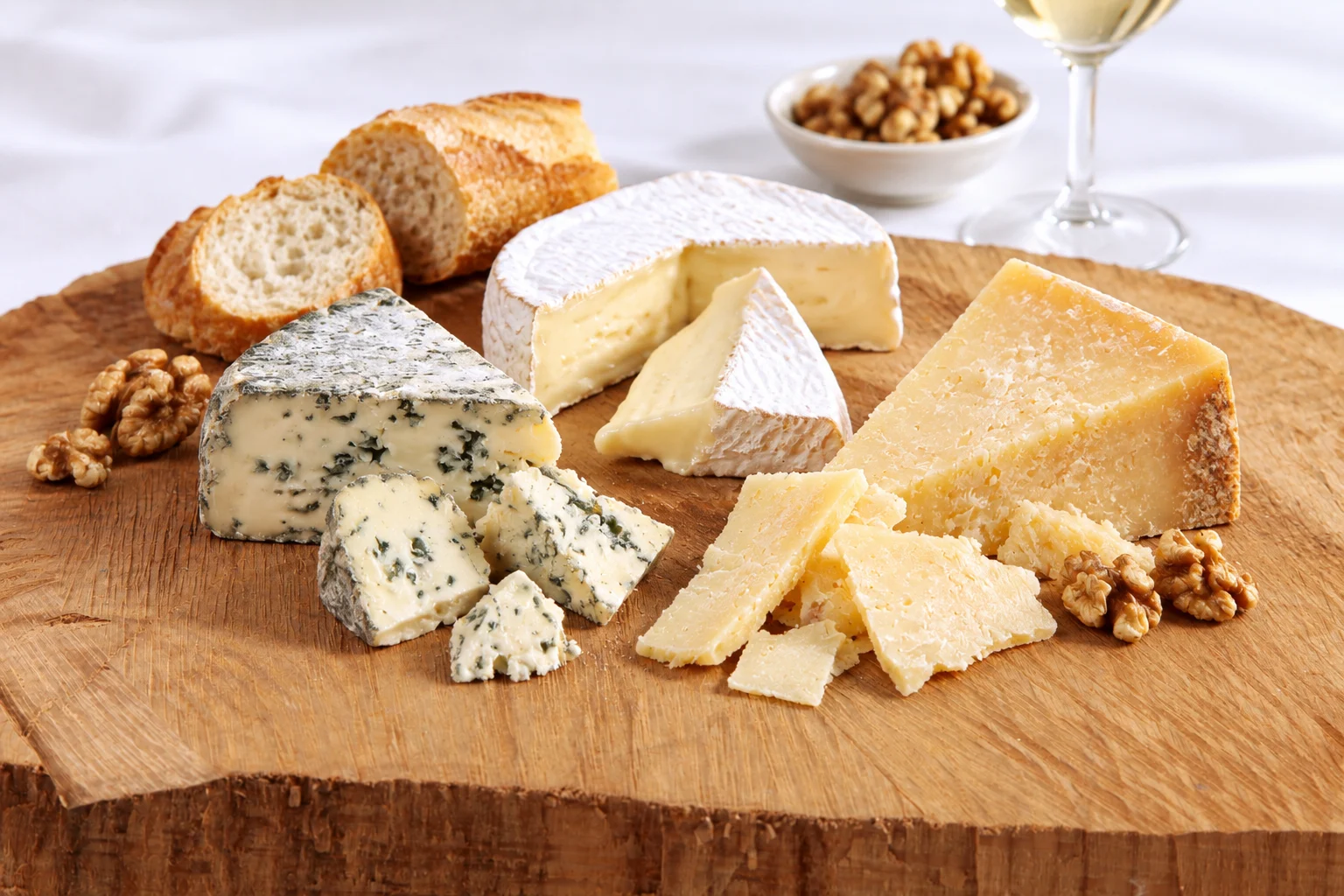
Choose a category to discover dishes that pair well with this wine.
Do you already have a dish in mind?
Let Sommy find wines to pair with your meal.
Discover Wine Trivia
Sign in to unlock fascinating facts about this wine and expand your knowledge.
Sign In