


2022 Gaja Rossj-Bass Chardonnay
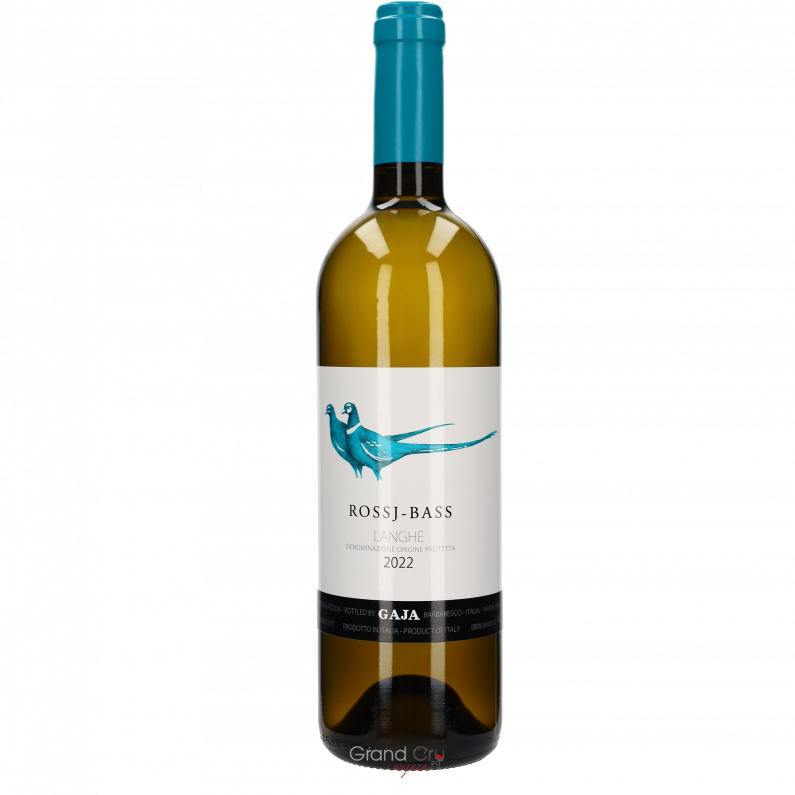
| Type of Wine | White |
|---|---|
| Country | Italy |
| Region | |
| Appellation | |
| Winery | |
| Vintage | 2022 |
| Grape | |
| Content (Alc) | 0.75 ltr (14%) |
| Drink window | 2025 - 2032 |
Out of Stock
Currently unavailable
Notify me when this product is back in stock

Description
This Chardonnay from Angelo Gaja comes from vineyards in Piedmont, planted in 1984. The name is composed of two elements: Bass, which means the lower part of the vineyards, and Ross, the name of one of Angelo's daughters, Rosanna. The vineyards are located in the Barolo region, near Serralunga. After the grapes are hand-harvested, the first fermentation takes place in stainless steel vats, followed by further aging in oak barriques. The wine is ready to drink now, but can easily age in the cellars for another 10 years.
Fermentation takes place in temperature-controlled tanks for four weeks. The wine is then transferred to new and used 225-liter oak barrels where it matures for six months. Malolactic fermentation also takes place during this period. This is a well-fragrant wine with aromas of citrus, honey, and flowers. With sufficient tension, the right acidity balance, and a fresh, sparkling finish, this wine can easily be considered one of the most elegant in the world. The palate is full, complex, creamy, and slightly spicy, with an exquisitely long finish. For those with patience, 3-5 years of bottle aging is recommended.
Specifications
| Packing information | Box |
|---|---|
| Type of Wine | White |
| Country | Italy |
| Region | Piemonte |
| Appellation | Langhe |
| Winery | Gaja |
| Grape | Chardonnay |
| Biological certified | No |
| Natural wine | No |
| Vegan | No |
| Vintage | 2022 |
| Drinking as of | 2025 |
| Drinking till | 2032 |
| Alcohol % | 14 |
| Alcohol free/low | No |
| Content | 0.75 ltr |
| Oak aging | Yes |
| Sparkling | No |
| Dessert wine | No |
| Closure | Cork |
| Parker rating | 100 |
| Tasting Profiles | Droog, Houtgerijpt, Krachtig, Rijk, Rond, Vol, Wit fruit |
| Drink moments | Barbecue, Cadeau!, Lekker luxe, Met vrienden, Open haard, Romantisch |
Professional Reviews
Parker
No written review available.
Wijnhuis
The history of winery Gaja starts in 1859, the year in which Giovanni Gaja, a local grape grower in Barbaresco, Piemonte, founded a wine company under his own name. A generation later, it is Angelo, grandfather of the current owner, who continues to make wine with the same determination as his father. He is supported in this by Clotilde Rey with whom he marries in 1905. They teach their scion Giovanni named after his grandfather so that as a winemaker you should not make any concessions; nothing should be at the expense of the quality of the wine.
In 1961 Giovannis son Angelo works in the family business. After graduating as an economist from the University of Turin and graduating from the School of Viticulture & Oenology in Alba, the young Angelo left abroad for an internship at wine farms in Bordeaux, Burgundy, along the Rin and in California. Full of fresh ideas, he had now returned to his native Piemonte. When Angelo Gaja took over his parents' company in 1970, he asked his old classmate and winemaker Guido Rivella to assist him. Together they implement a number of revolutionary changes for the region. For example, they sometimes reduce yields per hectare by up to half the number of liters allowed, they experiment with vinification methods, the planting of new - both red and white - grape varieties and pioneering ripening techniques. The results are astonishing and Gaja conquers the world with his beautiful Barbaresco's - the company's flagship.
The nebbiolo grapes for the Barbaresco of Gaja traditionally came from different vineyards. Angelos' father, grandfather and his father did just that before. Although young Angelo would not end this tradition, he launched a new line of Barbaresco's from a single vineyard. Interest in these experimental single vinyard wines became more and more popular. As a proponent of a dynamic, purely quality-oriented wine culture, the brilliant winemaker decides from 1996 to completely break with what he considers to be a conservative and restrictive Italian designation of origin. Only his traditional Barbaresco is still on the market as a prestigious DOCG. He deliberately 'declassifies' all other red single vineyard wines into regional Langhe Nebbiolo DOC. These are the Sorì San Lorenzo, the Sorì Tildìn and the Costa Russi. Gajas Barolo Sperss also underwent the same name change. With the exception of the Dagromis Barolo DOCG, Sito Moresco and Conteisa de Langhe also bear DOC. Langhe DOC is also on the label of his white toppers from Piemonte, the Rossj-Bass, Alteni di Brassica and Gaia & Rey. After all, for Gaja the abbreviation does not guarantee good quality of a wine but the name of the producer.
This Chardonnay from Angelo Gaja comes from vineyards in Piedmont, planted in 1984. The name is composed of two elements: Bass, which means the lower part of the vineyards, and Ross, the name of one of Angelo's daughters, Rosanna. The vineyards are located in the Barolo region, near Serralunga. After the grapes are hand-harvested, the first fermentation takes place in stainless steel vats, followed by further aging in oak barriques. The wine is ready to drink now, but can easily age in the cellars for another 10 years.
Fermentation takes place in temperature-controlled tanks for four weeks. The wine is then transferred to new and used 225-liter oak barrels where it matures for six months. Malolactic fermentation also takes place during this period. This is a well-fragrant wine with aromas of citrus, honey, and flowers. With sufficient tension, the right acidity balance, and a fresh, sparkling finish, this wine can easily be considered one of the most elegant in the world. The palate is full, complex, creamy, and slightly spicy, with an exquisitely long finish. For those with patience, 3-5 years of bottle aging is recommended.
| Packing information | Box |
|---|---|
| Type of Wine | White |
| Country | Italy |
| Region | Piemonte |
| Appellation | Langhe |
| Winery | Gaja |
| Grape | Chardonnay |
| Biological certified | No |
| Natural wine | No |
| Vegan | No |
| Vintage | 2022 |
| Drinking as of | 2025 |
| Drinking till | 2032 |
| Alcohol % | 14 |
| Alcohol free/low | No |
| Content | 0.75 ltr |
| Oak aging | Yes |
| Sparkling | No |
| Dessert wine | No |
| Closure | Cork |
| Parker rating | 100 |
| Tasting Profiles | Droog, Houtgerijpt, Krachtig, Rijk, Rond, Vol, Wit fruit |
| Drink moments | Barbecue, Cadeau!, Lekker luxe, Met vrienden, Open haard, Romantisch |
Parker
No written review available.
The history of winery Gaja starts in 1859, the year in which Giovanni Gaja, a local grape grower in Barbaresco, Piemonte, founded a wine company under his own name. A generation later, it is Angelo, grandfather of the current owner, who continues to make wine with the same determination as his father. He is supported in this by Clotilde Rey with whom he marries in 1905. They teach their scion Giovanni named after his grandfather so that as a winemaker you should not make any concessions; nothing should be at the expense of the quality of the wine.
In 1961 Giovannis son Angelo works in the family business. After graduating as an economist from the University of Turin and graduating from the School of Viticulture & Oenology in Alba, the young Angelo left abroad for an internship at wine farms in Bordeaux, Burgundy, along the Rin and in California. Full of fresh ideas, he had now returned to his native Piemonte. When Angelo Gaja took over his parents' company in 1970, he asked his old classmate and winemaker Guido Rivella to assist him. Together they implement a number of revolutionary changes for the region. For example, they sometimes reduce yields per hectare by up to half the number of liters allowed, they experiment with vinification methods, the planting of new - both red and white - grape varieties and pioneering ripening techniques. The results are astonishing and Gaja conquers the world with his beautiful Barbaresco's - the company's flagship.
The nebbiolo grapes for the Barbaresco of Gaja traditionally came from different vineyards. Angelos' father, grandfather and his father did just that before. Although young Angelo would not end this tradition, he launched a new line of Barbaresco's from a single vineyard. Interest in these experimental single vinyard wines became more and more popular. As a proponent of a dynamic, purely quality-oriented wine culture, the brilliant winemaker decides from 1996 to completely break with what he considers to be a conservative and restrictive Italian designation of origin. Only his traditional Barbaresco is still on the market as a prestigious DOCG. He deliberately 'declassifies' all other red single vineyard wines into regional Langhe Nebbiolo DOC. These are the Sorì San Lorenzo, the Sorì Tildìn and the Costa Russi. Gajas Barolo Sperss also underwent the same name change. With the exception of the Dagromis Barolo DOCG, Sito Moresco and Conteisa de Langhe also bear DOC. Langhe DOC is also on the label of his white toppers from Piemonte, the Rossj-Bass, Alteni di Brassica and Gaia & Rey. After all, for Gaja the abbreviation does not guarantee good quality of a wine but the name of the producer.
Wine Trivia
🍷 Enjoyed these wine facts? Share your newfound knowledge with fellow wine enthusiasts!
Discover Wine Trivia
Sign in to unlock fascinating facts about this wine and expand your knowledge.
Sign In

