
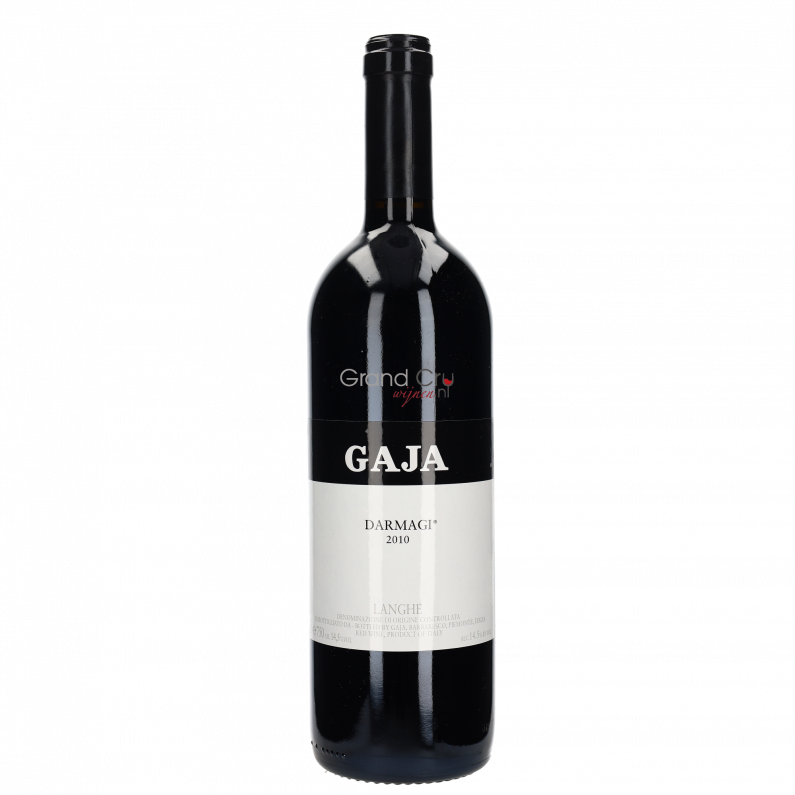
2010 Gaja Darmagi

The vintage may differ from the image shown
Login to see the price

Log in to request a custom quote.

Low Stock

Only 2 left

Enjoy now or cellar until 2035
Hoog gewaardeerd door professionals
Serve at 16-18°C

Description

chevron-down

An iconic Italian wine with international allure and proven aging potential.

The Hidden Cellar of Grand Cru Wines

The Hidden Cellar is Grand Cru's exclusive wine club concept, specially designed for our most loyal customers. You'll automatically become a member if you regularly order from Grand Cru.

As a Hidden Cellar member, you'll have first access to a selection of exceptionally rare wines: vintages, iconic Bordeaux and Burgundy appellations, Italian Super Tuscans, Napa Valley wines, and rare Champagne.

We can offer these gems directly from the wineries at very attractive prices, well below market. These are often wines that are no longer available or have become unaffordable. These wines come directly from the producer's cellars and haven't first traveled extensively under varying conditions.

View all the benefits of the Hidden Cellar wine club here .

Gaja Winery and a new generation in Piedmont

Gaja is one of Italy's most influential wineries and has played a key role in Piedmont's international recognition. Under the leadership of Angelo Gaja, the family business grew into a benchmark for quality, precision, and ageing potential.

In recent years, Gaia and Rossana Gaja have also become increasingly involved in winemaking. Their influence is evident in a style that has become slightly more refined and elegant, with greater emphasis on freshness and balance, without compromising concentration and structure.

Langhe as the basis for characterful top wines

The Langhe hills form a diverse wine region with chalky soils, good drainage, and pronounced temperature variations between day and night. These conditions lend themselves not only to Nebbiolo but also to international grape varieties, which develop a distinct, non-clichéd character here.

Darmagi is a prime example. The name, loosely translated in Piedmontese dialect, means "what a pity," a nod to the fact that Nebbiolo was once planted here. However, the results quickly justified this bold choice.

2010 Gaja Darmagi Langhe: grapes and vinification

The 2010 Darmagi is composed primarily of Cabernet Sauvignon, supplemented with small percentages of Merlot and Cabernet Franc. This blend gives the wine both power and aromatic precision.

The 2010 vintage enjoyed a consistent growing season with ample sunshine and cool nights, resulting in grapes with excellent ripeness and natural freshness. After hand-harvesting, careful fermentation follows, followed by extended aging in oak barrels. This aging supports the structure without overpowering the fruit's expression.

Color, aroma and flavor profile of Darmagi 2010

In the glass, the wine displays a deep ruby red color. The aroma is open and inviting, with notes of cassis, dark berry fruit, blue plums, and grilled herbs. Subtle hints of menthol, tobacco, and refined wood add further depth.

On the palate, the fruit's juiciness and purity are immediately apparent. The wine combines a ripe, almost seductive fruit expression with fresh acidity and fine-grained tannins. Despite its concentration, the wine is remarkably drinkable and lively, with a long, sustained finish that combines spice and freshness.

A ripe vintage with future prospects

With over fifteen years of bottle aging, this wine demonstrates its harmonious development. Wine is a natural product, and especially with older vintages, it's exciting to experience how primary aromas give way to complexity and nuance.

The 2010 Darmagi is currently in a very attractive drinking phase, yet possesses sufficient structure to develop further. Its drinking window will extend effortlessly well into the next decade.

Valuation, reputation and investment value

The 2010 Gaja Darmagi is one of the house's most highly regarded vintages, receiving a score of 95 points. The combination of ripe fruit, elegance, and exceptional drinkability makes this wine a favorite among sommeliers and collectors.
Specifications

chevron-down
Available as of Jan 16, 2026
Type of Wine Red
Country Italy
Region Piemonte
Appellation Barbaresco
Icons Icon Italy
Winery Gaja
Grape Nebbiolo
Biological certified No
Natural wine No
Vegan No
Vintage 2010
Drinking as of 2018
Drinking till 2035
Alcohol % 14
Alcohol free/low No
Content 0.75 ltr
Oak aging Yes
Sparkling No
Dessert wine No
Closure Cork
Vinous rating 95

Professional Reviews

chevron-down

Vinous

95

Wijnhuis

chevron-down

The history of winery Gaja starts in 1859, the year in which Giovanni Gaja, a local grape grower in Barbaresco, Piemonte, founded a wine company under his own name. A generation later, it is Angelo, grandfather of the current owner, who continues to make wine with the same determination as his father. He is supported in this by Clotilde Rey with whom he marries in 1905. They teach their scion Giovanni named after his grandfather so that as a winemaker you should not make any concessions; nothing should be at the expense of the quality of the wine.

In 1961 Giovannis son Angelo works in the family business. After graduating as an economist from the University of Turin and graduating from the School of Viticulture & Oenology in Alba, the young Angelo left abroad for an internship at wine farms in Bordeaux, Burgundy, along the Rin and in California. Full of fresh ideas, he had now returned to his native Piemonte. When Angelo Gaja took over his parents' company in 1970, he asked his old classmate and winemaker Guido Rivella to assist him. Together they implement a number of revolutionary changes for the region. For example, they sometimes reduce yields per hectare by up to half the number of liters allowed, they experiment with vinification methods, the planting of new - both red and white - grape varieties and pioneering ripening techniques. The results are astonishing and Gaja conquers the world with his beautiful Barbaresco's - the company's flagship.

The nebbiolo grapes for the Barbaresco of Gaja traditionally came from different vineyards. Angelos' father, grandfather and his father did just that before. Although young Angelo would not end this tradition, he launched a new line of Barbaresco's from a single vineyard. Interest in these experimental single vinyard wines became more and more popular. As a proponent of a dynamic, purely quality-oriented wine culture, the brilliant winemaker decides from 1996 to completely break with what he considers to be a conservative and restrictive Italian designation of origin. Only his traditional Barbaresco is still on the market as a prestigious DOCG. He deliberately 'declassifies' all other red single vineyard wines into regional Langhe Nebbiolo DOC. These are the Sorì San Lorenzo, the Sorì Tildìn and the Costa Russi. Gajas Barolo Sperss also underwent the same name change. With the exception of the Dagromis Barolo DOCG, Sito Moresco and Conteisa de Langhe also bear DOC. Langhe DOC is also on the label of his white toppers from Piemonte, the Rossj-Bass, Alteni di Brassica and Gaia & Rey. After all, for Gaja the abbreviation does not guarantee good quality of a wine but the name of the producer.

Food

chevron-down
🍷

Binnenkort beschikbaar

Voor deze wijn worden binnenkort automatisch passende gerechten toegevoegd. In de tussentijd kunt u onze wijnadvies tool gebruiken.

Ontdek onze Wijnadvies Tool

Attachments

chevron-down

Description

An iconic Italian wine with international allure and proven aging potential.

The Hidden Cellar of Grand Cru Wines

The Hidden Cellar is Grand Cru's exclusive wine club concept, specially designed for our most loyal customers. You'll automatically become a member if you regularly order from Grand Cru.

As a Hidden Cellar member, you'll have first access to a selection of exceptionally rare wines: vintages, iconic Bordeaux and Burgundy appellations, Italian Super Tuscans, Napa Valley wines, and rare Champagne.

We can offer these gems directly from the wineries at very attractive prices, well below market. These are often wines that are no longer available or have become unaffordable. These wines come directly from the producer's cellars and haven't first traveled extensively under varying conditions.

View all the benefits of the Hidden Cellar wine club here .

Gaja Winery and a new generation in Piedmont

Gaja is one of Italy's most influential wineries and has played a key role in Piedmont's international recognition. Under the leadership of Angelo Gaja, the family business grew into a benchmark for quality, precision, and ageing potential.

In recent years, Gaia and Rossana Gaja have also become increasingly involved in winemaking. Their influence is evident in a style that has become slightly more refined and elegant, with greater emphasis on freshness and balance, without compromising concentration and structure.

Langhe as the basis for characterful top wines

The Langhe hills form a diverse wine region with chalky soils, good drainage, and pronounced temperature variations between day and night. These conditions lend themselves not only to Nebbiolo but also to international grape varieties, which develop a distinct, non-clichéd character here.

Darmagi is a prime example. The name, loosely translated in Piedmontese dialect, means "what a pity," a nod to the fact that Nebbiolo was once planted here. However, the results quickly justified this bold choice.

2010 Gaja Darmagi Langhe: grapes and vinification

The 2010 Darmagi is composed primarily of Cabernet Sauvignon, supplemented with small percentages of Merlot and Cabernet Franc. This blend gives the wine both power and aromatic precision.

The 2010 vintage enjoyed a consistent growing season with ample sunshine and cool nights, resulting in grapes with excellent ripeness and natural freshness. After hand-harvesting, careful fermentation follows, followed by extended aging in oak barrels. This aging supports the structure without overpowering the fruit's expression.

Color, aroma and flavor profile of Darmagi 2010

In the glass, the wine displays a deep ruby red color. The aroma is open and inviting, with notes of cassis, dark berry fruit, blue plums, and grilled herbs. Subtle hints of menthol, tobacco, and refined wood add further depth.

On the palate, the fruit's juiciness and purity are immediately apparent. The wine combines a ripe, almost seductive fruit expression with fresh acidity and fine-grained tannins. Despite its concentration, the wine is remarkably drinkable and lively, with a long, sustained finish that combines spice and freshness.

A ripe vintage with future prospects

With over fifteen years of bottle aging, this wine demonstrates its harmonious development. Wine is a natural product, and especially with older vintages, it's exciting to experience how primary aromas give way to complexity and nuance.

The 2010 Darmagi is currently in a very attractive drinking phase, yet possesses sufficient structure to develop further. Its drinking window will extend effortlessly well into the next decade.

Valuation, reputation and investment value

The 2010 Gaja Darmagi is one of the house's most highly regarded vintages, receiving a score of 95 points. The combination of ripe fruit, elegance, and exceptional drinkability makes this wine a favorite among sommeliers and collectors.

Specifications

Available as of Jan 16, 2026
Type of Wine Red
Country Italy
Region Piemonte
Appellation Barbaresco
Icons Icon Italy
Winery Gaja
Grape Nebbiolo
Biological certified No
Natural wine No
Vegan No
Vintage 2010
Drinking as of 2018
Drinking till 2035
Alcohol % 14
Alcohol free/low No
Content 0.75 ltr
Oak aging Yes
Sparkling No
Dessert wine No
Closure Cork
Vinous rating 95

Professional Reviews

Vinous

95

Wijnhuis

The history of winery Gaja starts in 1859, the year in which Giovanni Gaja, a local grape grower in Barbaresco, Piemonte, founded a wine company under his own name. A generation later, it is Angelo, grandfather of the current owner, who continues to make wine with the same determination as his father. He is supported in this by Clotilde Rey with whom he marries in 1905. They teach their scion Giovanni named after his grandfather so that as a winemaker you should not make any concessions; nothing should be at the expense of the quality of the wine.

In 1961 Giovannis son Angelo works in the family business. After graduating as an economist from the University of Turin and graduating from the School of Viticulture & Oenology in Alba, the young Angelo left abroad for an internship at wine farms in Bordeaux, Burgundy, along the Rin and in California. Full of fresh ideas, he had now returned to his native Piemonte. When Angelo Gaja took over his parents' company in 1970, he asked his old classmate and winemaker Guido Rivella to assist him. Together they implement a number of revolutionary changes for the region. For example, they sometimes reduce yields per hectare by up to half the number of liters allowed, they experiment with vinification methods, the planting of new - both red and white - grape varieties and pioneering ripening techniques. The results are astonishing and Gaja conquers the world with his beautiful Barbaresco's - the company's flagship.

The nebbiolo grapes for the Barbaresco of Gaja traditionally came from different vineyards. Angelos' father, grandfather and his father did just that before. Although young Angelo would not end this tradition, he launched a new line of Barbaresco's from a single vineyard. Interest in these experimental single vinyard wines became more and more popular. As a proponent of a dynamic, purely quality-oriented wine culture, the brilliant winemaker decides from 1996 to completely break with what he considers to be a conservative and restrictive Italian designation of origin. Only his traditional Barbaresco is still on the market as a prestigious DOCG. He deliberately 'declassifies' all other red single vineyard wines into regional Langhe Nebbiolo DOC. These are the Sorì San Lorenzo, the Sorì Tildìn and the Costa Russi. Gajas Barolo Sperss also underwent the same name change. With the exception of the Dagromis Barolo DOCG, Sito Moresco and Conteisa de Langhe also bear DOC. Langhe DOC is also on the label of his white toppers from Piemonte, the Rossj-Bass, Alteni di Brassica and Gaia & Rey. After all, for Gaja the abbreviation does not guarantee good quality of a wine but the name of the producer.

Food

🍷

Binnenkort beschikbaar

Voor deze wijn worden binnenkort automatisch passende gerechten toegevoegd. In de tussentijd kunt u onze wijnadvies tool gebruiken.

Ontdek onze Wijnadvies Tool

Trivia

Attachments