

Sur Lie Ageing Explained: Technique, Flavour and Style Differences
Sur lie ageing sounds like something that mainly excites winemakers and exam candidates. It is not a term that demands attention, and you will rarely see anyone taking a photo of it. Yet this technique has a surprisingly large impact on how a wine feels. Not in aroma or colour, but exactly where it matters: in structure, tension, and that pleasant sensation that makes a wine linger just a little longer. Subtle, but far from unimportant.
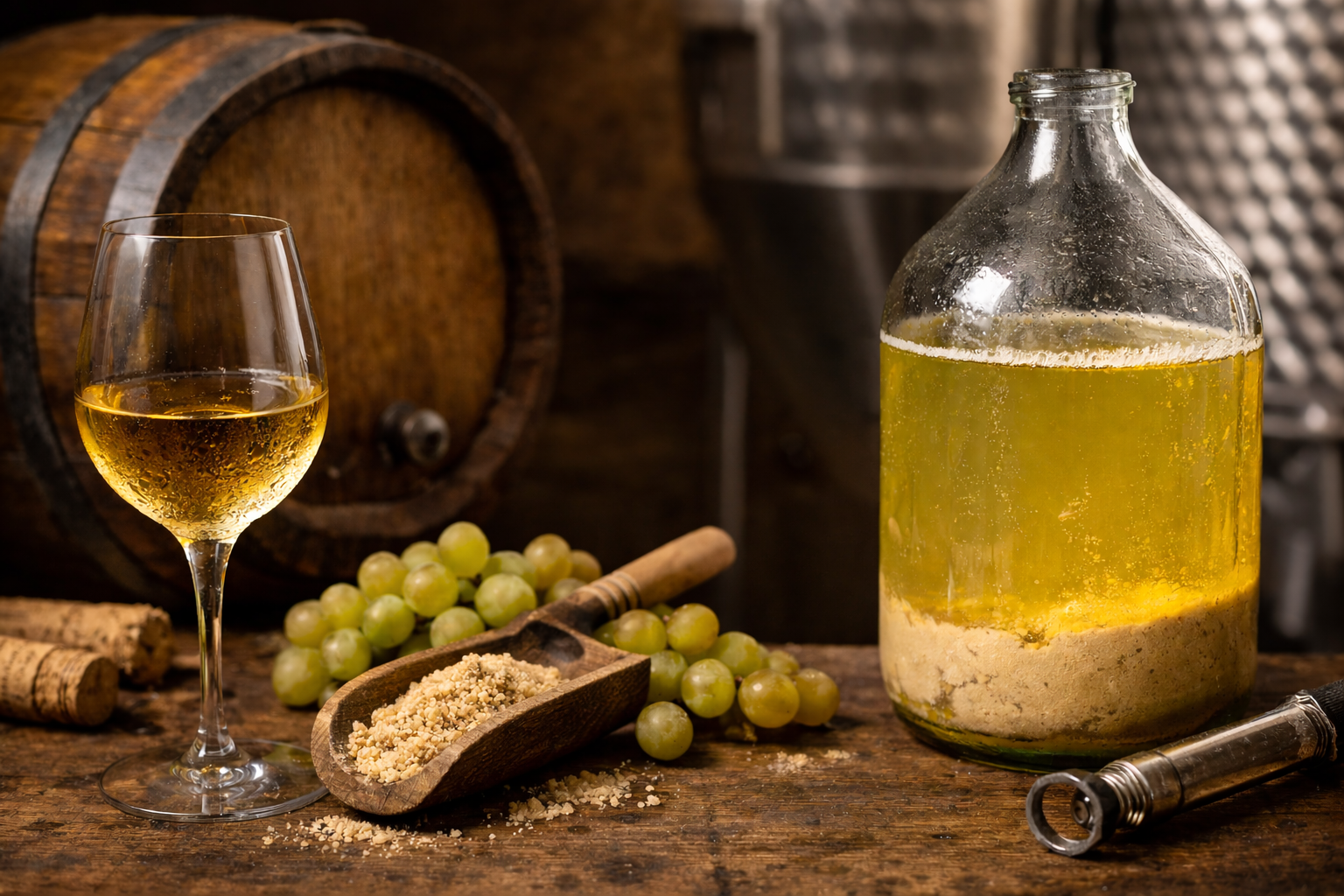
Here you see a photo with a glass demijohn in which white wine is still resting on its fine lees. At the bottom, a light-coloured layer of sediment has formed: spent yeast cells after fermentation. This is the stage where sur lie ageing does its work, as the wine is deliberately kept in contact with these lees.
You also see the contrast with the end result. The clear glass of wine on the left shows how that same wine looks once it has been separated from the sediment. What still appears cloudy and technical in the vessel ultimately translates into greater roundness and balance in the glass.
What does sur lie ageing mean?
Sur lie ageing means that after fermentation, a wine is left to rest on its fine yeast cells for a period of time. Once fermentation is complete, these yeast cells sink to the bottom and form a layer in the tank or barrel. Instead of immediately separating the wine from this layer, the winemaker deliberately keeps the wine in contact with it.
This contact with the lees gives extra depth. The effect is most noticeable in texture: wines often feel rounder, creamier and slightly less taut, without becoming heavy.
How does it work in the cellar?
Sur lie ageing can take place in stainless steel, wood, concrete or even in the bottle. The principle is always the same: wine and fine lees remain together. Sometimes the lees are stirred, a process known as bâtonnage. This literally means stirring the lees so the contact becomes more intense. Think of it as a gentle stir rather than a vigorous shake. Nobody wants a wine that behaves like a cocktail.
The duration can vary widely. It may be just a few months, but for certain styles, especially sparkling wines, it can be much longer. Generally, the longer the contact, the more texture and complexity you see. Usually. Because wine is still wine, not mathematics.
What do you taste? Texture, tension and sometimes brioche
The biggest gain from sur lie ageing is in mouthfeel. Wines often gain more “filling” without losing their freshness. This makes the technique particularly attractive for styles that can be quite taut, or that benefit from a little extra body.
- Texture: rounder, softer, sometimes creamy or chalky.
- Aroma: in some wines a subtle nutty note, brioche, toast or hints of almond.
- Balance: acidity often feels better integrated. Not less acidic, just less sharp.
Emilio Moro whites: a practical example
Sur lie ageing is increasingly used to create clear stylistic differences through relatively small cellar decisions. The white wines of Emilio Moro show this particularly well, as they are made from the same grape yet feel very different in the glass.
- Polvorete is fermented in stainless steel and does not undergo sur lie ageing. You can taste this immediately in its taut, fresh style with plenty of energy.
- El Zarzal is also fermented under controlled temperatures, but then aged on the lees in large French oak foudres. This adds texture and a broader mouthfeel without making the wine heavy.
- La Revelía goes a step further: fermentation in 500-litre French oak barrels, followed by eight months of sur lie ageing in those same barrels. Here you clearly taste more depth, roundness and length.
With these three wines, you can taste very concretely what sur lie ageing does. Not in theory, but in mouthfeel. The grape remains the same, the structure changes. That is exactly what this technique is about.
Style differences: from taut and saline to rich and layered
Sur lie ageing is not a flavour filter that produces the same result everywhere. The outcome depends on grape variety, climate, vinification and the choices made by the winemaker. Still, a few clear directions can be identified:
- Fresh and mineral with extra grip: wines that start out taut, but gain a little more body through sur lie ageing. Think saline notes, citrus, stone, with a fuller mid-palate.
- Richer and rounder: especially when bâtonnage is applied more frequently or ageing lasts longer. This can work beautifully for gastronomic wines.
- Sparkling wines with depth: ageing on the lees in bottle creates those familiar notes of brioche, toast and nuts, alongside fresh citrus and tension.
Sur lie in sparkling wines: Champagne, Cava and Franciacorta
If there is one place where sur lie ageing is especially evident, it is in sparkling wine. Particularly in wines made using the traditional method, with a second fermentation in bottle. In this case, the wine literally rests on its lees in the bottle, and that is exactly where the added complexity comes from.
Three places where you can clearly taste this:
- Champagne: often taut and refined, with a clear autolytic character when aged longer.
- Cava: can show surprising depth, especially with extended ageing, offering a fine balance between freshness and brioche notes.
- Franciacorta: often slightly creamier and more luxurious in texture, with a fine mousse and a high level of detail.
Which grape varieties work well with sur lie ageing?
Not every grape needs it, but some varieties seem almost made for it. Two particularly interesting examples:
Chardonnay: structure and finesse
Chardonnay is a perfect candidate because the grape can be both taut and rich. Sur lie ageing can add extra texture without turning the wine into a butter bomb, especially when balance and tension are carefully preserved.
Muscadelle: aromatics with a softer landing
Muscadelle is known for its aromatic charm. Sur lie ageing can help give those aromas more body and calm. Less high-pitched on the nose, more breadth in the glass.
When do you consciously choose sur lie?
If you enjoy fresh, taut white wines but occasionally want a little more texture. Or if you are looking for wines that work better at the table. Sur lie ageing often helps with:
- wines meant for food, not just as an aperitif
- styles where you want tension without excessive sharpness
- sparkling wines where you want depth alongside citrus freshness
In conclusion
Sur lie ageing is a technique you do not always see, but often taste. It is about contact with the lees, time, and sometimes bâtonnage. The result can range from subtle extra roundness to clear brioche-like complexity, depending on style and cellar choices. And once you know what to look for, you will start recognising it more and more often.